My Father loved opera. Not light opera or, heaven forbid, Gilbert and Sullivan, but Grand Opera. He had a gramophone of which he was very proud. It was a handsome polished mahogany box and although it did not have a horn, as His Master’s Voice advertising showed, it was one of the earlier models. He also had records of some of the famous opera singers of his younger days: Caruso, Tetrazinni, GalliGurcci and others whom I have forgotten. They were of course 24 rpm and some only had a recording on one side.
There was also a Book which I imagine was produced by one of the record companies. It was a handsome hardcover book with a short synopsis of each well known opera and probably a list of the recordings available, but what fascinated me as a small child were the stories which were short and in simple language, so that a beginning reader could work her way through these tales of love, passion and tragedy without too much trouble. Then there were the pictures. These were photographs of wellknown artistes in costume. I remember Caruso as a clown in Pagliacci, and a very gorgeous lady decked in flowers whose name I have forgotten. But poor Tetrazzini who was rotund to put it kindly looked quite peculiar as Aida, and many of the other pictures looked grotesque even to my unsophisticated eyes. Trying to fit these people into the dramatic stories was quite a puzzle, but it remained one of my favourite storybooks.
Every winter the Carl Rosa Opera Company made a tour of the large provincial cities in Britain usually staying for two weeks in each place and presenting a selection of operas. My parents used to go each season but it was not until I was about eight or nine that my Father suddenly said one Saturday afternoon, “I think I’ll go to the matinee of “Madame Butterfly”. If you want to go shopping I might as well take Cynthia.”
I had once before been taken to see “The Tales of Hoffman” when a babysitter was not available but remembered nothing except a boat floating across the stage during “The Barcarolle”, and to an English child who saw two or three pantomimes each Christmas it did not seem unusual. But “Madame Butterfly”! I had read the story of course and had seen a photograph of a handsome man in uniform and a strange (but not fat) Japanese lady in a beautiful setting of flowering trees so I was all set to enjoy myself.
We had seats in the dress circle so I could see the stage very well, but the theatre was not full. All went well through the first and second acts as I raptly followed the story and even recognised some of the music from my Father’s records. However, the third act was TOO MUCH! As the gentleman produced a wife and the poor Japanese lady was left alone, tears poured down my cheeks and dripped on my dress. As she put a little American flag in the baby’s hand and drew the sword, I broke into loud heartfelt sobs. My Father didn’t waste time telling me to shut up! He unobtrusively moved along the row of vacant seats until he could disassociate himself from this disgraceful display of emotion. To his credit this did not stop him from taking me to many other operas but he waited until I was a bit older. I don’t think I was even scolded- maybe he felt like sobbing too!
November in an industrial city in the north of England. Fog drifting up the river from the sea, and the muffled sound of riveting from the shipyards like far away guns. The smell of smoke from coal fires and industrial chimneys. The mournful wail of the fog horns from the ships on the river.
I was seven years old, trailing home from school along the main road with hurrying people pushing past and streetcars clanging on their tracks. It was a long school day for me, leaving home at eight in the morning and not returning until five… At last I turned up a quiet residential street lined with small neat houses enclosed in gardens surrounded by clipped hedges. Each one had a closed gate and some had bare-branched trees from which cold drops fell on my head as I walked by. So thick was the fog and so quiet the street that it seemed to me as if the houses were melting away and all the people had disappeared. It was quite dark by now and the mist was damp on my face and beaded on my coat, and the sidewalk was wet and greasy. I was chilled and cold and it seemed a long way home and what would I find there? As I plodded past each gate from the glow of one dim street lamp to the next, I came to a house that shone brightly. The light over the door was lit and you could see through the side windows into the hall. Although the curtains were drawn they glowed warmly red and pink as I stopped and looked through the gate at this vision of cosiness. Slowly I realized that the house looked vaguely familiar. In the nineteen twenties it was still the fashion among older ladies to have an ‘At Home Day’ every month and my Mother had once taken me with her to visit two elderly sisters, Mrs. Carrick and Miss Gill, on just such an occasion. Shivering in my damp clothes, I remembered the two kind ladies and the warmth of their welcome.
I was a shy child but that glowing memory drew me slowly up the path. All the lights must mean that the ladies were entertaining so I stood on tiptoe and rang the bell.
After a few minutes the door was opened by the older of the two sisters, her white hair shining in the light and her eyes opening wide in surprise.
“Yes, dear?” she said in a puzzled voice.
“I’m Cynthia,” I replied, “I have come to your At Home.”
“Why Cynthia, of course. Come on in. Mary,” she said to her sister who had come to see who this late caller could be, “Cynthia has come to our At Home.”
With no hesitation the gentle ladies took my hat and coat and showed me upstairs to their drawing room. I was in awe, as I had never had my tea upstairs before and what a sight that drawing room was! A blazing coal fire flickered over the brass andirons and the cream carpet; warm pink velvet curtains shut out the dark night; rose patterned sofa and chairs, soft silk cushions and shaded lamps. A small table drawn up to the fire was covered with a delicate embroidered cloth and set with china teacups and gleaming silver. The ladies had probably planned to sit down and have a leisurely tea on their own after their earlier exertions as hostesses in fact Miss Gill was carrying the silver teapot with fresh tea as she came in and Mrs. Carrick took the cover from the dish of buttered scones which had been keeping warm by the hearth.
Miss Gill brought me a special little teacup of cambric tea and we all enjoyed the remains of the feast. The two sisters chatted quietly together and I sat on the stool by the fire, entranced in a fairytale of golden light and warmth. At last the tinkling chime of the clock on the mantelpiece pricked the bubble and I stood up and said, “I think I’d better go home now.”
Downstairs I put on my hat and coat and remembered to say thank you for a lovely time, with a kiss.
I do not remember whether I was scolded for being late when I got home, or if my parents had been worried. But looking back over all those years I can still see the lights and feel the warmth and happiness in that cosy room.
When I was a little girl I lived in a city in the north of England called Newcastle-on-Tyne. The castle had been new when it was built by William the Conqueror in 1066, and the Tyne is a river. My mother and father and I lived in a brick house in a street of other houses much the same. Every house had gardens in back and in front, and in the front garden was an apple tree; the street was called Appletree Gardens.
Appletree Gardens
This was a new part of the city and a pleasant quiet place to live, but it was near an old industrialised area where the schools were big, old buildings with crowded classrooms. My father decided that this would not be a good place for me to start school, so 1 first went to a nearby private school. Then when I was 7 years old, I was sent to a school called St. Margaret’s School for Girls. I was bought a new school uniform which was very exciting: a navy blue gym tunic with a pale blue blouse, black stockings and black shoes, a thick navy blue winter coat and a black felt hat with a navy and pale blue ribbon around it, and a navy blue blazer with the school badge on it. I felt very smart.
The school was in quite a different part of the city and of course there were no school buses in those days. Every morning I left home before 8 o’clock and walked down my street and along another to the main road where the streetcars ran. I walked down the road until I came to a corner where I waited for a rather old green streetcar which turned onto a track which ran straight across the fields. I was often the only person on that streetcar except the driver and the conductor who took my fare of tuppence (two pence) for the ride. It took about half an hour to cross the fields and small straggly woods and reach streets with houses and shops again and it was a long lonely time. At last I got off at the Catholic Church, walked to the corner, crossed the main street, then turned into a road with big stone houses, two of which had been turned into the school.
I think my father or mother must have taken me on that journey a few times before I began school but I don’t remember that. What I DO remember is the first day. I was very scared. I didn’t know any of the girls, and some were very big girls. I didn’t know any of the teachers and the Principal was a very tall, terrifying, grey-haired lady. Not only that, but I was to stay at school all day and not get back home until 5 o’clock. At that time most families had their main meal in the middle of the day, so school was from 9 o’clock until 12 o’clock, and then a break of 2 hours for the girls to go home for dinner, starting again at 2 and going on until 4 o’clock. Our parents paid for those of us who lived too far away to go home, to have a hot cooked meal at school. Those school dinners were a great trial to me as there were many things I didn’t like, and at each end of the long table sat a teacher who frowned if you did not eat everything on your plate.
Afterward we went into a classroom for a while and could read or do homework and then were sent out into the playground and played with balls or skipped, rushed around and chased each other or played tag until school began again.
I can still remember how long that first day seemed. I had never been away from home before without my mother or father or someone I knew and the more I thought about it, the more dreadful things I imagined could be happening while I was away. At last the teacher noticed the big tears rolling down my cheeks. She came over and asked, “What is the matter, Cynthia?”
Choking back my sobs, I said, “It’s so long since I left home this morning perhaps our house has burnt down and there is nothing left.”
She persuaded me that she was sure that everything was all right and eventually the long day ended. I put on my coat and hat, walked back to the old green streetcar, drove across the fields, walked home, and there was the house, quite safe with my mother and father waiting to hear how I had liked my first day at school.
About a year later other parents began sending their daughters to the same school with me and we had quite a good time on our rides, chatting and trying to finish homework each morning. In the afternoon we would rush to the little corner store to spend our pocket money on long liquorice strips or packets of sherbet and snowballs. Big hard round candies called gob-stoppers were a favourite as they lasted so long and changed colour as we sucked, taking them out frequently to check each new colour.
There were holidays to look forward to: a month at Christmas; another month at Easter; and then six weeks in the summer. Both my parents were far from their homes so I grew up without any extended family of grandparents, aunts, uncles and cousins, but we had friends in the neighbourhood and I enjoyed visiting and playing with them.
There were treats to look forward to: the comic my father brought home for me on Tuesday evening; the Pantomime at Christmas; having my parents’ friends to tea on Sunday afternoons, with a visits to the patisserie the day before to help choose a selection of small fancy cakes. I always kept a close watch on the chocolate eclair as the plate was passed round. Going out to other grown-up tea parties where I sat quietly while the adults talked was not very interesting, but I soon found out that many of them had lovely story books, like the Pollyanna books and Tales from Japan which kept me happily occupied.
My parents enjoyed the theatre and if there was no baby sitter available I was taken along. Plays, concerts and even operas were sometimes exciting and sometimes dull, but they were all fun. One thing I was never taken to and that was a MOVIE. They were not considered suitable for children. No movies! No TV! What we had was wireless- radio to you- and if I got home early enough, I could listen to the Children’s Hour on the BBC.
Now that my mother’s stories are set in England, and deal with her own life as a child with Carol in her role as mother, it is time to introduce Cynthia’s first letter- not to her mother (although she is the person who preserved envelope and letter), but to Santa Claus! This is a bit strange in itself, since I would have thought an English child would have written to Father Christmas rather than Santa, but she did have an American influence- her Simmons cousins, Milly, Marguerite, and Mona, who had spent the war with her in St Vincent, at some time had joined their father in New York, and grew up on Long Island. This letter from an 8-or-9-year-old Cynthia is, I hope, legible enough not to need a transcription.
NEW YEAR IN NORTHUMBERLAND
by Cynthia Costain
Children growing up in Northumberland had one big advantage over children in most of the rest of England. We celebrated an English Christmas and a Scottish New Year.
At Christmas, there was none of this grudging John Knox attitude. It was the season to be merry, with presents and Father Christmas; delicious secrets hidden in cupboards; expeditions to the country for holly and mistletoe to decorate each room. Noontime dinner on Christmas day was full of delectable smells and feasting a fat stuffed roast capon (as we were a small family) and the fun of blazing Christmas pudding with the suspense of seeing whether I would get the silver ring this year or the threepenny bit or horrors! the silver thimble. Tea at five o’clock brought friends to share the large iced Christmas cake and little warm mince pies. We younger ones ate and giggled, compared presents and began the task of eating as many mince pies as we could in between Christmas and New Year each one consumed counted as a happy month in the coming year.
New Year was quite different. No presents or special goodies, but the mystique of STAYING UP TO SEE THE NEW YEAR IN. This longed-for event was not achieved by being good or behaving well in church, it involved pleading each year, “Can’t I stay up? I’m seven eight- nine now,” until at last, parents tired of nagging would say, “All right, this year you can See In The New Year.”
The best family party was at the Sheedys’: an Irish father, an exuberant North Country mother, two sons of my age, and various young Irish uncles, as well as a selection of neighbouring families. The most important person in the whole ceremony was Grandfather. Mrs. Sheedy’s father was a fine impressive old gentlemen with white hair and a beautiful white beard a cross between Father Christmas and King Edward VII. We would all gather at the Sheedys’ house about eleven o’clock, the adults making polite conversation, and the children being as quiet as possible so that we could eavesdrop on our elders. As midnight drew nearer, Grandfather, already in his best black suit with white shirt, stiff collar, and black silk stock, would put on his overcoat with the velvet collar and his hard square topped hat, tuck his scarf around his neck, put on his gloves, and take his silver topped cane. In the meanwhile, Mrs. Sheedy would carefully slip into his pocket a piece of coal, a twist of paper holding salt and a small flask of whiskey.
We all gathered to see him march down the garden path, out the gate and down the dark road. No need in that shipbuilding city to watch the clock for midnight. As the minutes crept by we listened and then up and down the river for miles around the sirens howled and the ships’ hooters blew as Tyneside welcomed in the New Year. There would be a great knocking at the front door, and everyone would rush to see Grandfather enter the house as the First Foot over the doorstep to bring good luck to the house and all within. With the coal for warmth throughout the year, salt for food, and whiskey for drink he would call a Happy New Year to all and set out to kiss all the ladies. Traditionally the First Foot must be a dark man, and presumably Grandfather had once had dark hair, since he remained the perfect bringer of good luck.
Then what hugging and kissing and exchanging of good wishes, from husbands to wives, mothers to sons and adults to children! 1 can’t remember that we children kissed each other perhaps we did. Glasses were filled with port or sherry and each child had a wineglass of Stone’s Ginger Wine glowing ruby red, with a lovely hot sweet burny taste. Then the toasts and speeches and refilling of the glasses, until at last the piano would begin to play and everyone would gather round to sing. The favourite music was “The Student’s Songbook”, a fat compendium of songs from all over the world, from Annie Laurie to John Brown’s Body and on to Daisy, Daisy, give me your answer do. People would call for their favourites, from hymns to the local anthem, The Blaydon Races. I remember a dashing ditty about a railway journey which began “Riding down to Bangor on an eastern train” and ended with “a dainty little earring sparkled in that naughty student’s beard”.
After a while the ladies would retire to help Mrs. Sheedy bring in sandwiches and tea and the remains of the Christmas cake. This was the time for the children to collect their food supplies and fade away as much as possible under the piano, behind Grandfather’s chair, or in the entrance hall among the coats, while the singing continued and the laughter and chatter rose. This was our way of holding back as long as possible those dread words, “Well, it’s about time to go home… Where are those children?”
A child’s world is very small and mine had shrunk. No grandmother, aunts and cousins- no warm tropical sunshine and kind black nurse. I arrived in England when I was four years old with my Mother to meet an unknown Father in a strange country and to live in a cold industrial city in Northumberland.
This was my new world: the small detached brick house with a small garden front and back enclosed by a hedge with a wooden garden gate. Too young for school and restricted by protective parents and bad weather I knew no other children until one afternoon there was a knock at the front door and when my mother answered it there was a small red-haired boy. “Can the little girl come out to play?”
Here was my first friend, Dennis Sheedy who lived up the street. Dennis had a younger brother Bobby, and with them I was allowed to play, first of all in our garden or in theirs and finally in the street. It was a small dead-end street and made a splendid playground for children as there was very little traffic- the milkman and the postman in the morning and then later the vegetable man and the baker both with horse drawn vans. On Thursdays the fisherwoman Lizzie would come on the electric train from Cullercoats on the sea with her heavy creel on her back, dressed in the traditional costume of thick navy blue skirt and striped petticoat and apron, her bonnet on her head and a black woolen shawl tied around her shoulders if it was cold. It was exciting to see Lizzie open the big wickerwork creel, the lid of which made a chopping board and watch her bring out her big knife and deftly fillet the fish which my Mother chose. While she drank a cup of tea I would listen to the conversation but I don’t think my Mother understood any more than I did what Lizzie was saying until she hoisted her burden and marched on to the next house, saying, “Weel it’s aff the noo- t’ra hinny!”
In England at this time the memory of the Great War was still pervasive. The father of my friend Nancy down the street had been killed and her mother was left to bring up her little girl and her delicate asthmatic son. As children we could not realize the whole tragic aftermath: the loss of a whole generation of young men, the wounded still in hospitals, the jobless, the disabled begging in the streets but these were the conditions around us. In Ireland, the fighting continued in what was called “the Troubles”. My father was born and brought up in County Antrim in the North of Ireland and was a Presbyterian. Dennis’s father was from Lisdoonvarna in Southern Ireland and they were Roman Catholics. My father was overseas during most of the wartime years and I never knew when Mr. Sheedy left Ireland and settled and married a northern English girl, but it was generally assumed that he had been with the Sinn Fein, the Irish Republicans fighting for free rule from Britain. Nevertheless the two men were good friends and neighbours and I never heard any dissension between them.
Across the road lived an older man and his wife, Mr. and Mrs. Price. They were a quiet couple with no children who “kept to themselves”. However, they must have been fond of children because when Dennis and Bobby and I were playing in the street Mr. and Mr. Price would sometimes invite us in for lemonade and a biscuit. Even better, in the summer they would take us into their garden and let us eat raspberries, which was a special treat. One evening at home I heard my father say to my mother that Mr. Price had been a Black and Tan. I thought that this was strange since he wasn’t black and I didn’t know the word Tan. Only when I was older I realized that the Black and Tans were the hated British Police in Ireland who fought a guerrilla war with the Sinn Fein for many years. Three men who left Ireland and enmity behind.
One day Mrs. Price gave me a gold bracelet as a present.
“Look what Mrs. Price gave me today, “I said as I ran home and showed the old-fashioned link bracelet of heavy gold. My father looked at it and feeling its weight said, “I think there must be some mistake. This is much too valuable a present for a little girl. I’d better take it back.” I did not really mind as it was something a grown up would wear, much too big for me, so my father went over to see Mrs. Price and I forgot about it. After a while he came back with it still in his hand.
“Mrs. Price wants you to keep it,’ he said. “I’ll put it away carefully and you shall have it when you are older.” Then he turned to my mother and said, “She wants Cynthia to have it- for friendship.”
My mother’s story ‘Waiting’ is fictional, and ignores an event that would have changed family life as much as the First World War changed the world in the twentieth century. My great-grandfather, John Gregg Windsor Hazell, died in March 1915, and this would have affected the business as well as family life. But Cynthia continued to include him as a character, as the focus moves from St. Vincent to England at the end of the story.
JGWH’s Memorial in the Botanical Gardens, St Vincent, WI
WAITING
by Cynthia Costain
The sun was just rising as Carol slowly turned and left the dock. The ship had completely disappeared towards the dark misty horizon and the clouds were flushed with pink. The cool morning breeze was already becoming warmer with the promise of a hot day. She walked towards the town but instead of taking the turning to ‘Windsor’ she turned aside feeling she needed to be alone for a while. Leaving the little shacks behind, she climbed higher and coming to a low stone parapet edging the sharp drop to the water she stopped. With a guilty glance around she perched on the wall with her feet dangling into space.
“Not the action of a respectable married woman!” she thought. “But although I am married and have a child, I am only 23 years old and I am going back to my old home to live with with my parents. I’m becoming a daughter again with my Mother and Father and sisters because Gordon has gone to England. Thank Goodness Ettie is there with her girls, we’ll be in the same position with both our husbands away, but it will be very strange; like being a girl again. No house or servants to look after, no need to worry about meals or cooks and Mary Sam to look after the baby.” She couldn’t help smiling at the thought – no responsibilities! “Of course I’ll miss Gordon but he’ll soon find a job in England and buy a house so that we can join him.”
There was no doubt that the last year or so had been difficult. Gordon became discontented and restless in Kingstown. He thought Dr. Durrant was old fashioned and incompetent but he was the senior doctor, and his boss. Then again, Gordon didn’t really get on with her parents and resisted being automatically taken over by the Hazell family. Moving to Georgetown had seemed such a good idea – further away but not too far. It had been such fun at first; a nice house in the small town up the Windward Coast and Gordon had been pleased to be on his own in a new district. For a while all went well but it was small with not many estates nearby, so not many friends. Before long Gordon was bored and the friends he had thought so delightful at first became dull. Before the year was finished he was applying for another move.
When the posting to Carriacou came he was pleased, but Carol had dreaded leaving St. Vincent. Yes, she knew Carriacou was not very far away, just one of the Grenadine Islands near Grenada but she would know no one and would have to live in a different house and find new servants, leaving all her family behind. It was a long two days in a sailing vessel with the baby and all their furniture and trunks and when they arrived the house was old and not even very clean because it had been standing empty, and the garden was a jungle. Even Gordon’s pleasure at a new place and new people soon faded and Carol felt miserable. Of course she had tried not to show it but the servants were slow and tended to be rude to such a young mistress. Baby Cynthia missed Mary Sam who had stayed in St. Vincent, and was fretful and difficult.
The decision to go back to England came as a relief. Gordon explained that he would have to go first until he had a job and could get a home for them and Carol realized that this was only sensible.
“You can stay at Windsor with Cynthia when I go,” Gordon said. She had hesitated and he went on, “They’ve already taken in your sister Ethel and her girls while Simmonds is in New York so they can’t refuse to take you.”
Carol felt reluctant but she wrote to her parents when Gordon wrote to England. She need not have worried – her Mother wrote kindly that of course she and Cynthia could live at home while Gordon was away. Many more letters were written and plans were made until finally it was arranged. Dad got a passage for Gordon on a ship with a cargo for London; their furniture was sold, then back they sailed to St. Vincent and home to Windsor. Everyone remarked how the baby had grown and how thin Carol was.
“I seem to have done all this before,” Carol thought. Now all the packing and moving and rushing was over. Carol sat and gazed at the sea and felt all her worries and tension melting away. Scrambling off the wall she began hurrying down the road in the bright morning sunshine, and then up the steep hill to her old home. Mary Sam, back with her again, was strolling down the drive with the little girl in her arms.
“Daddy gone?” said Cynthia.
The house was certainly full; two unmarried sisters, Blanche and Muriel, besides Mother and Dad and Aunt Min then Ettie with her three girls, Milly (11), Marguerite (8) and Mona (5), and now Carol and Cynthia. Fred and Mil lived in town with their baby Jean while Bee and John Otway with their boy Jack were not far away. Carol looked forward to joining the family but Mother had suggested that she and Cynthia and Mary Sam could have the small cottage in the garden as their own, as it would be quieter for the baby and Carol was delighted.
Carol holding Cynthia with a bow in her hair.
They soon settled down to a happy routine. Every morning they went up to the big house for breakfast and Cynthia waved “the big girls” off to school. Afterwards there were jobs to do. Mary Sam would sweep the cottage while Carol made the beds, then go up to the house again to help. Carol would do the flowers or dust the furniture while Mary Sam did the baby’s washing while Cynthia would play happily.
One of her favourite playmates was Great Aunt Min, or Miss Wilhelmina Maria Laborde. She was Mother’s sister who had come to live with her after her marriage. She had not approved of the bridegroom, as he was in Trade and their father had been an Anglican Archdeacon! However, as an unmarried sister, she was grateful for a home, but continued to call her brother-in-law “Mr. Hazell” all her life. She had a very special place in the family and was much beloved by all the children and grandchildren.
Aunt Min would sit quietly sewing or reading while the little girl played at her feet and told her long complicated stories. One place she loved to play was underneath one of the big high mahogany beds where the surrounding starched white valance made a secret playhouse. Hidden there she would play contentedly, if she could find some of the lovely books or paper dolls which were sent to her cousins by their father in the States. She was not supposed to play with them as she was “too little” and would tear them and spoil them. Still she would go looking and bring some of the lovely fragile paper dolls into her hiding place. All would go well until she heard the girls’ voices as they came from school and then panic-stricken she would call, “Aunt Min! Aunt Min! The girls are coming! Help me! Help me!”
Poor little Aunt Min would come running, and crawl under the bed on hands and knees to help gather up the treasures and help return them to their rightful places. Of course the big girls found out many times and Milly would be cross and Marga would scold but there were not many playthings and the paper dolls were too tempting to resist.
The days passed pleasantly for Carol. She enjoyed the company of her sisters and joined in all the family activities. They worked at the Cathedral and every Saturday cut flowers in the garden and took them down to “do” the flowers for the Sunday Services. In the afternoons they would rest or sit on the verandah sewing or making lace and talking while Cynthia slept. Afterwards Mary Sam would take her for a walk and later other friends and family with their children would drop in for tea. Mother was getting old but still very much in charge of everyone and everything. She was a severe-looking old lady and did not take kindly to many of her sons and daughters-in-law, but she was very kind to Carol and Cynthia. Sometimes she would take the little girl onto the verandah at night and show her the stars. She taught her “Twinkle, Twinkle, Little Star”.
Many of Carol’s evenings were spent in the little cottage writing long letters to Gordon. He was a regular correspondent and anxious to hear all her news and how his little daughter was growing. Besides the letters, he sent Cynthia postcards of children and beautiful actresses, so that she looked forward to the mail as much as her mother did.
Gordon had retired from the Colonial Service and had been medically unfit for the Forces because of his childhood illnesses and emphysema. He was applying for jobs and had contacted old friends from his Edinburgh days. One of them had been hopeful that he could find something for Gordon in the area, which was promising.
Willie
Months went by pleasantly to be suddenly shattered with the tragic news that Willie had been killed in France. He had always written so cheerfully and had said that he was the lucky one, that they had come to believe that he would be all right. Carol wept over the picture he had sent her of him in his uniform with a loving message on the back to her and her little girl. Dear kind Willie – it should have been Fred as the youngest son to go to England when the War began, but he was married and had a family and Willie had said, “I’ll go!” Only two Hazell sons left.
Commemorated at Loos Memorial
Glad news came from Gordon that he had got a job in Newcastle-on-Tyne, and Carol was happy and began to plan what she would take with her to England. Already it was nearly a year since he had left and she couldn’t help being anxious. Looking at a map of England, Newcastle seemed a long way from London and the places she had known during her school days and she had hoped to be near her dear Miss Lefroy but she was sure that it would be lovely. Now Gordon’s letters were full of plans. He was saving his money and living in lodgings but he liked the job and he was making friends. He was looking for a house but in 1918 that was not easy and the months went by until at last the War was over! St. Vincent joined in the general rejoicing and gradually young men began to trickle back to the island.
Still Carol waited and hoped but the post-war shipping was in confusion and although Gordon had sent money for a passage to England for her and Cynthia, Dad had not been able to arrange anything. Finally he suggested that he could get a berth on a ship going to New York where she could stay with her brother Arthur, and he would have a better chance of finding her a place on a ship going to England. Gordon agreed, so Carol found that after two years she would soon be with her husband again. Cynthia was now four years old and remembered nothing of her Father, having only looked at his picture and the post cards he sent her. How would they all get on together?
With excitement and misgiving, Carol packed for the last time and said her goodbyes. This time she knew in her heart that she would never see her parents again and probably not many of her family, but she tried to be brave and cheerful for Cynthia’s sake.
The last day arrived and she parted from her Mother with tears but tried to laugh and joke with the sisters and friends who had come to see her off. She stood at the rail of the ship waving while Cynthia kept saying, “Bye bye” and lifted her up to see the last glorious sight of the sunshine glowing on the green and gold island. Would she ever see St. Vincent again? Perhaps when I am an old lady and Cynthia is grown up, she thought, but that was something she could hardly imagine.
The Hazell Business
This letter, while addressed to my grandfather Ewing, ended up in the care of the Hazells in St Vincent. I am very grateful for their generosity in sharing it with me here.
Pages 1 and 4Pages 2 and 3
I believe this transcript is mostly accurate, but any corrections are welcome.
Sat: night
May 11, 1918
Dear Mr. Ewing
I very much regret to inform you that your brother-in-law, Cpl. W Hazell, & incidentally my Pal, has been killed buy a shell last Sat: about midnight as near as I can tell you. We were in a trench on the banks of Bethune Canal crossed-out word, and as the Germans were shelling, we, that is the 12th Northl’d Fusiliers and the people we were relieving, were bunched up together, & an order was passed up, to extend out a little, & Willie passed it on, & moved in accordance, and jammed with several, were in a very shallow part of the line, and a shell burst right amongst them, killing two & severely wounding others, of whom one or two died later.
I don’t know his mother’s address, but he often spoke of you, but I forget the no of your house, but I reckon your name will suffice to find you all right, anyway I thought it best to inform you, so that you can cable his folk, for the War Office message will be some time yet in informing you of his death, and my writing will put their minds somewhat easier, I hope.
Well Sir, he suffered no pain, for he died instantly, for which I am very glad, and if there ever lived a good & brave comrade it was W. Hazell, for he was one of the True Blue, for he was cool & his coolness helped others to stand the awful strain.
He was in command of my section (the Lewis gun) until he was promoted Cpl, then he was on another one, and I took his place being made L/Cpl to do so.
Carol stood on the verandah looking down the narrow dusty road which led to the town, hoping for the sight of the maid coming back from market. If she didn’t come soon dinner would be late and her husband would be cross. He’d had a long ride this morning to the Leper Asylum and he would be hot and tired when he arrived home, not inclined to be tolerant of her poor housekeeping.
Being married to the “young Doctor” with a house of her own in town and a new baby was really quite fun but it was difficult to remember all the things that had to be done. The servants were new and had to be told everything; what to cook for dinner, how much to buy, how long it would take to cook, and how did she know? Thank goodness that Mary Sam was a good nurse and when the baby cried took care to carry her out of earshot when the master was at home. Perhaps if Cook got ready a cold rum punch to serve before dinner it would help.
Her neighbour came out into her garden and Carol waved.
“Isn’t it hot?” she called. “There isn’t a breath of air.”
“Yes, and so still,” said her friend. “I don’t know what has got into this dog today. He keeps following me around and whining- go on Robbie – lie down and behave yourself.”
They strolled to meet each other at the low fence to continue their conversation and at that moment there was a terrible loud thunderous noise like a hundred great trucks roaring down the hillside, rushing past them and down to the sea. The earth heaved and Carol staggered and would have fallen if she hadn’t clung to the fence. Mabel Sprott stood trembling on the other side, her eyes wide with horror. Suddenly she turned and ran back to the house shouting “Wake up, Carol! Get the baby and servants out!”
Cynthia Ewing
Carol turned and ran across the garden calling to the maids while she stumbled up the steps and into the baby’s room. Cynthia was awake in her crib and began to cry as soon as she saw her mother, while Carol picked her up and dashed outside. The servants came crying and panic-stricken as another shudder shook the house and one of the tall palm trees by the gate wavered and fell. Cries and shouts came from all around as people scrambled to safety. A man called out, “Don’t stand under the trees!” As they huddled in the garden another voice screamed, “Fire!” and towards the town they saw flame and smoke coming from behind one house.
“Cook, did you light the coal pot?” asked Carol. “Yes’m, I had it all ready for master’s dinner.”
“Then run and see if it’s fallen over. Call the gardener to bring water from the cistern and make sure that every cinder is put out.”
Confused cries and shouts continued, but from the road Carol heard the sound of sobbing and through the gate came running the maid Francey. They called to her and Carol said, “Come on Francey, we’re all here and you are safely back.”
But her market basket still clutched in one hand she broke into more sobs and panted out, “Missus, Missus, I hurried – I really hurried – never stopped to talk to nobody – but there was a great noise and the houses were falling down and the mountain was falling down and I fell down and cried! But I got up and ran down the road and then in front of me the road cracked right across! I like to die! But I just give one big jump over in case the devil come out and ran all the way back!”
The cook patted her and consoled her until she calmed down and Carol said “You were a brave girl, Francey.”
Nothing more seemed to be happening so gradually they ventured back to the house. It seemed that no great harm had been done as far as Carol could see: pictures fallen and broken; vases of flowers spilt and one cupboard overturned; and cooking bowls broken. As they found later many houses had much more damage with walls cracked, or ceilings and roofs fallen. Stores in town had their big windows shattered, and many people had been cut with broken glass and hurt with falling debris and trees. In this catastrophe the natives’ little palm-roofed houses survived better than some of the bigger stone buildings and there were not many serious casualties or fires.
The Doctor was very late for dinner that day. He had been riding along the road to town and his horse had become very restive and unmanageable, so he had dismounted and was trying to calm the nervous animal when the earthquake occurred. His impression as he looked along the road in front of him was that it was undulating and rippling like water. As he led the horse back home he found rocks and earth still tumbling down the mountainside, trees across the road in places, and water pipes fractured, with water was gushing into pools everywhere. As he came in sight of the harbour he was just in time to see a towering tidal wave sweep across the bay and into the town carrying boats, cargoes and bodies up onto the land.
The aftershocks were not severe but St. Vincent had suffered another natural disaster.
Transcriptions of the newspaper clippings above, June 1914:
Matrimonial
The marriage of Dr. J.M.G. Ewing, a Government District Medical Officer, to the youngest daughter of the Hon’ble J.G.W Hazell of this island, which was solemnized at St George’s Cathedral yesterday, caused a flutter of delightful excitement among their immediate relatives and friends who constitute the leading social circle in the colony. The wedding party was comparatively small, but a large and fashionable gathering in the sacred edifice witnessed the entry of the happy young couple into the joys of married life; and this afforded ample testimony of the goodwill entertained among various sections of the community, towards Mr. J.G.W. Hazell and his family.
The Bride, charmingly attired in a lovely robe of white bijou satin and carrying a bouquet of chicken daisies and tube roses, was escorted by her father, and had, as her bridesmaids, the Misses Mildred Hazell, Joyce Hutchinson, and Millicent Simmons who wore very pretty dresses of mauve silk crepe de chine. The mother, Mrs. Hazell, wore an elegant black silk dress and bonnet, and the other ladies who were guests were equally representative of fashion’s artistic features.
The bridegroom, also a centre of attraction and the happy recipient of sincere congratulations, was accompanied by Mr. F Birkinshaw who filled the favoured office of bestman.
After the service, which was fully choral, the party drove off to Windsor House where the reception was held, and subsequently went away to Grand Sable for the Honeymoon, carrying with them many greetings and good wishes, which we heartily echo, for their future happiness.
Wedding Bells
St George’s Cathedral was today the scene of a fashionable wedding, the contracting parties being Dr. J.M.G. Ewing, the popular medical officer of No. 1 District and Miss Enid Carol youngest daughter of the Hon’ble J.G.W. Hazell and Mrs. Hazel of Windsor. The Sacred Edifice was tastefully decorated for the occasion, and long before the wedding party arrived, the church was filled with the friends and well wishers of the bride and bridegroom. Punctually at the hour fixed for the ceremony the Bride who looked charming in a dress of white satin Charmeuse trimmed with Lace and Orange Blossoms, arrived leaning on the arm of her Father. She was attended by Miss Millie Hazell (cousin of the bride) Miss Joyce Hutchinson, and Miss Millie Simmons (nieces of the bride) tastefully dressed in mauve crepe de chine trimmed with Lace and Orange Blossoms each carrying a bouquet of white lilies. The Service was fully Choral, Appropriate Hymns being rendered, The Nuptial knot being tied by the Venerable Archdeacon Turpin. Mr. F. Birkinshaw performed the duties of Groomsman. The party consisting of members of the Bride’s family, Mr. P. Verrol, the Archdeacon Turpin, and Rev. Dr. McPhail, after the function, drove to Windsor and was entertained at a recherché luncheon by Mrs, Hazell, The presents were costly and numerous, Dr. and Mrs. Ewing left later in the afternoon for Grand Sable House, the Country seat of the Hazell. We wish the happy pair long life and prosperity.
Carol stood at the ship’s rail peering into the dimness of early dawn. The Captain had told her that they would be arriving in St. Vincent in the morning and she wanted to be ready for the first sight of the island. All the goodbyes were behind her; Miss Lefroy and the other teachers back in England were already fading into the memory of another life. Before her was the homecoming she had looked forward to for nearly three years.
“Well, Miss Carol, you are up early,” said the First Officer’s hearty voice. “You’re going to have to wait another hour or so to see that island of yours. We’ll not be arriving until about ten o’clock.”
“I’m longing to see it,” said Carol.
“Well, you still have time to go down and have some breakfast. I’ll call you when the sun comes up and you can watch for the volcano on the horizon.”
Carol felt that she couldn’t eat a bite, but as she sipped her tea and found hot toast and a boiled egg very acceptable she thought how nice it was to be treated as a grown-up.
She had thoroughly enjoyed the ocean voyage with a friendly group of passengers and ship’s officers, and found herself involved in musical evenings and small impromptu dances. She was no more the shy little schoolgirl, but a young lady holding her own in society.
The sky brightened and Carol watched faint outline of the island appear on the horizon, then grow more distinct until suddenly it was daylight and in no time the ship was sailing into the sunlit arms of Kingstown harbour. There was the familiar little town (was it smaller than she remembered?) and the green surrounding mountains, and yes, she could see the red roofs of Windsor halfway up the hillside. She was excited and scared and happy all at once and afterwards could never remember the morning clearly. Dad and Willie and Fred on the jetty; the carriage waiting to drive her home with old Leo grinning as he helped her in with her smaller bags. People in the crowd calling out, “Hello, here you are home again!” and “Nice to see you back, Carol” “Welcome home!” until at last they were up the steep hill, into the driveway, with Mother and the girls waiting on the verandah.
All that first day was laughing, crying confusion. Everyone remarking on how much she had grown, how they liked her dress and her hairstyle; Willie teasing her that she was even pretty now; and the servants giggling at her English accent. She was hugging brothers and sisters: some who had grown older, some who had grown fatter, others who were handsome, and some who looked thin and tired, but Mother was just the same. Later came the married sisters with their families. First was Georgina with the girls growing up and even Basil, the baby, a sturdy boy firmly held by father Carden who had visited her at school and had so kindly taken her to the theatre. Ethel was there with her three girls, Mona still a baby, and Trixie with her husband John and handsome little Jack, all living nearby and welcoming Carol home. As she lay in bed that night, tired out but too excited to sleep she thought, “They all still call me Monks but I’m no longer the baby, I’m a real person and everyone treats me as if I’m new and interesting!”
Carol at the piano
It was a happy carefree time. After all her trunks were unpacked and her new clothes admired by her sisters, the presents distributed to everyone with squeals of joy from the little nieces and nephews, she soon fell into the easygoing pleasant routine of home, with few duties and plenty of leisure time.
After the structured hours of school the casual social life of the young people delighted Carol. She was a lively good-natured girl with dark hair and big brown eyes and before long she was a popular member of a congenial group of young people with Doris and Fred, as well as other local families. They went riding and visited Willie on the estate where he was manager; took picnics to the beach for bathing; enjoyed sailing parties up Leeward to see the waterfalls at Baleine or to Bequia to spend a weekend with friends. There were small dances at home; or dinners where married sisters enjoyed playing hostess and introducing their young sister just home from England. Visitors from the various ships were entertained and visits from British warships always produced a spate of parties and dances. Some times the officers would give a dance on board ship with fairy lights decorating the rigging and under the huge tropical moon nothing could be more romantic! To one of these Carol wore her most beautiful white satin balldress embroidered with pearl beads, only to find the heat of her partners’ hands melted the beads and quite ruined the dress. It was a big joke in the family that all Carol’s partners stuck to her!
Group on Rutland cliffs, Mustique
One day at lunch Fred said, “I met the new young doctor today. He’s from England and is working with Dr. Durrant. He’s called Gordon Ewing.”
“What is he like?” asked Blanche.
“Oh, quite a little fellow- not much to look at, but very pleasant. I suggested he might drop in one evening but he said hewould call first.”
Call he did, with the required number of engraved calling cards, and before long he became a much sought after member of the island society. He was charming and polite, very neat and immaculate in dress, with blue eves in a fair-complexioned face. He was older than the young group to which Carol belonged but he enjoyed joining in some of their outings although his work was demanding. Before long it became obvious that he was one of her admirers.
“Do you like him, Monks?” asked Doris one night as they were going to bed.
“Y-e-s,” said Carol. “He’s so different from the men here. He’s been to America and India and all sorts of other countries when he was ship’s doctor on the Cunard and P&O liners and he can talk about so many interesting things.”
“Well of course he’s quite a bit older than you are. Twelve years, isn’t it?”
“Yes, but he doesn’t seem stuffy like some older men. Anyway I like blue eyes,’ Carol giggled, “and his head is such a nice shape!”
Family Group on Young’s Island
Some months later the engagement was announced in the weekly newspaper and before long there was another engagement: Fred had asked a pretty blonde Barbadian, Mildred Ince, to marry him and there was a combined party for both couples. They enjoyed the greater freedom that engagement brought, and in the evening would stroll out into the garden and sing the songs Carol had brought home with her. Mother and Dad were not too happy- Dad felt that though Gordon had a good profession and could certainly support a wife, he seemed to move from one job to another and might not stay long in St. Vincent. Mother considered both Fred and Carol too young and she did not care for either Gordon or Mildred, but this was not unusual, she disliked all her sons and daughters-in-law!
During this time the family had a sudden and tragic blow. Doris came to breakfast one morning complaining that she was getting a stye on her eye. By evening it was larger and inflamed, but she said that she would bathe it with boracic and it would be better. However in the morning her eye was closed and the whole side of her face was swollen, so Dr. Durrant was called. Before penicillin there was not much could be done to cure an infection, and in the tropics it was said that there was not much illness, but a lot of death. In a few days pretty young Doris was dead. John Louis had died some years before of pneumonia while in the USA but this death was at home in the heart of the family.
Two years after Carol returned from school she was married to Gordon in June 1914 at the Cathedral in Kingstown. It was a happy family wedding with two young nieces, Marion and Milly, in pale lavender dresses carrying bouquets of mauve lilies and wearing big hats that looked rather like wedding cakes. The bride was in ivory satin and a veil with a wreath of orange blossom in her hair. Both hats, bouquets and the bridesmaids’ dresses were made at home but Carol’s dress was ordered from the States. The reception was at Windsor, and the bride was careful to send wedding photographs and cuttings from the newspapers to her new mother-in-law and relatives in Northern Ireland. They had received an invitation months earlier, but of course could not accept, so no member of Gordon’s family was present.
A wedding in 1914! No one could imagine how their world would change in the next few years.
My last two posts have been stories written by my mother about her mother, Carol, who was sent from St Vincent so she could go to school in England. This post is a transcript of the earliest document I have, my grandmother’s memoir of those years. My mother referred to it as a journal, but I, with 30 years of teaching high school English behind me, think that it was more of an assignment, or perhaps a hobby project. It was obviously written to be read by others (nothing negative is ever said, everyone is described as ‘so kind’), and it is written after the fact, not immediately as a journal would have been. After all, her reactions to daily life would have gone into the weekly letters the 15-year-old sent home. The memoir shows little personality- she describes the sights, the landscapes, the theatres, from a correct Edwardian (teen) perspective, (her favourite description is ‘very fine’- church services, architectural details, acting, sermons…) and only occasionally does the real Carol emerge- as when she and her brother see the Royal Mail ship in port, and she wants to get on board and go home! There are a few red pencil annotations, but whether this was commentary by a teacher or an older Carol re-reading her work is unknown. Often the lefthand side of the book has been left blank for illustrations to be added, but only a few postcards are present- her holidays are recorded in a separate photo album, labelled Hickling or Littlehampton, showing young people swimming, bicycling, boating, and picnicking. And it just stops! There are detailed descriptions of the funeral procession of King Edward VII and the Coronation of King George V and Queen Mary, but she fills the book with accounts of visits to some of London’s sights- nothing about leaving her school, or any of the formalities- graduation, academic achievements, certificates- that are important today.
Here, then is her memoir, 1909-1912, in her own words, underlinings, spelling, grammar, and exclamation marks. My interpolations can be found in italics and square brackets, occasionally to add a correction I just couldn’t let pass, or to explain blanks where West Indian insects have eaten a hole in the exercise book and the word is unknown.
Memories of England
I have now been here two years and since then I have seen many sights of London which shall never fade from my memory.
I arrived in England on June 1st on a wet rainy day & I thought London unspeakable, but since then I have changed my mind as I find it can be fine in England. For the first fortnight we stayed at “Glenroy” Hotel, while staying there I saw many sights, among which were the British Museum, and the White City and the Crystal Palace.
The White City I enjoyed very much, I went on everything & I had a lovely time, but I was very disappointed in the Crystal Palace.
Streatham College for Girls
On the 15th of June I was taken by force! to school, I was very reluctant to go as I did not know what an English school was like but when I got there my feelings quite changed, everyone was so kind to me. The school is a lovely old building, situated on the High Road, it dates from the time of the Stuarts. The “Assembly” room is an Adam’s room, most beautifully decorated in that style, also the staircase is one of the “Seven Wonders of the World”!!
The grounds are lovely, with two tennis courts, and a beautiful pergola at the end over which the sweetest roses climb, but the thing I like best is the mulberry tree. We have the most glorious oak hall which Lady Tate (Our “Fairy Godmother”) gave us. It is the best Hall that any school possesses in the whole of England, and it goes by the name of “The Amy Lefroy Hall”.
I did not do anything exciting the first half term I was at school, when I arrived I was put in the Lower IV which was very big form of 32 girls. The term flew very quickly & before we knew where we were Exam- week was upon us, but I did not do any as I had the painful experience of haveing my adenoids removed, which was a little worse than exams!!!!!!!!
The Summer Holidays 1910 [Although I’m pretty sure it was 1909, she describes the King’s death the year after]
The Holidays came & then I was bundled off to the country. I spent the first week at Houghton in Hunts. which is a pretty little village situated on the river Ouse. I had a most enjoyable week, boating and bicycling, I then returned to London, where I spent a week with my Father & Fred, we spent the whole week in sightseeing, I went with my brother to the Tower of London, and Westminister Abbey and St Paul’s Cathedral, my father also took me to a couple of theatres, after my week was up, I had to say goodbye to my father, & then I left for Hickling in Norfolk, where I stayed for the rest of the holidays, I stayed at the Vicarage with the Crosses, there I had a lovely time, when I arrived I did not know anyone, but I soon got to know them all, they were all preparing for their bazaar which was to come off the next day. I helped the girls, at the fruit stall, to sell, altogether we got £8 at our stall.
We used to go sailing on the broads in the afternoons & in the mornings we all used to bicycle to the beach at Palling, which was about 2 1/2 miles for Hickling, there we all bathed, it was lovely, as we were a very large party & we had great games in the water. Whilst I was in Norfolk my father left England for New York, where he stayed several months and then continued his journey home. I hated the idea of being in England with out him, at first, but everyone was so very kind to me, & I liked Hickling very much, it is quite a small village situated near the Norfolk Broads , they are very nice, we used to go for long sails every day, sometimes we used to take 0ur lunch out and go sailing for the whole day. At the end of the eight weeks, I returned to School.
I found there were many new girls and some of the old girls had left. The first few weeks of the term, I was the only boarder at school, but I was not a bit lonely all the mistresses and everyone were so very kind to me, but soon afterwards Rina returned and Vesta came as a new girl. The term went by quickly, I was then in the Upper IV & I had to work hard, at the half term I stayed at school, & Miss Hull took us to Masklin & Devants which was very nice & amusing, [Maskelyne and Devant’s, a magic show] we also went to the National and the Tate galleries that term, at the end of the term I had my first experience of an English Examination. I found it rather difficult but I managed to get through. I then went to spend my holidays with my brother at a small village near Andover in Hampshire, there we had a very quiet time, as there were no boys and girls as there were in Norfolk, there Mr and Mrs Holbrooke & their three grown up daughters. My brother & I did a good bit of bicycling, Christmas day, was spent very quietly, Fred & I opened all our presents in the morning before the others were down, & we had quite an exciting time over it! We went to church at 11 AM but there were very few people & the church is very tiny, one of the smallest churches I have seen in England, in the afternoon Fred & I went for a long walk, & in the evening at 7:30 we had our Xmas dinner! Turkey and ham & plum pudding, & at dessert we had crackers, which caused great excitement! After Xmas we were invited to some dances, at Andover & I looked forward to going very much, but Fred rather dreaded it, & tried to get out of it, but at last we managed to persuade him, & we all went, we all enjoyed ourselves very much, & we went to another the next week, which was quite enjoyable, we were invited to another one but we had to return to school before it came off. In these holidays roller skating was all the rage, so at first we went with the Misses Holbrooke to the Skating rink but just as I was getting on, one day Miss Holbrooke fell & broke her leg, so after that we were not allowed to go again, much to my disappointment!
After our four weeks were up, we returned to school, we got to London the day before school opened so Miss Hull went with Fred & myself to a play called Arsene Lupin. It is one of the nicest & most exciting plays I have seen, & I enjoyed it thoroughly. When I went back to school Fred came with me for the night, he liked my school and all the mistresses very much indeed, he left the next morning & the same morning we opened school, I spent the first half of the term trying to work hard. Miss Lefroy took Rina & self to the “Blue Bird” as a treat. I enjoyed it very much indeed. At Easter I went with Miss Lefroy and Miss Hull to Brighton. I think Brighton is a very nice place and I spent one of my happiest times there! We left here on Thursday afternoon, & when we got to Brighton we had to look for rooms, we went from place to place hunting for rooms, I thoroughly enjoyed it, we at last found a set of rooms, they were very nice and comfortable & we then got some supper, and soon went to bed, the next morning was Good Friday, so we spent it very quietly, we went to the three hour service at twelve & we came out at about three, the service was very fine & we had a magnificent preacher called
In the evening we went to the same church called St Paul’s, to a Lantern Service, that also was very fine. Saturday we passed in shopping & we went to church in the evening, on Easter Sunday we went to church three times & all the services were very fine, in Brighton there are over forty Protestant churches, so we had a nice choice, we went to a different one each time. On Easter Monday Brighton was crowded so we went for a long bicycle ride, we went right out into the country for 14 miles & passed through a good number of villages. On Tuesday we left at about 2 o’clock & returned to school, the rest of the term seemed very short, as our half term holiday had been kept until Easter. The first two week of my holidays, I spent at the Holbrooke’s again, with my brother Fred, we had a very nice quiet time, Fred & I did a good deal of bicycling. One day we went to Salisbury by train, it is a very old town & the cathedral is a very beautiful one, we went all over it, & we found it very interesting, we spent the whole day there, & went all over the town.
Another day we went to Southampton & we went to a theatre called
It was very nice and interesting, we went all over the town & Fred took me to the docks, I felt very much tempted to go on board the Royal Mail & go home! but Fred held me back & would not let me go!! Another day we went to see a play “Miss Hook of Holland” in Andover which was lovely, it was a music play & we all went mad over the music!
When our two weeks were up. Fred had to go back to school, so I went for the next week to Gloucestershire. I stayed with Vesta Mackie at Chedworth Vicarage, it is one of the prettiest places I have seen in England, the village is situated in a valley with hills up each side, the village is a very old one & the church is built in the Norman style, it has a chained bible in it & many other great reminences.
Up the valley there are large woods with lovely thick trees, & on the ground there were sheets of primroses, we used to go for lovely long rambles through the woods. Just a little way up the valley there are the old remains of an old Roman Villa which was only discovered a few years ago, it was discovered by some men who were ploughing it had been covered by the earth & no one had ever known it was there. I found Chedworth very interesting & I enjoyed my stay thoroughly, all the Mackies were very kind to me & such nice people. When my week was up Vesta & I returned to school, much against our wish! We had been at school just a few days when we heard of the sad death of our dear King Edward VII. It was on a Saturday morning the 6th May [1910] that I came down stairs & heard he had died that night, the whole of England seemed to mourn. I went with Miss Lefroy that morning up tp London & with us came Miss Turner & Mis Hull, London was packed with people , & one could hardly get into the shops on account of the press. Every one was grave, & sad, as you passed along the streets you saw the sad news on all the posters, as you went in the train every man was reading his paper with the sad news. Everyone seemed to feel that we had lost one of the greatest monarchs that had ever reigned on the English throne. We went into various shops to try to and get some black clothes, the price of all the black things had gone up & it was difficult to find anything. Whilst we were in one shop I turned round & found the Smiths standing next to me, they recognized me at once, & as I had been invited for the weekend to stay with them, before, Miss Lefroy let me go off with them, I spent a very nice weekend, but of course it was very quiet, all blinds had to be pulled down, & everything quiet. On Sunday we went to a very nice church St Bartholomews quite near where the Smiths lived a very fine sermon was preached by the Rev Bernard Shaw. Chopin’s funeral march was played at the end of the service, everyone almost was in mourning & the church was very dull and sad. I returned to school on Sunday afternoon, & we started school again on Monday morning, that whole week in London was very quiet no Theatres or anything were going on. I went with Miss Lefroy on 18th to see the procession of the King’s funeral, [which was actually on the 20th of May] we had seats at the Treasury in “White Hall” Street we had a magnificent view, & I think it is one of the greatest & yet most solemn sights I have ever seen. We had to wait a good while before the procession came, the crowd down below on the sides of the streets was a dense mass the police-men had a great work to keep the press back, the streets were lined up on each side with double files of soldiers, in their red coat uniform, when the procession arrived there was a hush over the whole crowd, & hardly a sound could be heard except for the tread of the horses hoofs. In front led Lord Kitchener & Lord Roberts, then led some troops & behind them became the gun carriage with the coffin which was very beautifully decorated with the royal standard, & other draperies, the crown, the orb and the sceptre were on the top. Right behind followed King George V walking with his two eldest sons on either side of him, then behind him walked all the other kings, we had a splendid view of them, as they walked rather slowly, father behind came the carriage with the Queen Mother & behind another carriage with the Queen and her children, it was a very fine sight and I would like to see it over again. It was a great difficulty when we left the treasury, to pass through the crowd, we all had to hold on to each other’s coats & form a crocodile, I being rather short was almost lifted off my feet several times, after many adventures we at last arrived at the Army and Navy stores, where we had a very nice tea. The rest of the term was very quiet, we put off our Empire dance, which we always have every year.
My brother-in-law Carden came over to England about the middle of the term & he took me out, several times, once to the White City where we spent the greater part of the day, we went on all the side shows but the one I liked the best was the Scenic Railway, we also went on the Wiggle Woggle, the Canadian Railway, the Mountain Railway, the Flip-flap the Ferrer’s wheel, the Witching Waves and the Whirling Waters, these are a few but I can’t remember them all.
He also took me to a theatre one Saturday called “The Dollar Princess”. It was simply glorious & the music was lovely, I had lunch with him at the West Indian Hotel, and I enjoyed it thoroughly, and from there we had a taxi to the theatre.
Soon the summer Holidays were upon us, & Fred came & stayed a week here, with me, Miss Lefroy and Miss Hull were here also. We had a lovely week together & we were treated to a good many theatres, as it was our last week in England together, we went to “The Scarlet Pimpernel” which was very exciting I could hardly keep my seats with excitement, we all enjoyed it thoroughly I am sure, & we were very sad when it came to an end.
We also went to “Priscilla runs away” it was a very sweet play, the heroine of the play was Nielsen Terry, & she was absolutely sweet.
We went to the Palace Theatre, to see the Russian Dancers, they dance most beautifully, on the very tips of their toes, they performed many fancy dances, which were most wonderful. For the third time I again went to the White City Japanese Exebition, there we met our cousins, & we all had a jolly time together.
I left Fred and went off to spend my summer holidays at Norfolk. Where I had an even nicer time than the last, we had dances of all sorts, one was a fancy-dress dance, we all had to get up our own dresses, I went as a Japanese girl.
Carol is 1st Left
At the Half Term I remained here with Miss Story & Una and we went to The Tower of London. This Tower is one of the finest and oldest in England, it is dated from the time of King Alfred. It is the tower where all royal prisoners were kept until after the Commonwealth. It is now kept especially for the Crown jewels and armour, & a great part of it has been turned into soldiers barracks.
The Crown jewels are kept in the Wakefield Tower, and the great collection of armour is kept at the White Tower.
It has been the scene of many sieges and many people of high rank have been executed, Lady Jane Grey & her husband, being some of the unfortunate ones, this spot where the block used to stand is on the green in front of the the Beauchamp Tower, where Lady Jane Grey was imprisoned sometime before her execution, her room is still to be seen.
We also went to see the National Gallery. It is situated in Trafalgar Square.
The pictures are of many different types of Foreign Schools such as the Tuscan & Dutch School and the Italian School. I found the Madonnas of the Italian Schools especially fine.
There were also a very good collection of English painters, such as Turners and Reynolds.
For the Christmas Holidays I went to Littlehampton. It is a nice sea side place, but very flat, there are some very nice walks all around where we used to go very often, whilst there, I went to Portsmouth, I went on board the “Victory”, Nelson’s ship on which he fought the battle of Trafalgar October 21st 1805. The ship is very interesting, and has been well preserved, (most of it has been rebuilt) the spot where Nelson fell is still to be seen, & also the spot where he died, down in the Cock Pit, there is now there a very interesting saloon where there are pictures of him from his child hood and many remnants of his.
Arundel Castle. In Arundel beautifully situated at the side of Arundel Park. The present castle is not very old but the ruins are said to be very ancient. This castle belongs to the Duke of Norfolk, who possesses the whole of Arundel & Littlehampton and most of the places around. The interior of the castle is very fine, nicely decorated with antique furniture, the Baron’s Hall is a very large room with two huge fireplaces, the chapel is also very fine, with beautiful ornamentations and fine stained-glass windows. Arundel park is said to be one of the prettiest parks in England. The Swan Lake is most picturesque, very blue with lovely green banks all round it, on one side there live a great number of peacocks, which look very picturesque strutting about.
In Arundel there is also the very fine Roman Catholic Cathedral built by the Duke of Norfolk, although it is quite new it is not very [unknown] the whole length of the church there are very tall straight pillars meeting with slight curves at the top, the altar is very finely decorated with seven gold candlesticks, and other gold vessles, there is a very fine rose window which is said to be the finest of the present-day. At the bottom of the aisle.
Worthing. I also went there during my stay at Littlehampton, I found my day here most enjoyable, I went to the theatre, the piece acted was called the “Mark of Fate”, it was most exciting, the town itself is very nice, with nice shops, and the parade on the front is very nice especially when the band is playing.
Easter Term passed on quietly, I went for the half term to the Cowes where I had a most enjoyable time. I went to “The Merry Wives of Windsor” written by Shakespeare, it is a very amusing play, the actors were splendid the two chief ones being Lilly Brayton and Oscar Asche.
I also went to the Palladium Theatre which was just nicely opened & very large I thought it was.
On the Monday the same day I returned to school I went to see the South Kensington Museum of Natural History. There are many kinds of different animals from all parts of the world, there they have all different kinds of birds so well arranged in their nests in glass cases one would think they were living. There are besides the animals themselves, in their real form, skeletons and animals which have only ever been found once, & of ones which have only ever been found in skeletons, the skeleton of the largest animal is there. As you enter the museum there is a fine statue of Sir Richard Greene KCB, & an elephant in the front hall.
I went this term with Miss Lefroy and Una to Henry VIII which was acted at His Majesty’s Theatre. The scenery and the whole performance of the play was splendid, & most of the chief actors in London were in it. The play begins first, when Cardinal Woolsey was in great favour with Henry VIII and [blank] it goes on with Henry’s divorce from Catherine of Aragon and then his marriage with Ann Boleyn, and it ends up with the sudden fall of Wolseley. It is said that this play is not at all like any other play of Shakespeare & it is not quite sure if he wrote the whole play. It is quite probable that it was finished by one of his friends, & brought the climax to an end so quickly.
My Easter Holidays, I spent at Littlehampton with Una, we had a lovely three weeks and were quite sorry when we had to return, we had a very jolly Easter with a party of about twelve, on Easter Monday we all went for a picnic up the river, and stopped at Burpham and had lunch, this is a very pretty little village on the river “Arun”; the church there is very old and it has little windows high up, where they say that lepers were allowed to sit and look on at the service.
We went during our stay for many rows up the river which were lovely, especially when we rowed ourselves.
Chichester. We all went one day to see Chichester, I found it a most interesting old town, Chichester Cathedral, it dates from 1108 when it was consecrated. This building was destroyed by fire, & a new one was erected in the end of the 12th century by Bishop Ralph. During the civil war the town was captured by the Royalists and the soldiers did a great deal of damage to the church. [Ah, no, Carol, it was the Roundheads who captured and desecrated the cathedral after a five day siege.] In spite of all attempts to preserve it, the spire & tower came to the ground in 1861, but it has since been restored. The cathedral itself is 407 feet in length & it has double side aisles.
The town itself is well built and it consists of 4 principle streets which meet at right angles & in the centre is an octagonal cross fifty feet high, erected by Bishop Story & it is said to be one of the finest structures of its kind in England. Chichester still retains its ancient walls, which have a circuit of about a mile and a half. There is also another very interesting place, which is called to St. Mary’s Hospital, is said to be older than the cathedral, & was used by monks, it was afterwards turned into a hospital, now it is a home for old ladies and old gentleman, it is a very curious old building with the chapel at the end of it, this is the only one of its sort in England, there is said to be one other in Germany like it, but not so old.
Summer Term
The year 1911 is a year which never shall be forgotten by me, for in the summer term the great event of King George V’s Coronation took place.
The Coronation
On Thursday, June 22 the splendid ceremony took place, we did not see anything of it this day, but we heard that it was very fine. That evening we went out on the roof of the house, and all around the sky was aglow, from magnificent bon-fires which were burning all over England, to the glory of their new king.
On Friday, June 23, the great procession through London took place we all went to see this, we had a fine view in Borough Road. There was great excitement the whole of that day, we had to have early breakfast, and rush off to catch the train, when we got to Borough Road there was a great crowd on the side walks and soldiers lined up on each side of the streets. By the help of a policeman, we managed to push our way through the crowd, and we at last got to our room, which was most comfortable with two windows, & a balcony, it was well furnished with easy chairs & a sofa, and a piano, which was a great joy to us whilst waiting. Although we had to wait quite a long while before the procession appeared, we none of us got tired of it, we had our lunch during that time, & we played and sang, and eat sweets, the seething mass below a great amusement to look upon also, it was a very enthusiastic crowd but after waiting a long while they got rather tired so when ever anyone passed down the course they cheered most violently, it did not matter who it was if even it was the dust-men. The soldiers were also very amusing to watch, when it rained some of them perhaps three in number tried to shelter under one cape, the consequence was all their Busbies got soaking wet, & they looked somewhat like drowned rats.
At last at 12:15, there was a hush over the crowd and the soldiers were called to atention, and the first of the great procession at last arrived, they being the colonials, when the West Indian Guards passed by, I cheered until I was quite hoarse and waved my scarlet ribbon frantically.
After the continual tramp of many soldiers and horses, their Majesties King George V and Queen Mary, appeared amid tremendous applause and cheers, which was renewed by the enthusiastic on-lookers the whole way down the street, especially when they passed our window, & our hearty cheers rang out and our brilliant ribbons waved forth. The King and Queen seated in their open state coach drawn by 8 cream horses, looked charming, smiling at their enthusiastic subjects as they passed them. The Queen was beautifully dressed in a white satin robe trimmed with pale blue, and a hat with blue ostrich feathers to match, on her knee she held a lovely bouquet of pale pink carnations, but what was the most remarkable thing of her attire was The St. Vincent Sunshade which lay by her side.
The King looked very magnificent in his uniform with the “Order of the Garter” & various medals on. After the procession had ended which was about a mile long, we finished eating what was left over from the lunch, and then we packed up our traps, & departed our happy abode. Some of them returned to the Shrubbery, but I went with Rina & her Mother straight up to Huntingdonshire where I had a most enjoyable weekend, it rained a great deal but in spite of it, we managed to get quite a great deal of bicycling.
At the end of this term I went with Miss Hull and Una to see ‘A Mid Summer’s night dream” at His Majesties Theatre, it was very well acted Laura Cowie and Maud vessel being the chief female characters, & Basil Gill the chief male. The scenery was all very beautiful and also the music.
This summer, 1911, I went with Miss Dart and the Symonses, to France. It was on a Monday morning we left here & went first by cab & then by train to Tilbury Docks, there we left in the steam ship “Kingfisher”, we were 12 hours in crossing, but it was a lovely voyage, & no one felt much the worse for it, we girls sat on deck & eat most of the time. We stopped at Margate on the way, that last we arrived Boulogne, it seemed very strange to me at first to here the foreign tongue all around one, & and they spoke so quickly, & there were such crowds of people all around. I found out after wards that the crowd was on account of Market day. After seeing about our boxes we took a tram to Wimereux, where we stayed. This is a pretty little Seaside Place about 3 miles out of Bologne, we stayed at Hotel Belle Vue, very nice comfortable little hotel. We did a great deal of bathing sometimes twice, and sometimes three times a day. We went to Bologne several times, and went over the town, it is very old, the cathedral is very old with beautiful pillars, the ancient walls around the town are very picturesque, the Normandy peasants are all over the town and in the markets, all this adds to its picturesque scenery. In the museum there are many ancient relics, among which are Napolians hat and sword, which he used during his great victories.
St. Paul’s Cathedral
May 6, 1912
We went to St. Paul’s for the service of the Accession of George V and afterward we went over the cathedral. The building from outside is very fine, with huge pillars all around, and a large massive dome in the centre. The ground plan of it is in the shape of a Latin cross at the centre of which is the Dome. After the dome the chief feature of the building is the west front, with its noble portico divided into two storeys like the rest of the structure, with large columns, above which is an entablature decorated with very fine sculpture.
The interior of St Paul’s is as much impressive; it is divided into two massive arcades, supported by huge pillars; and two aisles. The roofs are vaulted and the windows are placed between the curves of the vaulting.
Below the drum of the Dome is the well-known Whispering Gallery, it is so called from the great distance from which whisper may be heard. We sat at one side of the gallery and heard our guide whispering on the other side. We then went from the Whispering Gallery off to the stone gallery around the outside of the dome where we had a magnificent view of the whole of London. The staircase from the top of the dome is very long and winding, I amused myself by counting the number of steps, there were three hundred and seventy five.
In the choir there is much fine carving, and seperating the choir from its aisles is some exquisite iron work. The great reredos, known as the high altar, is made out of marble and enriched with other stones and gilt, on it there are carvings of the life of our Lord, on the very top which seems a great height up is the Nativity.
Behind the high altar is the Jesus Chapel, the altarpiece contains a copy of Cima’s “Doubting of St. Thomas.
The Pulpit under the dome, is made of marble of many colours.
There are many monuments, in the body of the church, one very fine memorial in white marble and bronze, was that of the Duke of Wellington.
Another very fine one, was that of Lord Leighton, and behind his monument there are some fine carvings, in memory of the officers who fought in the battle against Russia.
Ocean Park Maine rightAbove the door of the south aisle there is Wren’s plain memorial.& upon it is written some Latin by his son. There is the painters corner, where lies the memorials of Turner and Reynolds etc. There is also the Poet’s Corner, where there are memorials all the famous poets.
Busshy Park & Hampton Court,
May 11th 12
This park is one of the prettiest I have seen, when we entered the gates we could see you streatching for miles the beautiful Chestnut avenues, and in the centre was a drive with many ‘moters and carriages, we walked up one of the avenues on the right side, when after a while we sat down under a large chestnut tree and eat sweets, after that we went on and we came to a lovely pond with a fountain, which made you long for a drink of water, then we got to the Great Iron Gates, which lead you into the grounds of Hampton Court. They also were most beautiful, and we went into the maze where we had some most exciting times, we lost our way several times, but after many attempts we managed to get out, then we walk onto the palace itself. We first went into the Great Hall where there are some of the most beautiful tapestries on the walls, the entrance to the Great Hall is supposed to be the Ghost’s Walk, where there is sometimes seen a ghost of a girl walking without a head. We went into some other rooms of the Palace, and then we went and saw the wonderful grape tree which is over two centuries old, it is a magnificent vine, and it seem to have millions of bunches of grapes on it. The palace is a very fine looking building from outside the view of the West front is splendid.
Westminster Cathedral
May 13th 12
The Cathedral from outside is not at all an attractive building to look at, it is built of a redish brown stone and has a very tall a narrow spire which can be seen for a great distance round. It has just lately been finished building, when I came three years ago it was not nearly finished, but now it is quite complete, and when you enter you at once feel the difference of the inside to the outside it is most beautiful, everything very simple, and nothing very gorgeous, The High Altar is all carved in marble with the most beautiful pillars and engravings, and the altar itself has six very fine gold candlesticks. All along the side aisles of the church, there are little chapells for all the saints, some of them are very fine. The chapel for St Patrick was very fine the altar was all made out of shamrocks carved out of marble it seemed.
The Chapel of the Blessed Sacrament is the finest of the chapels, most beautifully decorated, a service was going on in this chapel while we were there, but it was soon over the electric ligh(t?) (high?) decorations are wonderfully arranged over the top of the altar.
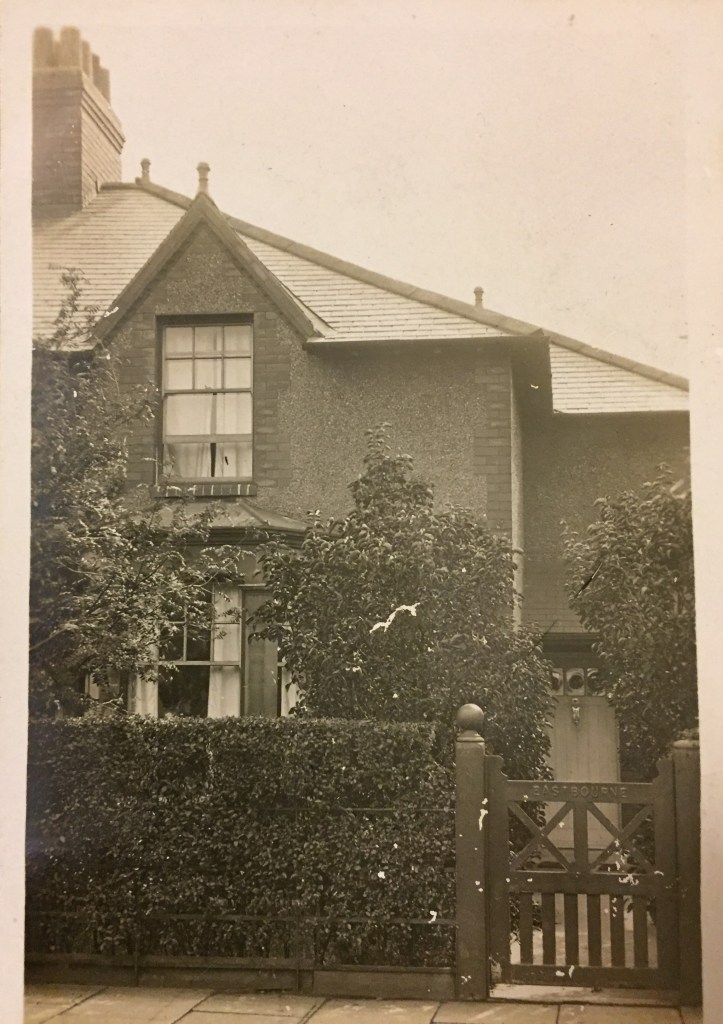
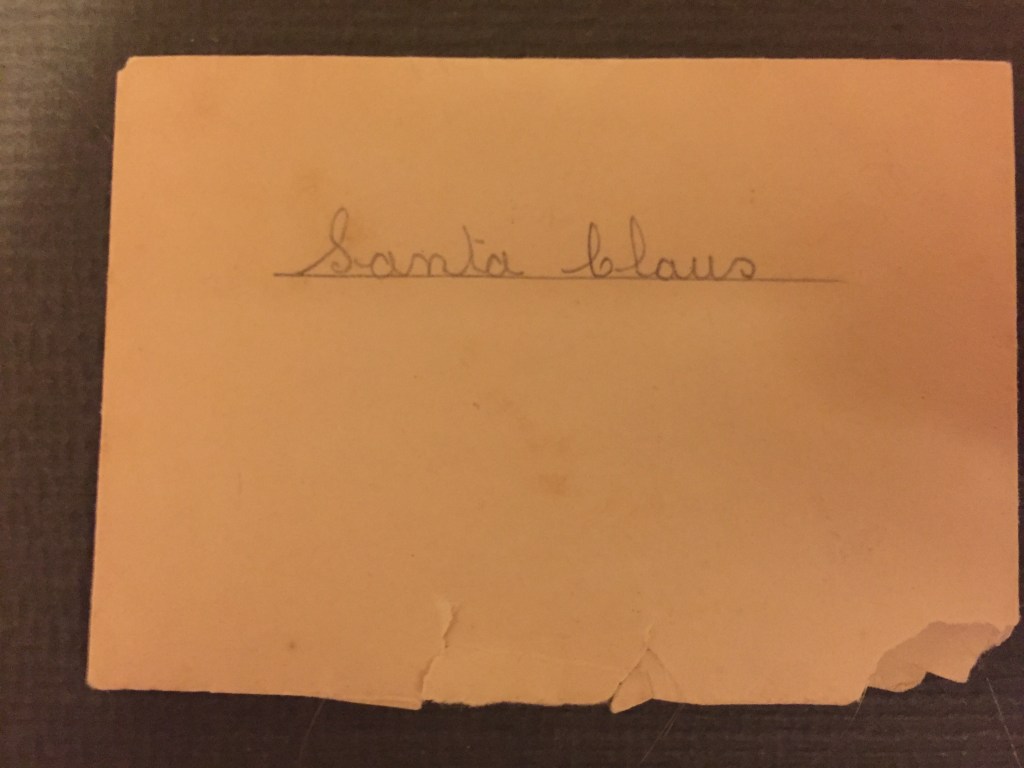

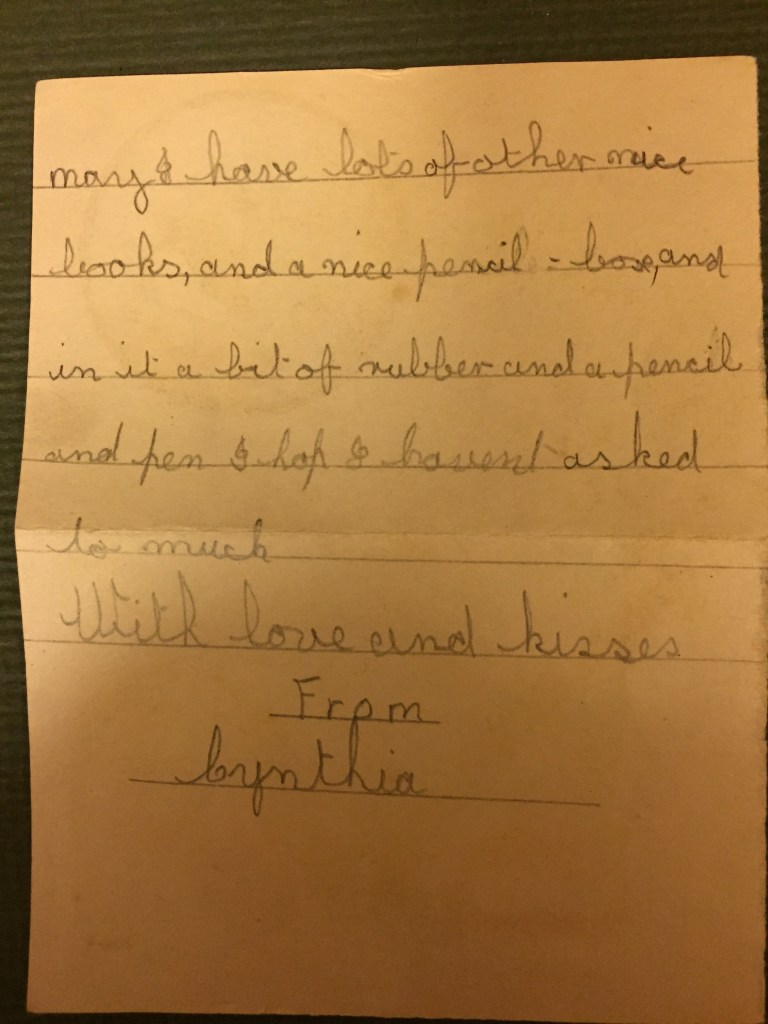

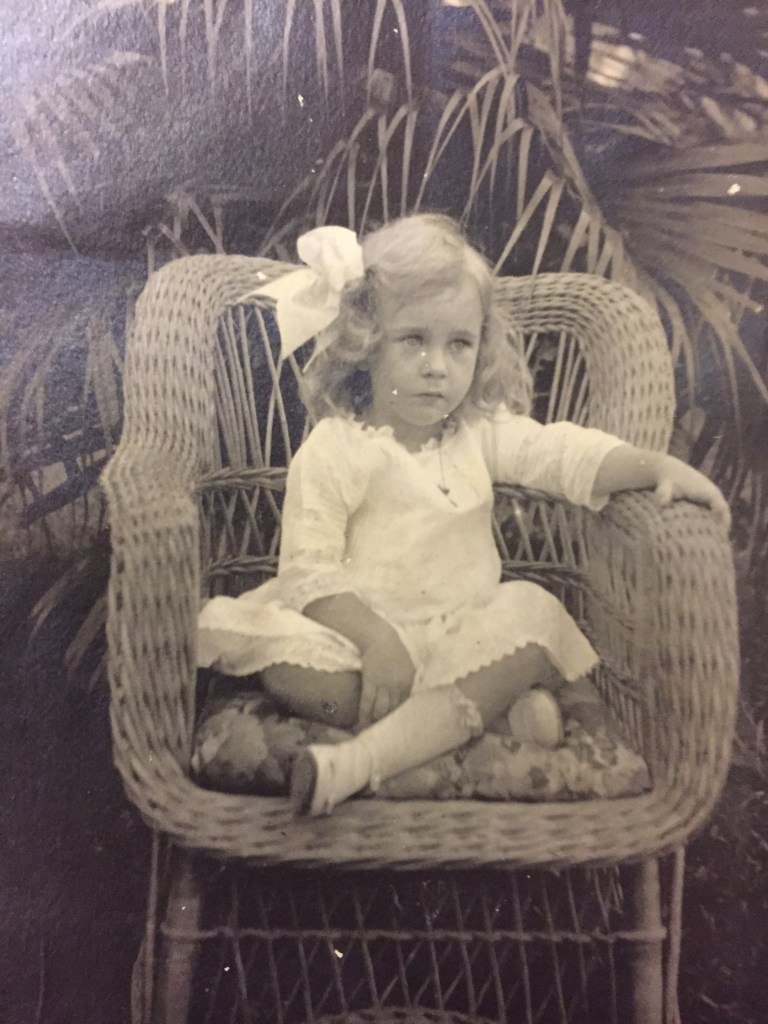
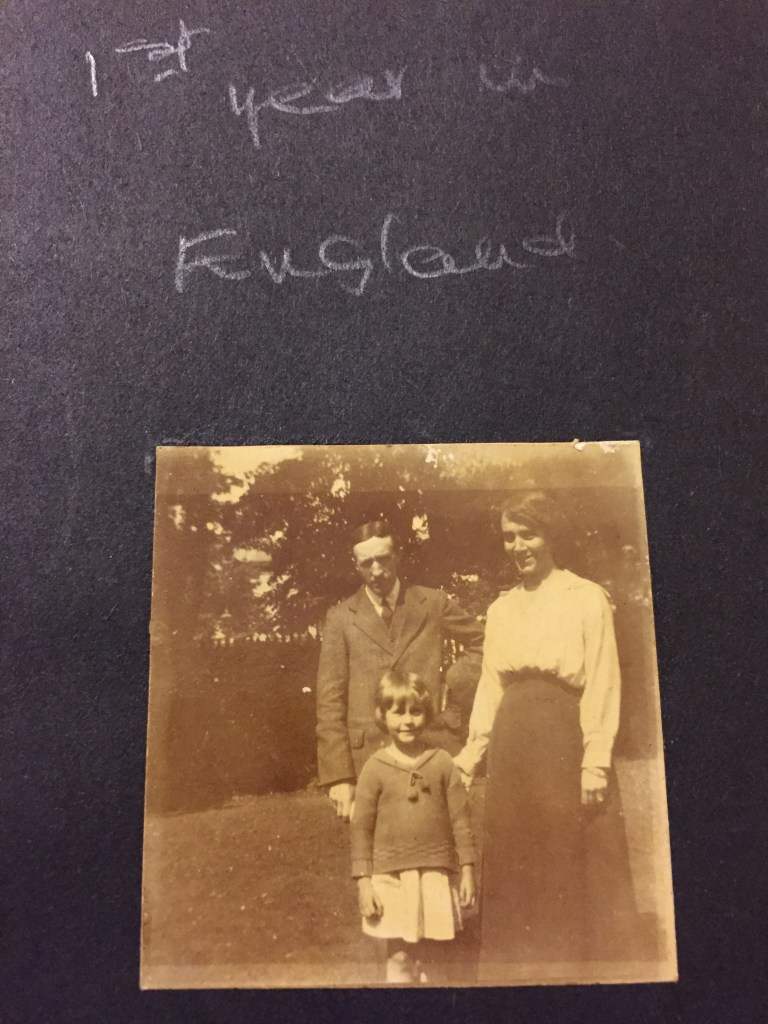
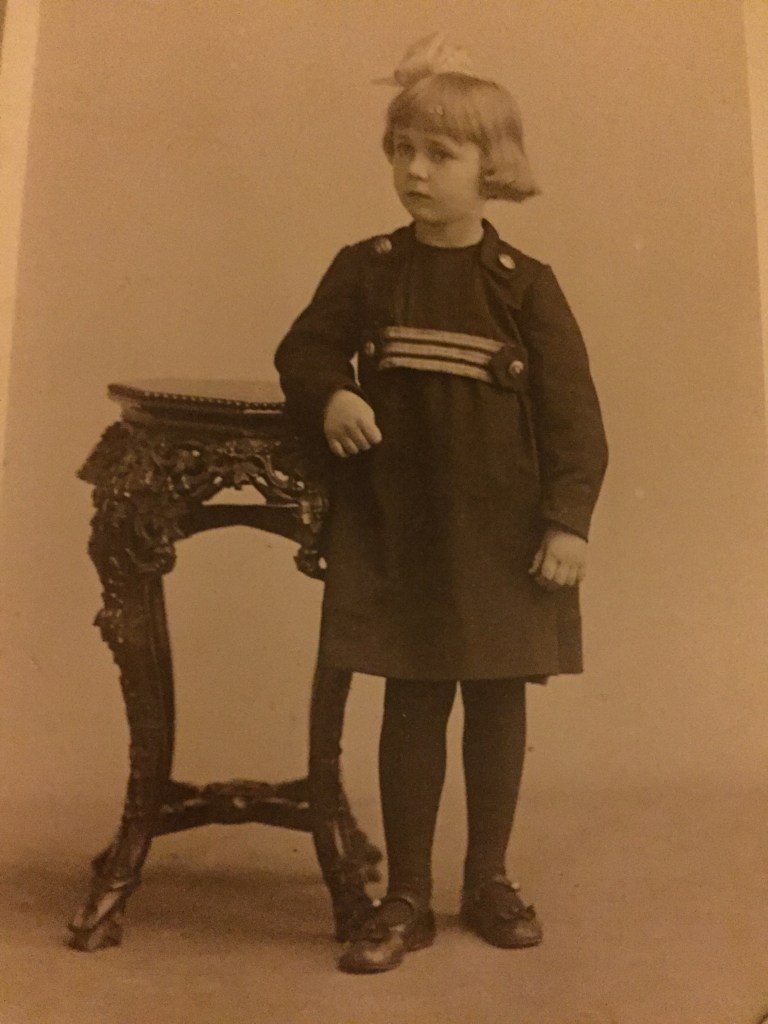


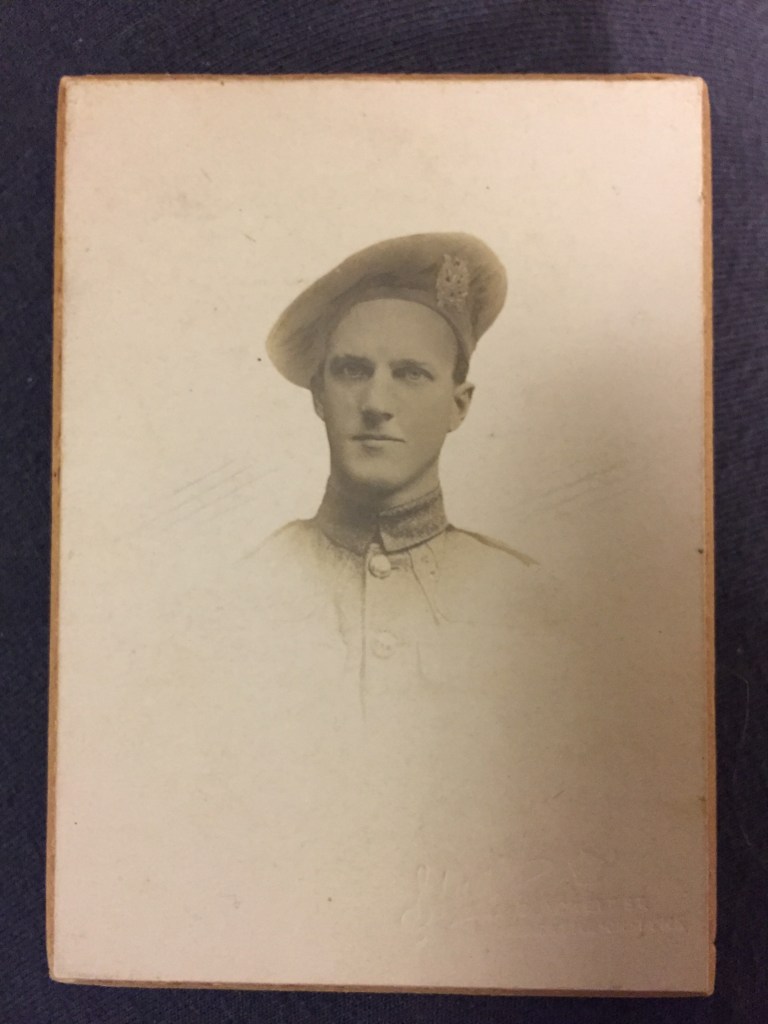
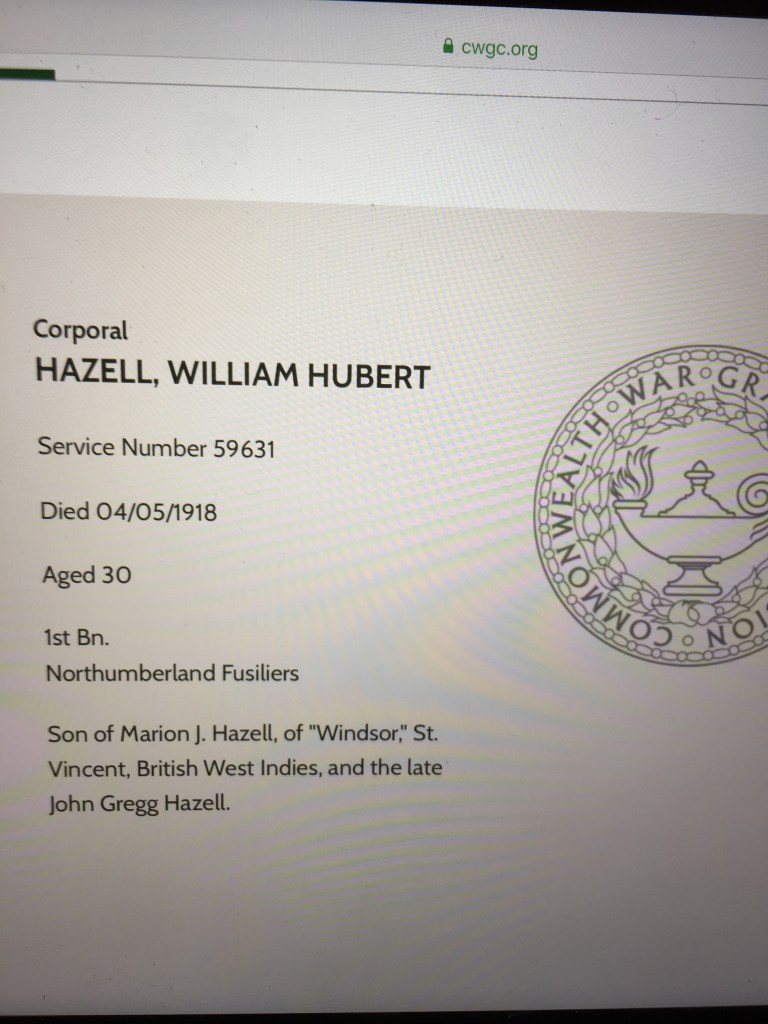
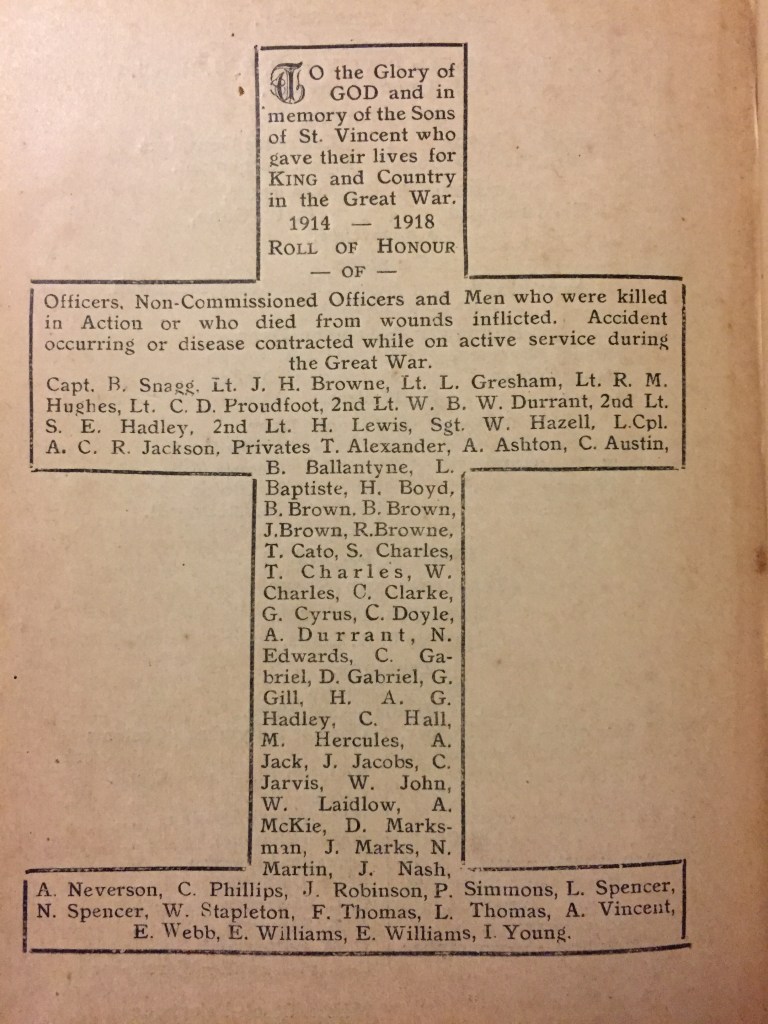


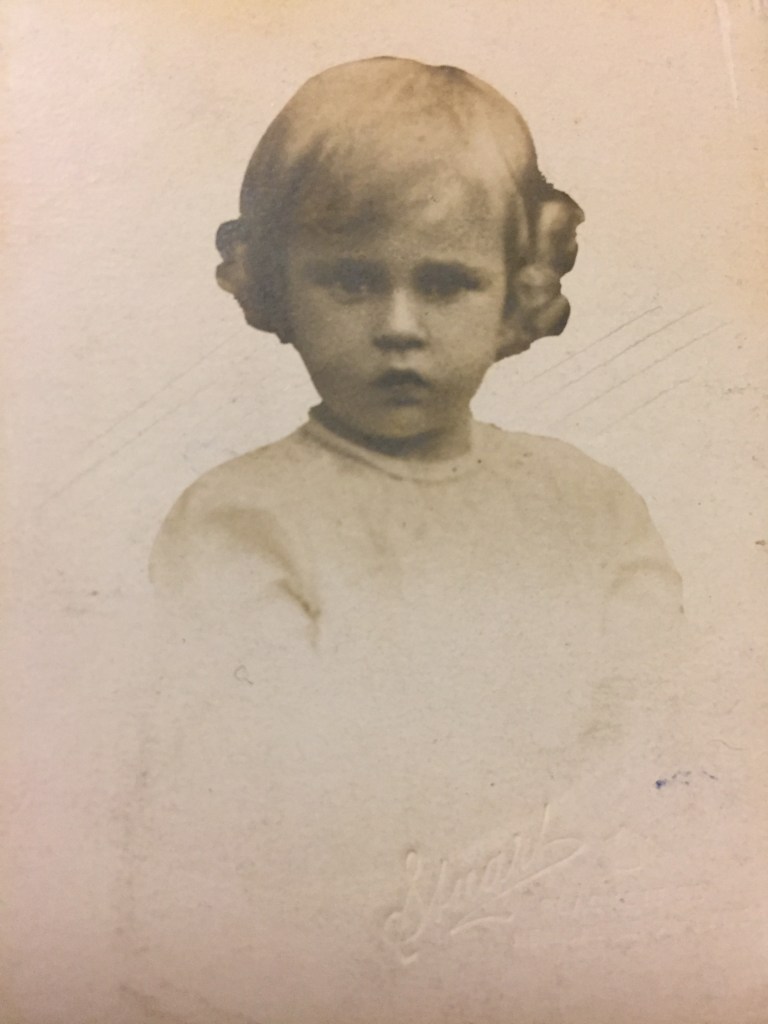
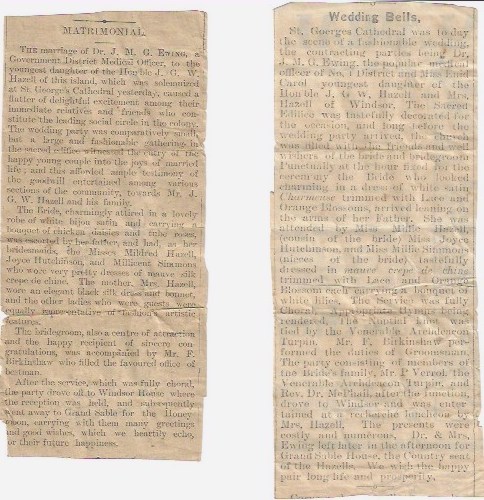
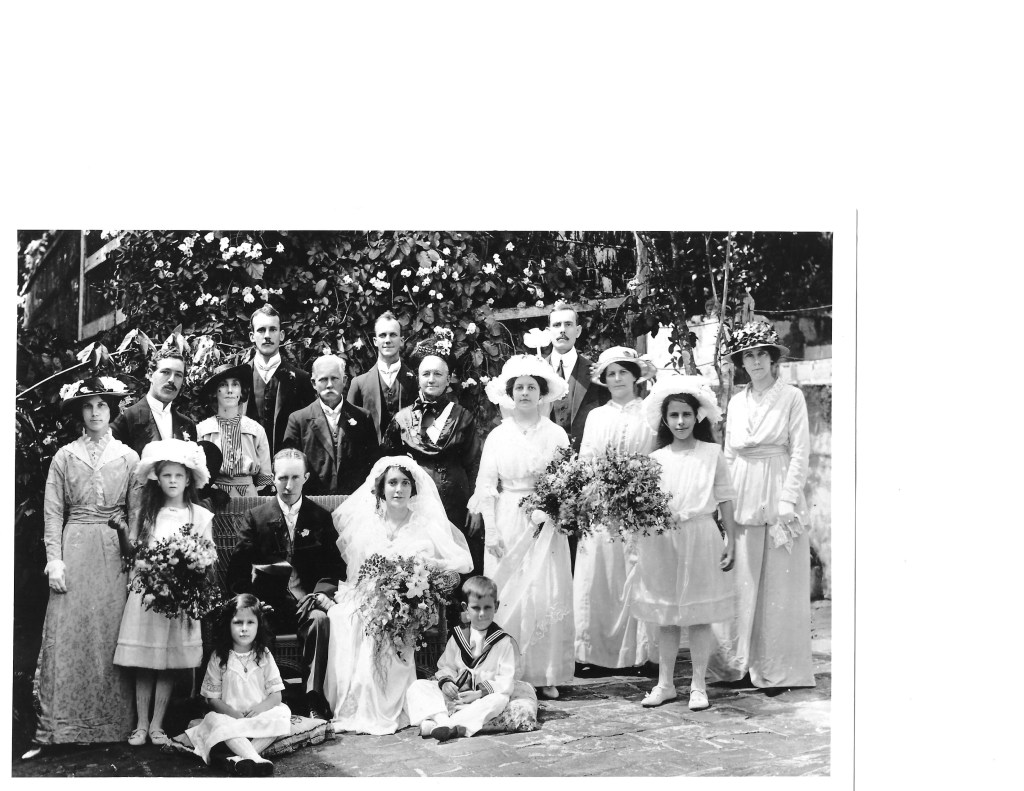

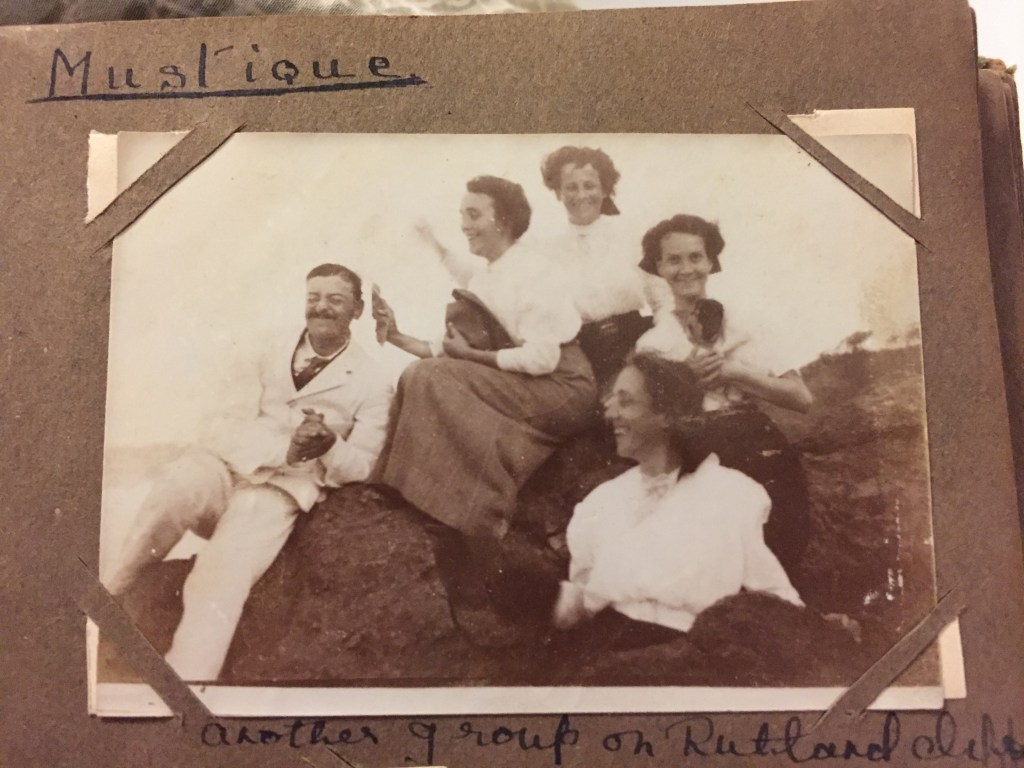


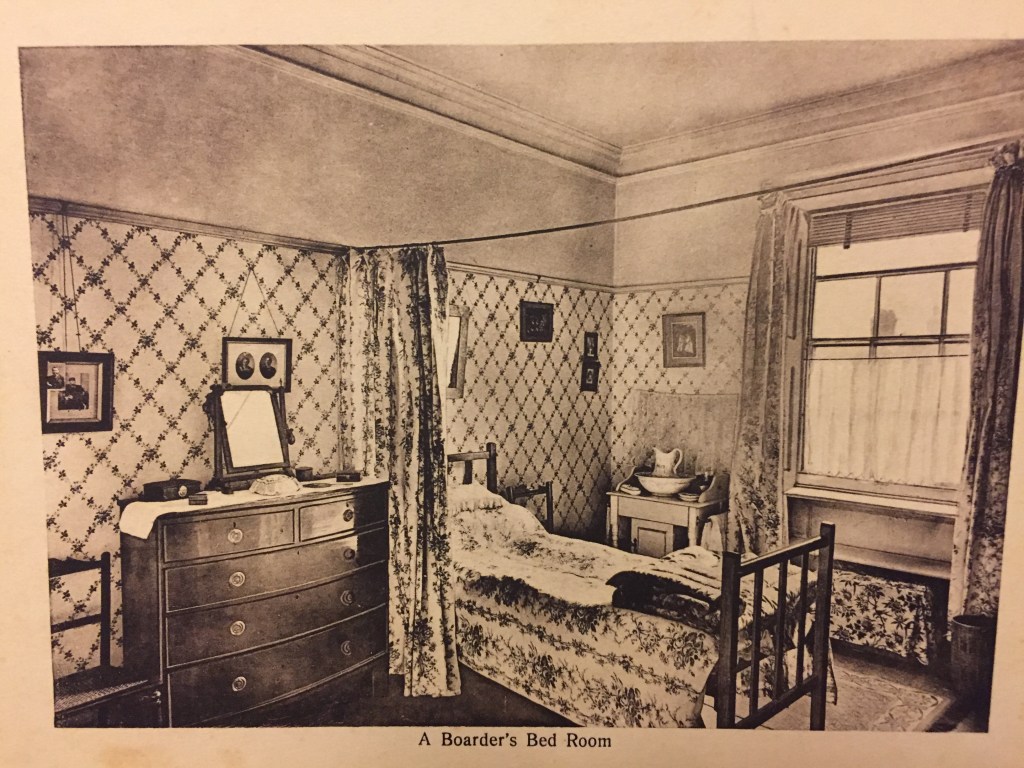
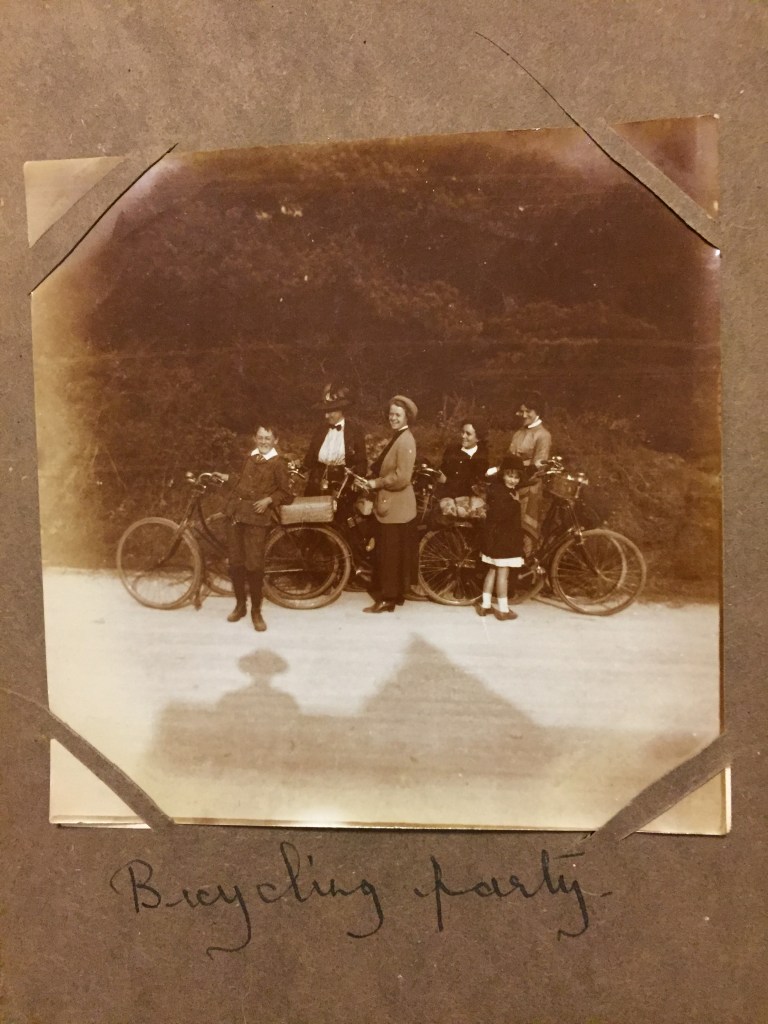

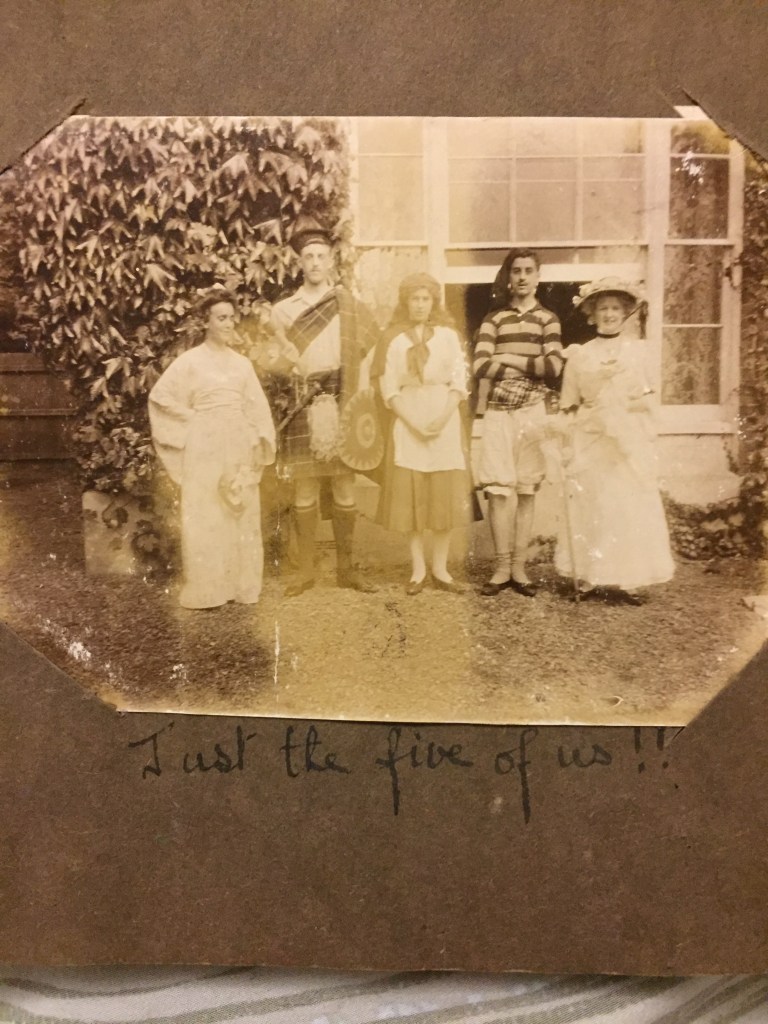


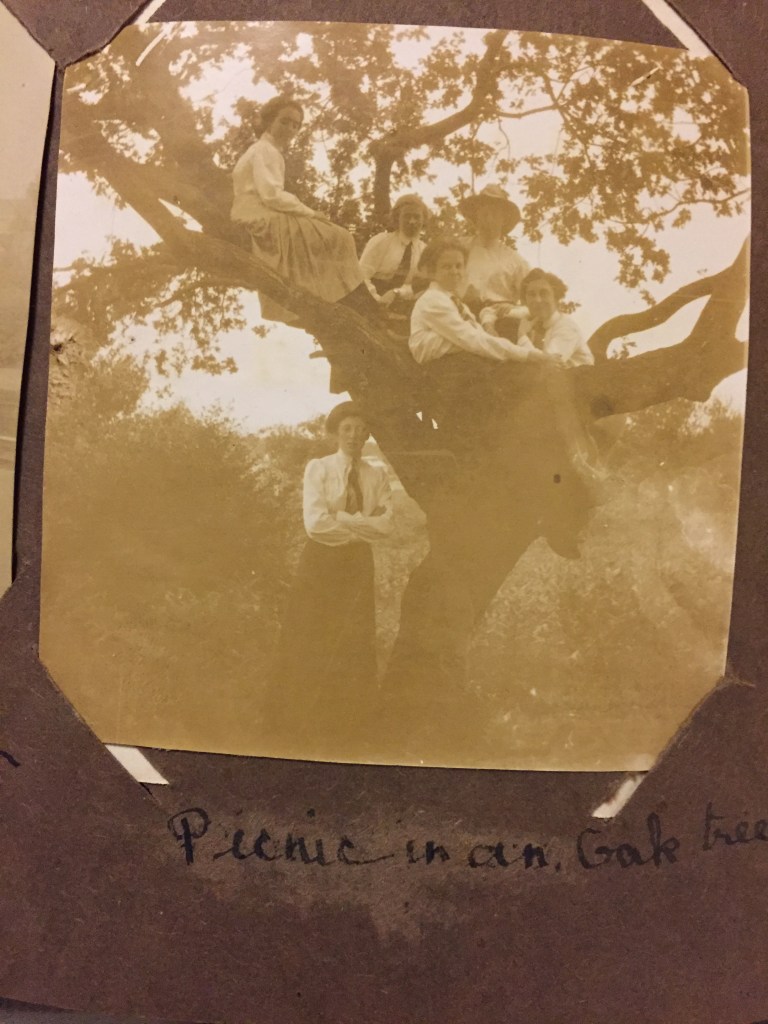

 A Family History in Letters