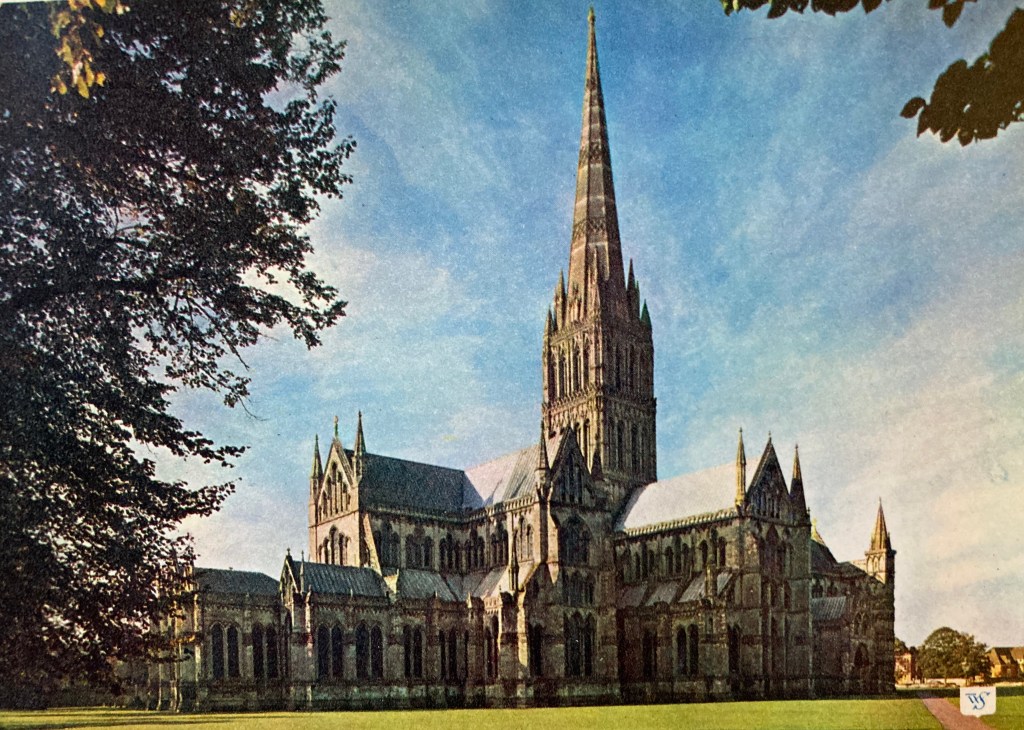
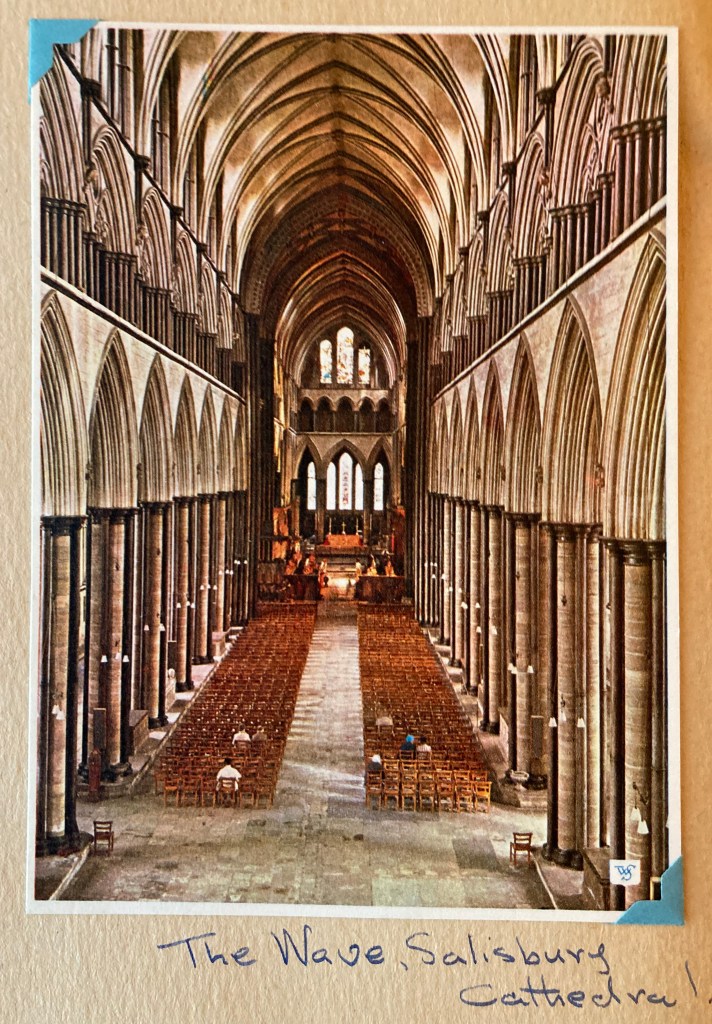
It is now Thursday 20th of July, this year of our Lord, one thousand nine hundred & sixty seven. Happy Centennial! We went on to Salisbury and saw the cathedral which is lovely and I found the tomb of a knight, the son of Fair Rosamond & Henry II, William, known as Long-Espée, Earl of Salisbury. Do you know Fair Rosamond’s story? But Queen Eleanor wasn’t nasty.
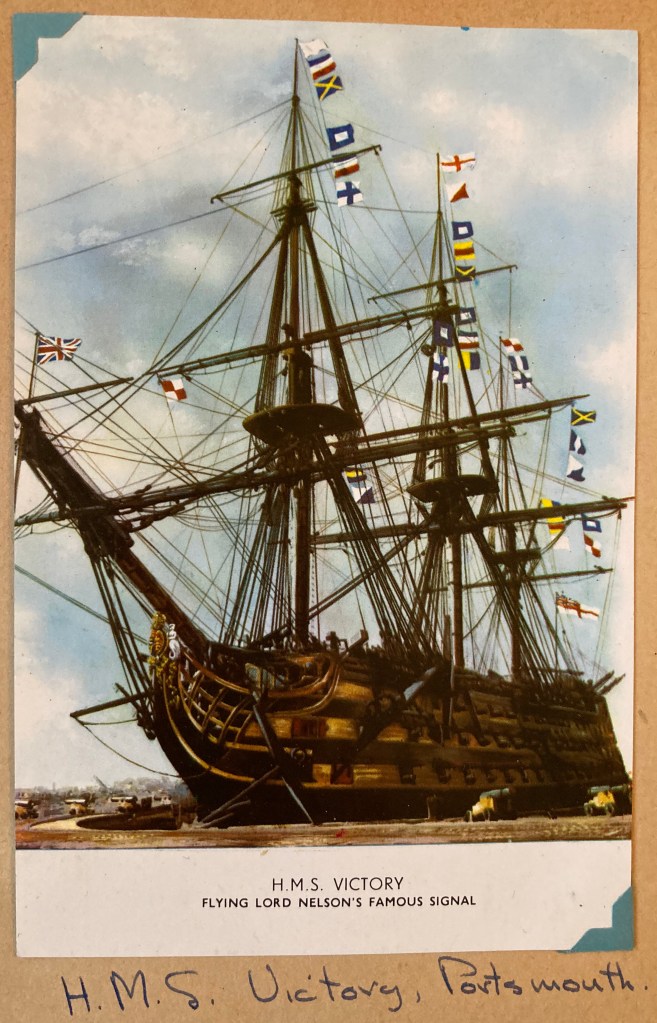
In the afternoon we went to see Nelson’s ship the Victory which Charlie loved but which I think is overrated and give me the Duke of Wellington any day. In a museum there, there were figureheads and I never was so disappointed in my life, I didn’t know figureheads were like that – crudely carved and garish and UGLY! Oh!!!
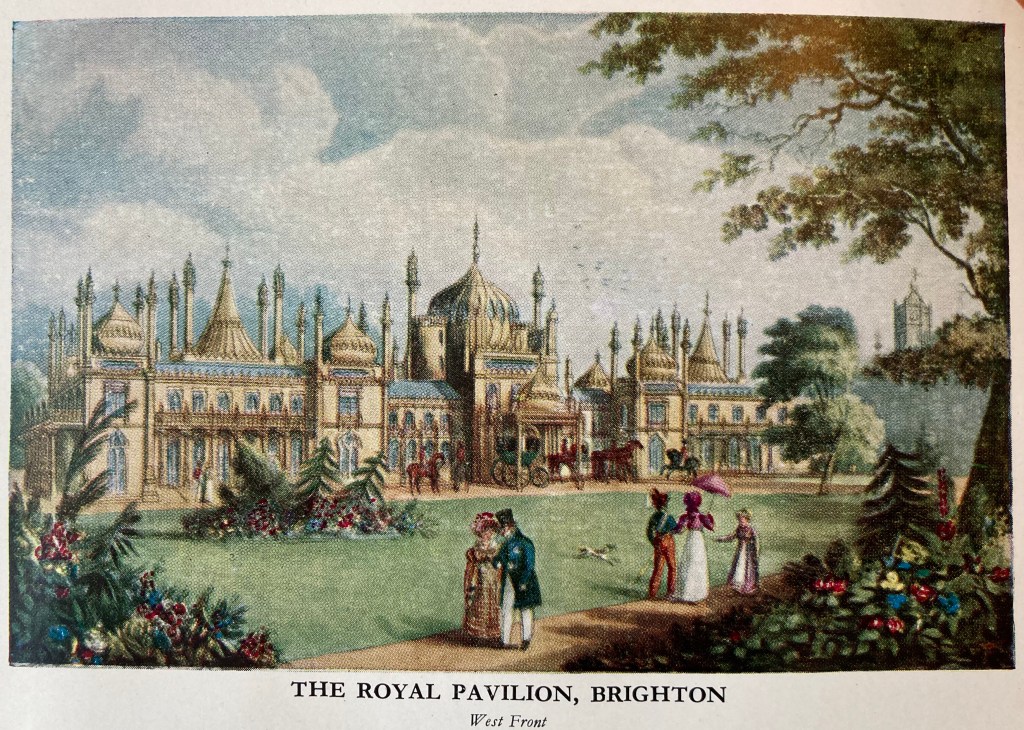
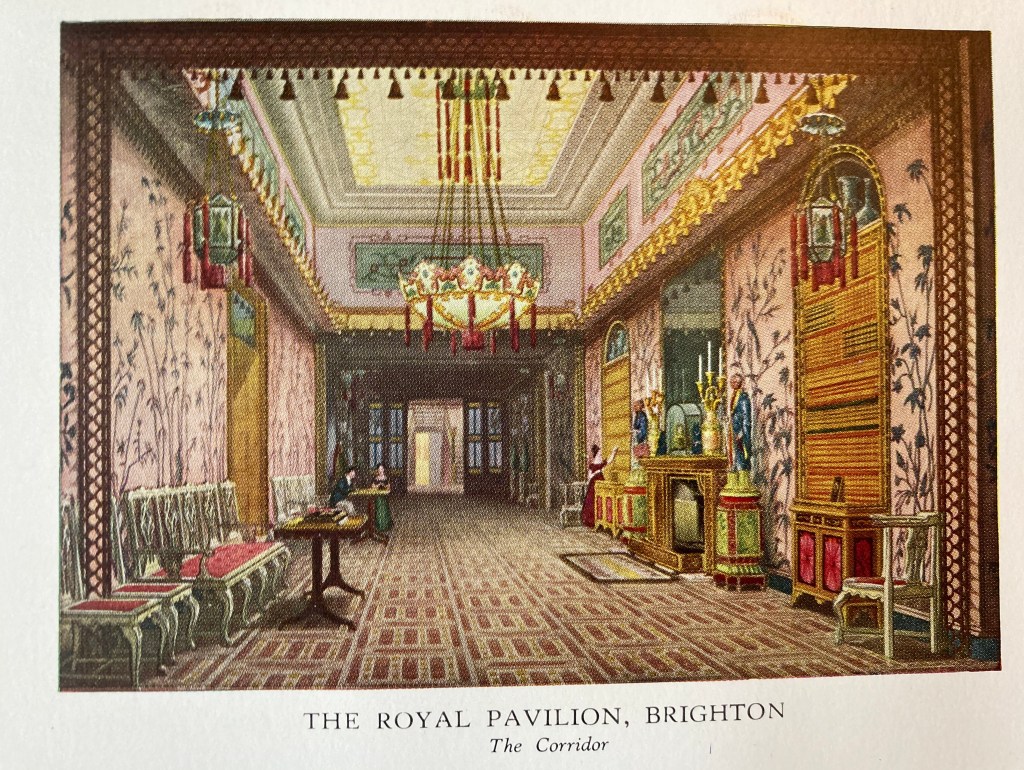
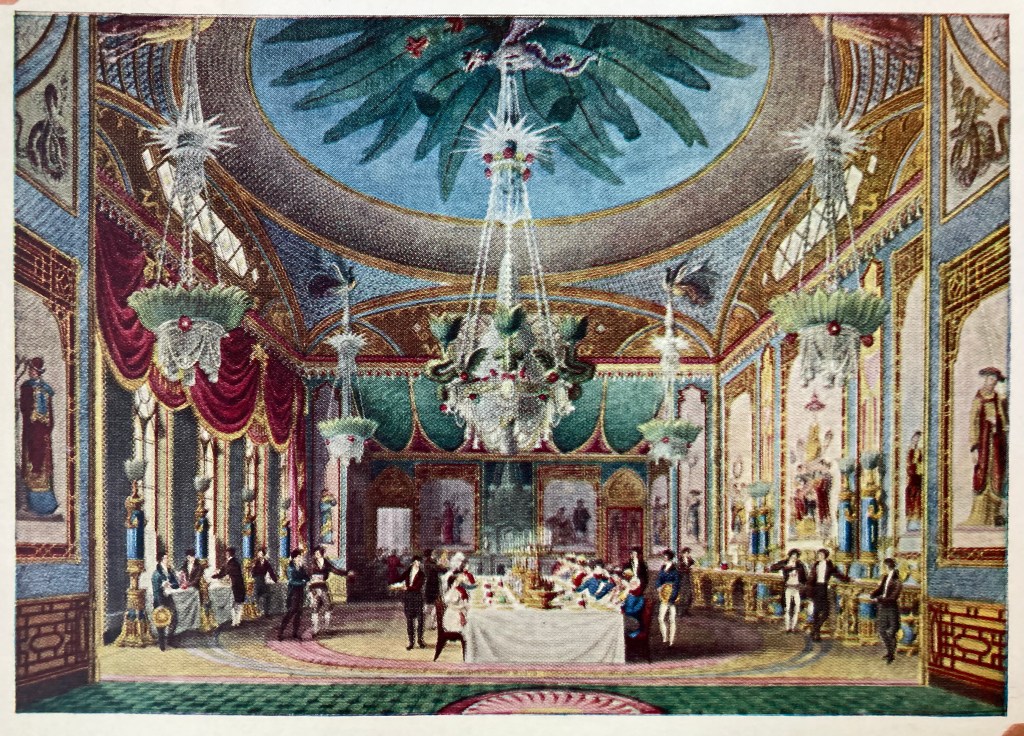
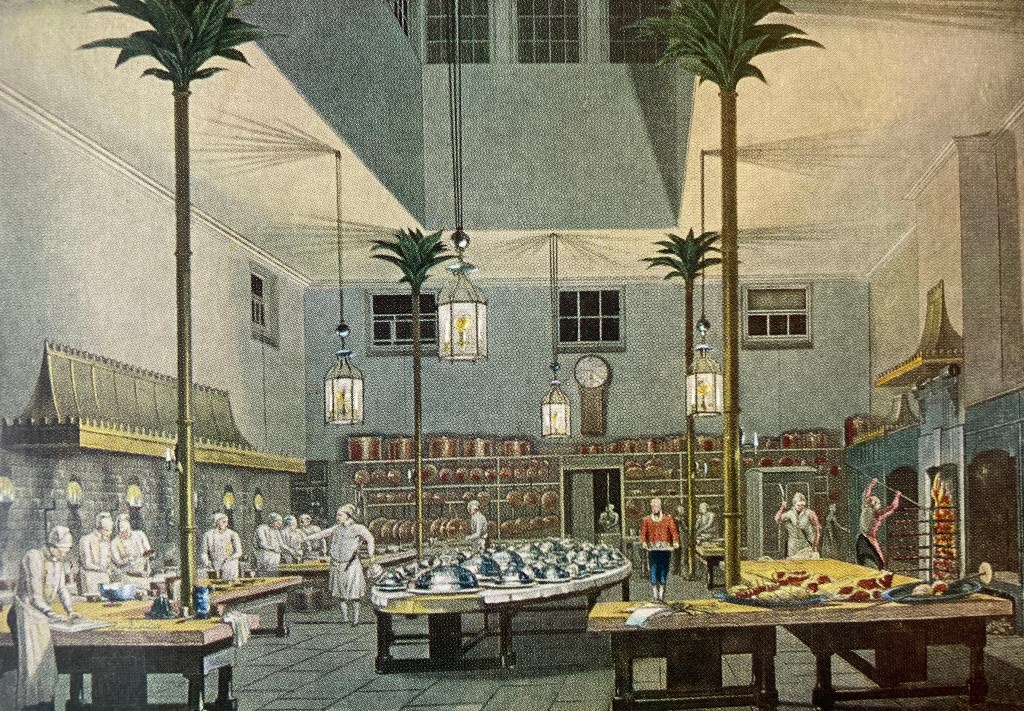
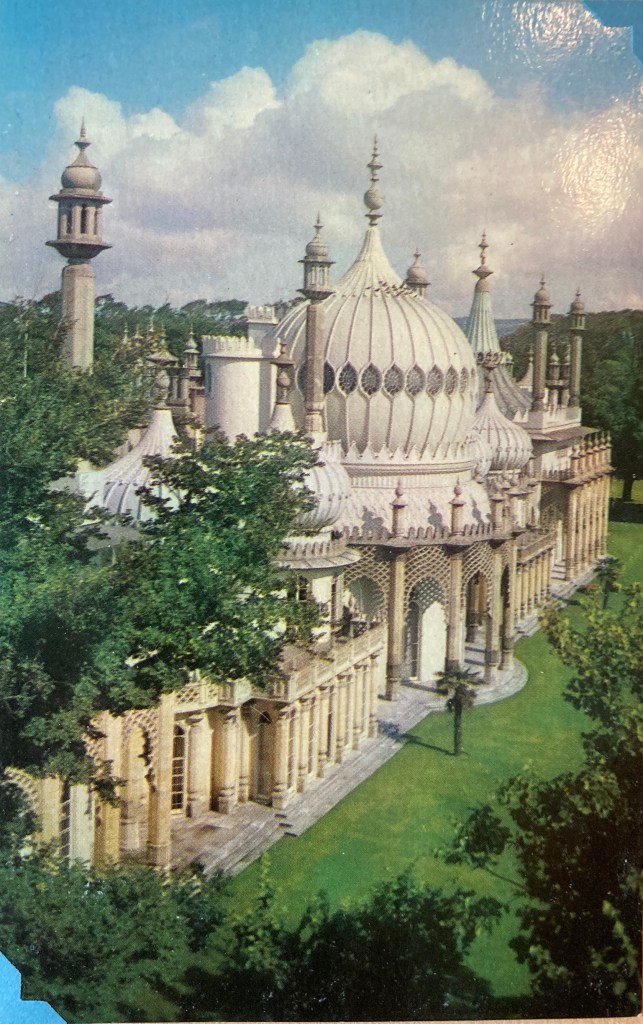
However, Brighton quite made up for it and Stonehenge because at Brighton we saw the Royal Pavilion built by the Prince Regent, later George IV as a summer place. It is perfect – marvellous – ludicrous – fantastic – overwhelming – stupendous. Impossible to describe. It is Indian outside – with a million Taj Mahal domes, and mad Chinese inside – priceless – I will send you a couple of postcards but you must send them back, they are part of my collection. Mummy & I absolutely loved it.
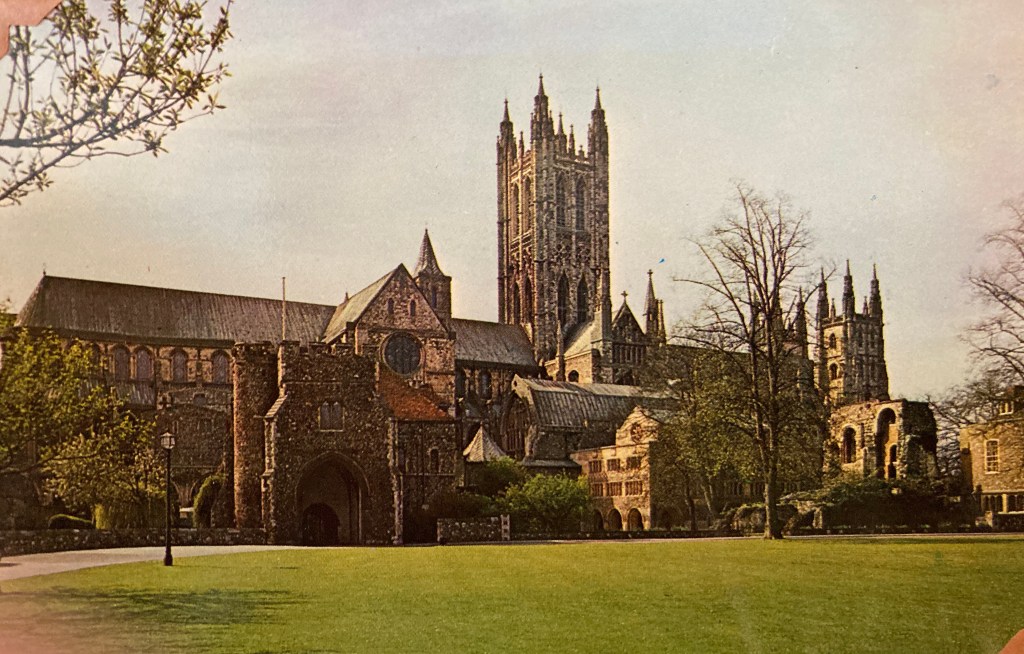
Then we went to Canterbury and saw the cathedral in the evening.
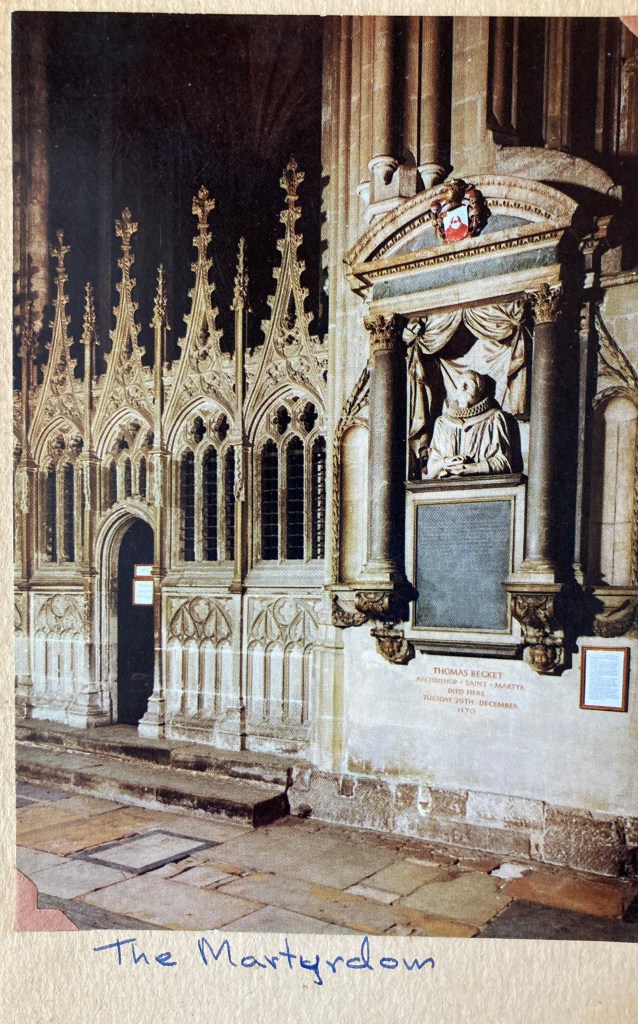
We saw the spot where Thomas à Beckett had been killed but the shrine had been destroyed by Henry VIII of cursed memory and some fool nobleman had his memorial thing with a bust of himself just above on the wall so there was just the floor & 3 square ft. of wall.
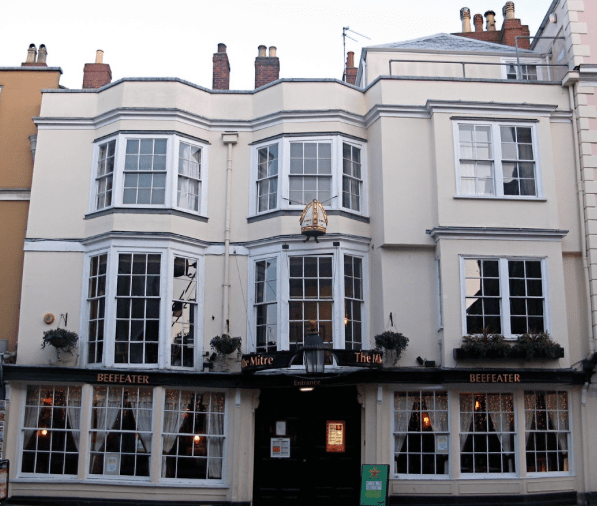
We had tea at the Mitre in Oxford and had gorgeous chocolate eclairs, I had three. We took a walk through Oxford and bought some books but you can’t see much if you don’t know anybody. We spent the night at ‘The Hare and Hounds’ a very nice place, would have liked to stay longer, and went on to Bath. We saw the terraces of Regency houses and went into the Roman Baths. We had lunch in the Pump Room and I got a sweet little replica of a Roman pot 3 inches high & fat. It is silvery with red dots in a pattern, little bumps I mean, and the inside is brown glaze. Sweet. Charlie got a little replica of a silver penny like “Render unto Caesar that which is Caesar’s… and that will be handy in Sunday School class.
We went onto Wells and met Ruth who is nice & Richard and Michael and the dog – all three very nice & friendly and Dr. Stainthorpe whom I am sorry for. Mummy & I think it was a great mistake for him to come and live with them, it is not a happy arrangement. Ruth & the boy are irritated by him and show it (rather like you & me & Mummy in a modified way to our shame, but we love you and I didn’t see any sign of them!) and poor ‘Grandpa’ has a hard time of it, with nothing to do & no friends. You should invite him out to St Vincent for a long holiday!
Ruth & the boy showed us the cathedral (I think we would have seen more, and taken in more on our own) (ungrateful me) and it is lovely – the squarish front with the figures of the saints & kings and queens reflected in the sunlight. However, they showed us Vicars Hall, a 14th century dining hall set with pewter plates etc. which we couldn’t have ordinarily seen. From the window we had a beautiful view of the oldest Street, intact, in Europe – Vicar’s Close. I hope you have seen it, it was lovely with walled gardens in the sunset but I can’t describe it. At tea Peter Haynes came in and I liked him very much but he just shook hands & kissed (they do it an awful lot in England) us (Mummy & me that is) and then dashed upstairs & changed into clerical garb and dashed off after shaking hands through the window. He had a meeting, he seemed awfully busy.
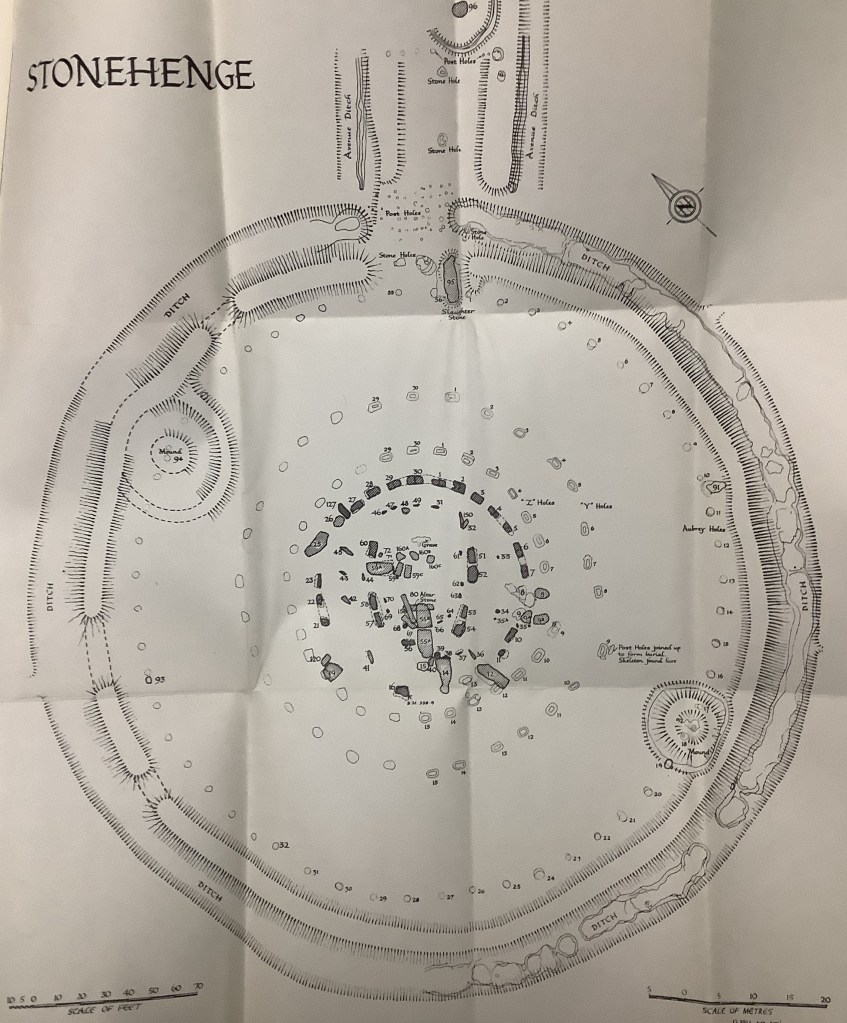
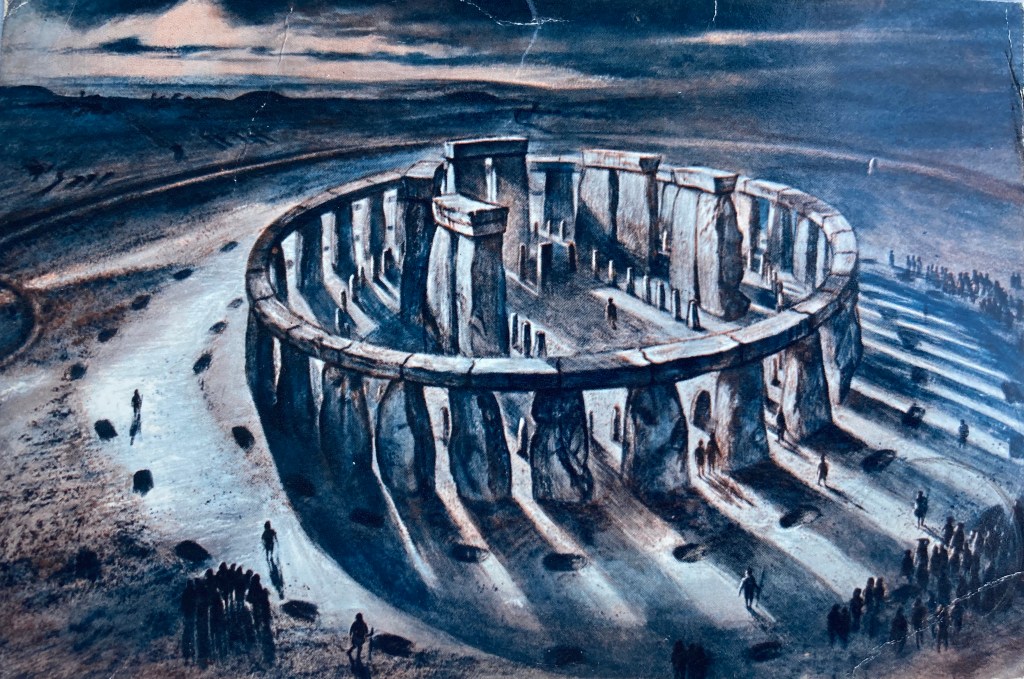
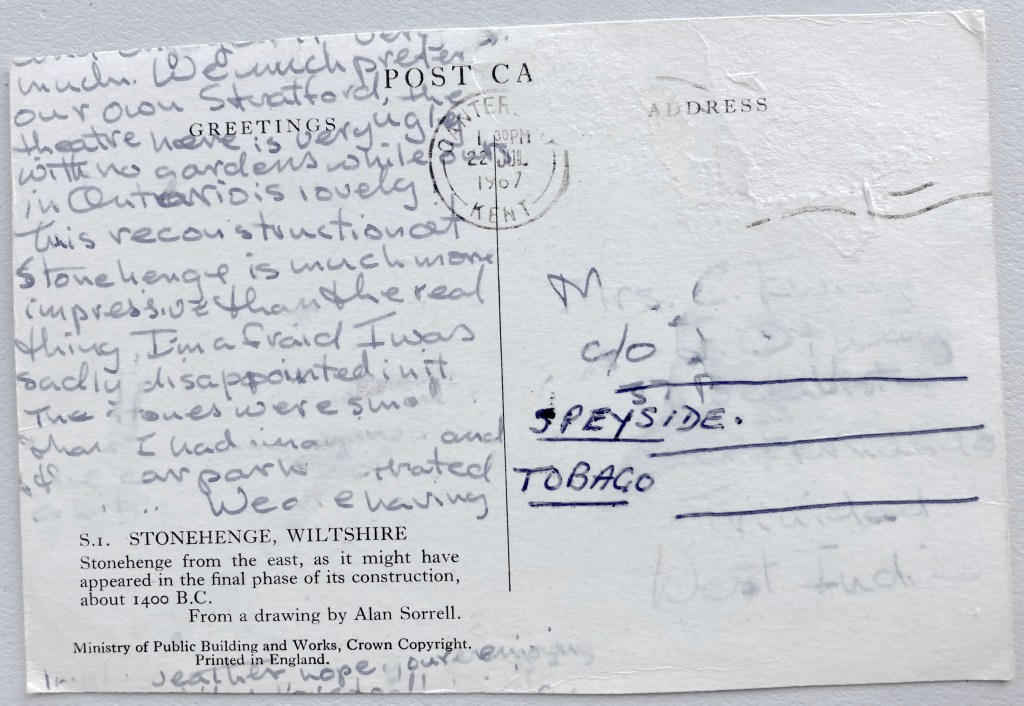
We then left & went off to Amesbury – not very nice – lots of traffic past the hotel. On the way we came upon Stonehenge. It just rose up out of the ground before us. However I was disappointed in it. I sent you a reconstruction version on a p.c. I think but actually it’s very untidy, all lying about, and since the historians have discarded the theory that the Druids built it, they don’t have a theory – it’s just there- something to do with religion and before the Druids but what, they don’t know – unsatisfactory. It is nice to think we are on our own now – meals in people’s houses tried me but I tried to be good.
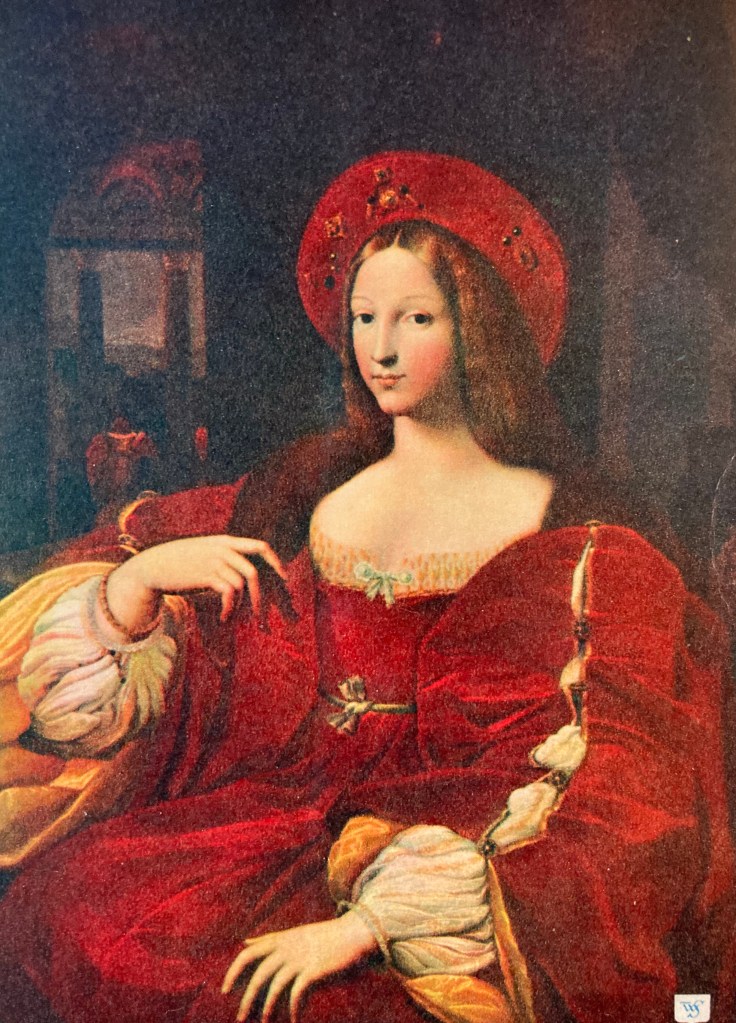
Joanna of Naples. Sent to Linda’s friend Joanne because of her name!
Trip Postcards
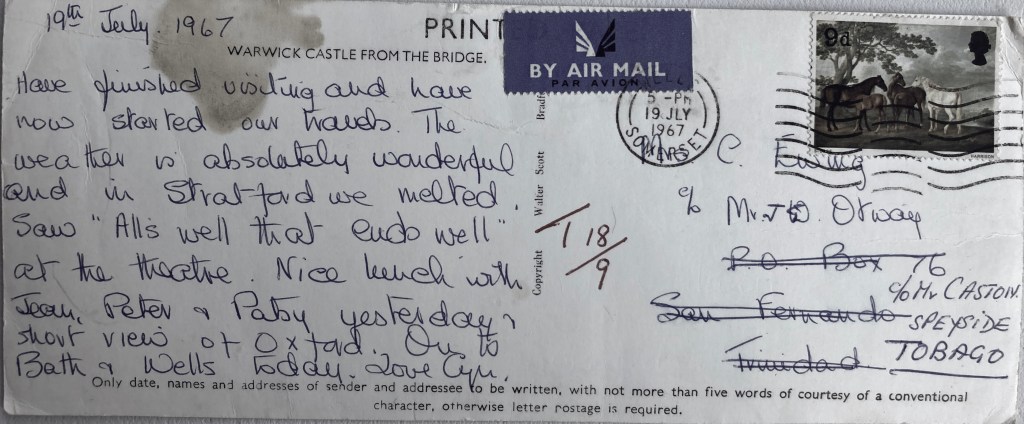
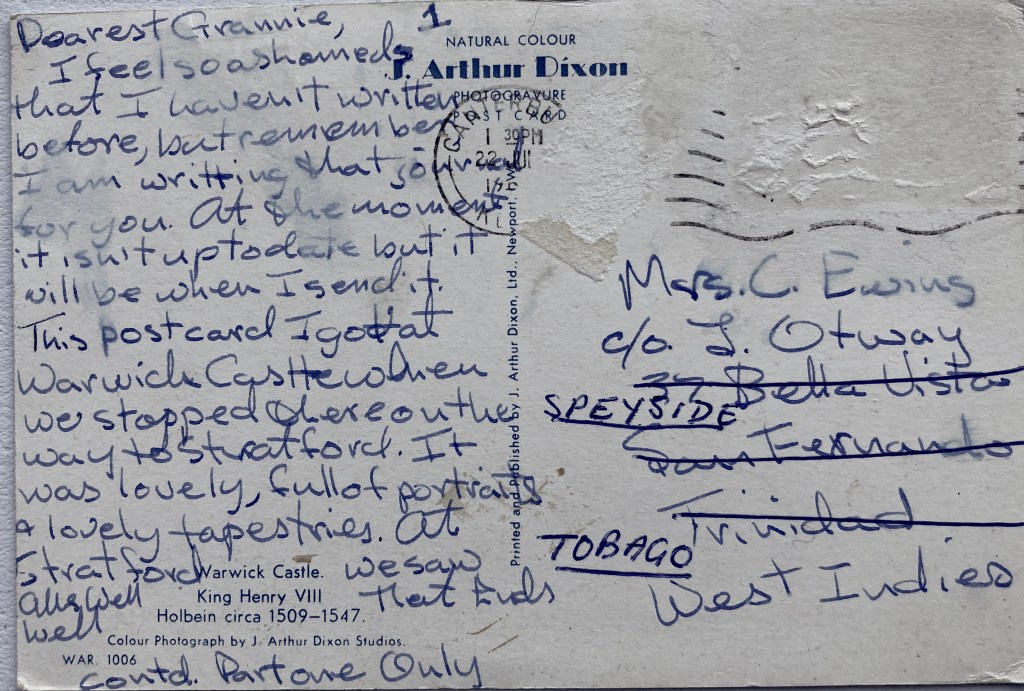
These are postcards from Cyn and Linda from the holiday in England, sent to Carol a week after Cyn’s letter to her mother. Carol seems to have been on holiday herself, visiting the Otway relatives in Trinidad and Tobago, and the cards were forwarded, with Linda’s second one trimmed so the top and bottom of the message is missing, and the stamps removed, which may account for the water damage that erased a few words.
Long black-and-white postcard showing Warwick Castle from the Bridge. Addressed to Mrs C. Ewing. 19th July 1967 Have finished visiting and have now started our travels. The weather is absolutely wonderful and in Stratford we melted. Saw “All’s well that ends well” at the theatre. Nice lunch with Jean, Peter and Patsy yesterday & short view of Oxford. On to Bath and Wells today. Love Cyn.
Colour postcard of Holbien’s Henry VIII Portrait. Addressed to Mrs. C. Ewing.
1. Dearest Grannie, I feel so ashamed that I haven’t written before, but remember I am writing that journal for you. At the moment it isn’t up-to-date but it will be when I send it. This postcard I got at Warwick Castle when we stopped there on the way to Stratford. It was lovely, full of portraits & lovely tapestries. At Stratford we saw All’s Well that Ends Well. Cont’d Part one Only
Colour postcard showing drawing of a re-creation of Stonehenge. Address washed out.
Presumably this one started with a #2 since it seems to have continued the discussion of Stratford, but the first and last lines are missing, and other words washed out. … much. We much prefer our own Stratford, the theatre here is very ugly with no gardens while ours in Ontario is lovely. This reconstruction of Stonehenge is much more impressive than the real thing, I’m afraid. I was sadly disappointed in it. The stones were smaller than I had imagined and the car park …. … . We are having lovely weather, hope you are enjoying…
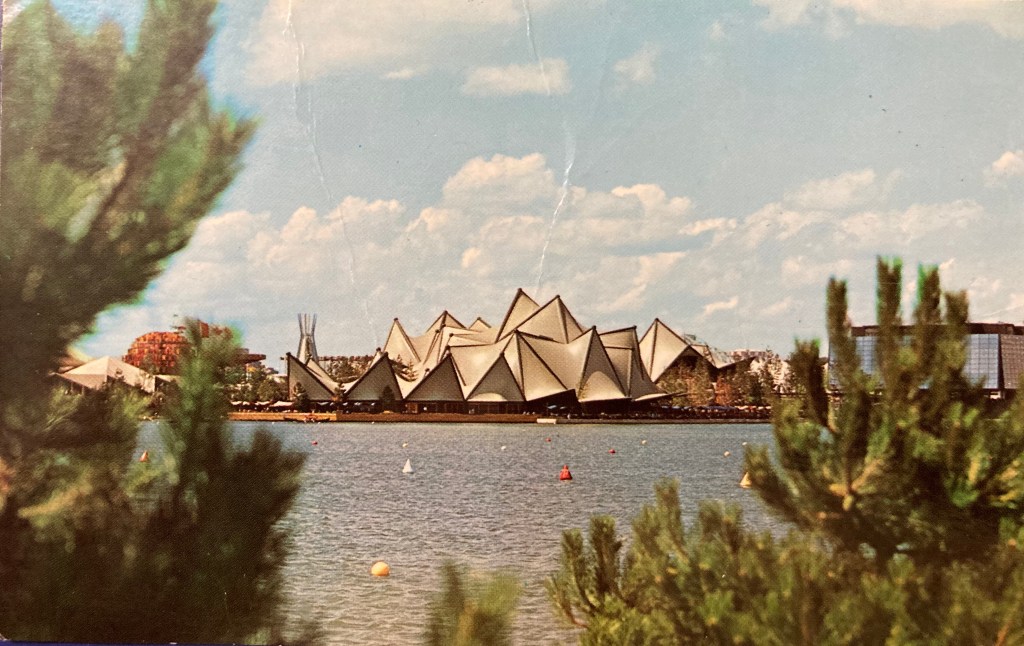
The thing about Expo was the stunning architecture. Now all that I remember is Buckminster Fuller’s geodesic dome that was the United States’ Pavilion (that I’m pretty sure we did not go in, since we skipped anything with a long lineup) because of its connection with Harry Kroto’s Carbon 60 Nobel Prize, but it was not the only flashy, unusual, or frankly weird building- they were all like that, trying hard and amazing. Inside they were educational marketing pitches for their country/province/state/nation/organization/or theme: 90 in all, and they had merchandise too of course, restaurants, and shows leaning heavily on exciting technology.
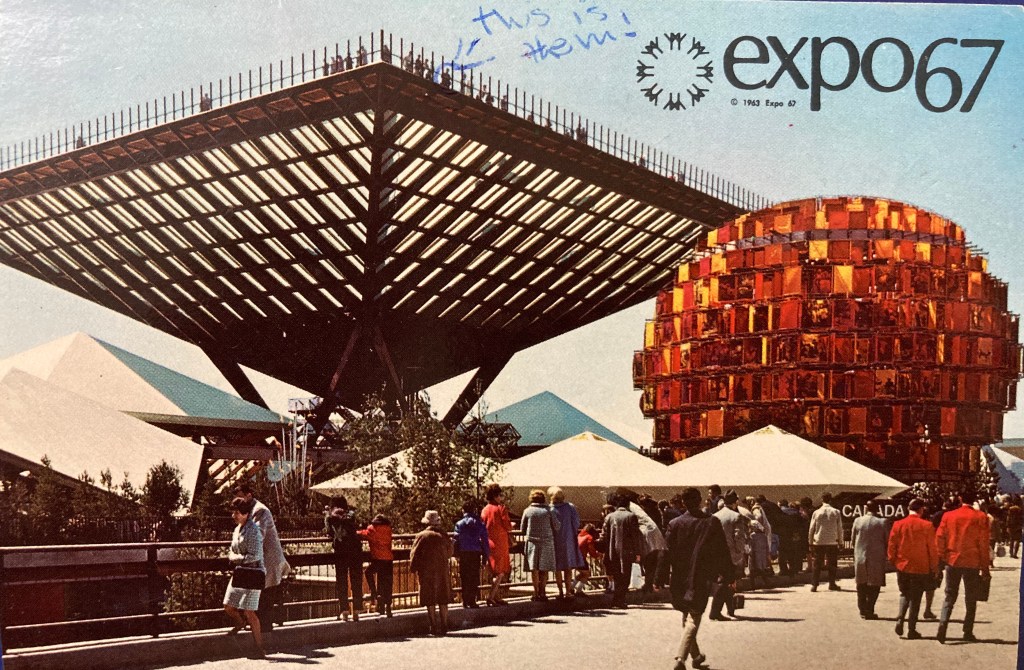
Now that I’ve read these letters, I know that Cyn must have remembered her visit to the New York World’s Fair in 1939 but I certainly don’t remember her making any comparisons at the time- I was too busy buying a real koala bear fur postcard- yes, repulsive, but very soft to stroke. I never sent that postcard, but Grannie saved a couple showing the Canadian Pavilion and the Ontario one. The front of the Expo 67 one has an arrow pointing to the minute people around the edge of the inverted pyramid and saying: This is them!
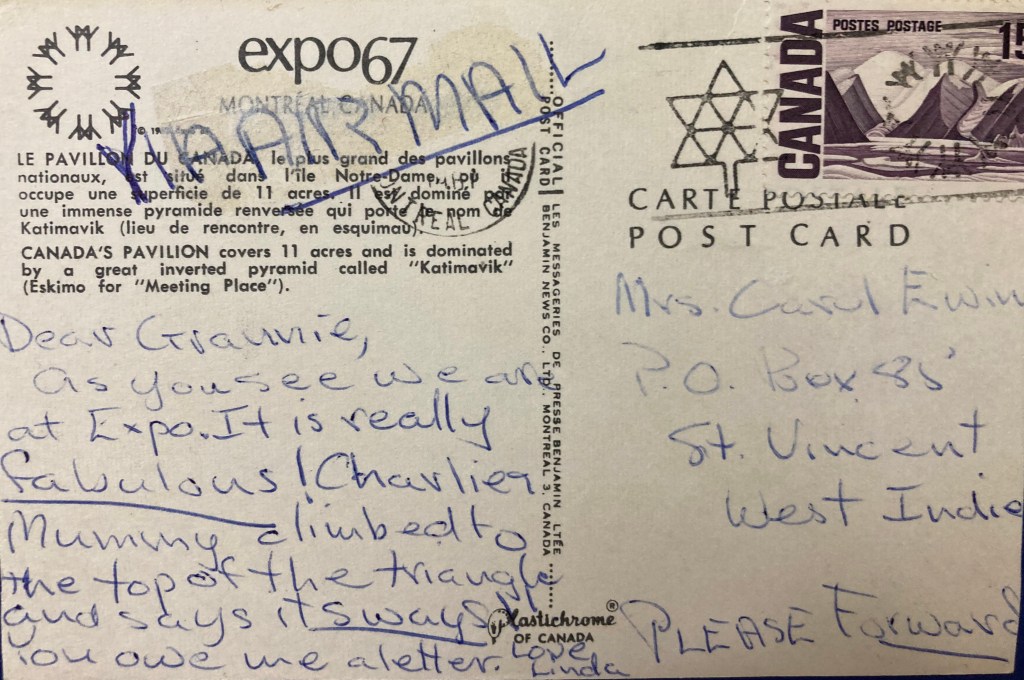
On the other side it is addressed to Mrs Carol Ewing and the stamp is franked with a (dateless) Expo logo showing it was mailed on site, and it reads:
Dear Grannie, As you see we are at Expo. It is really fabulous! Charlie and Mummy climbed to the top of the triangle and says it sways! You owe me a letter. Love Linda.
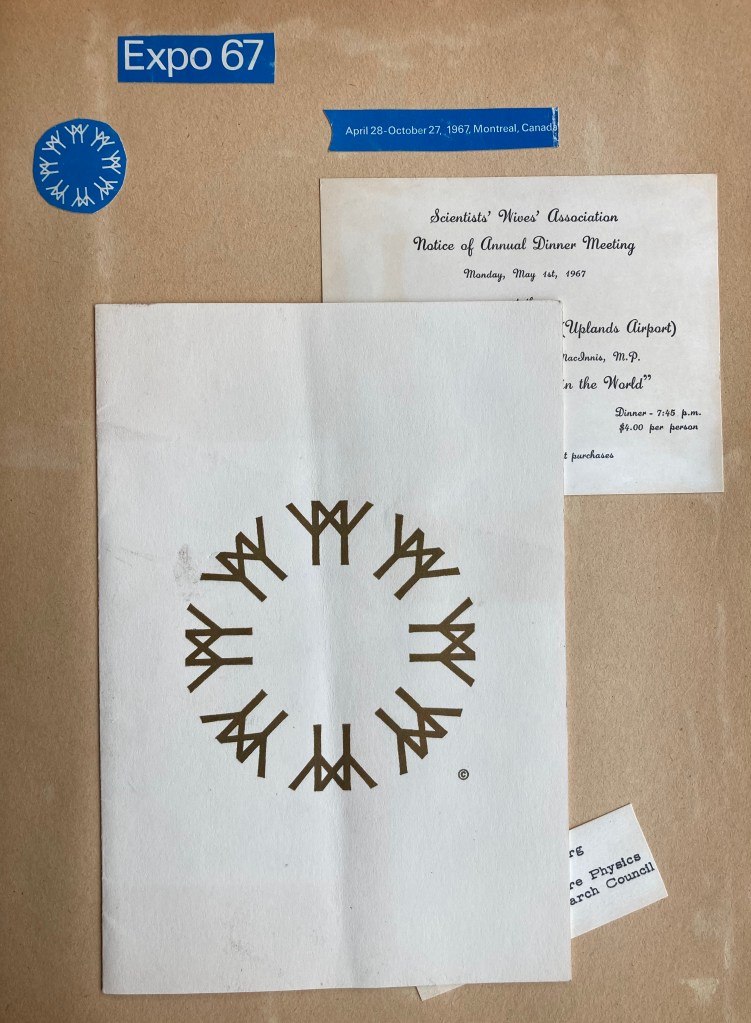
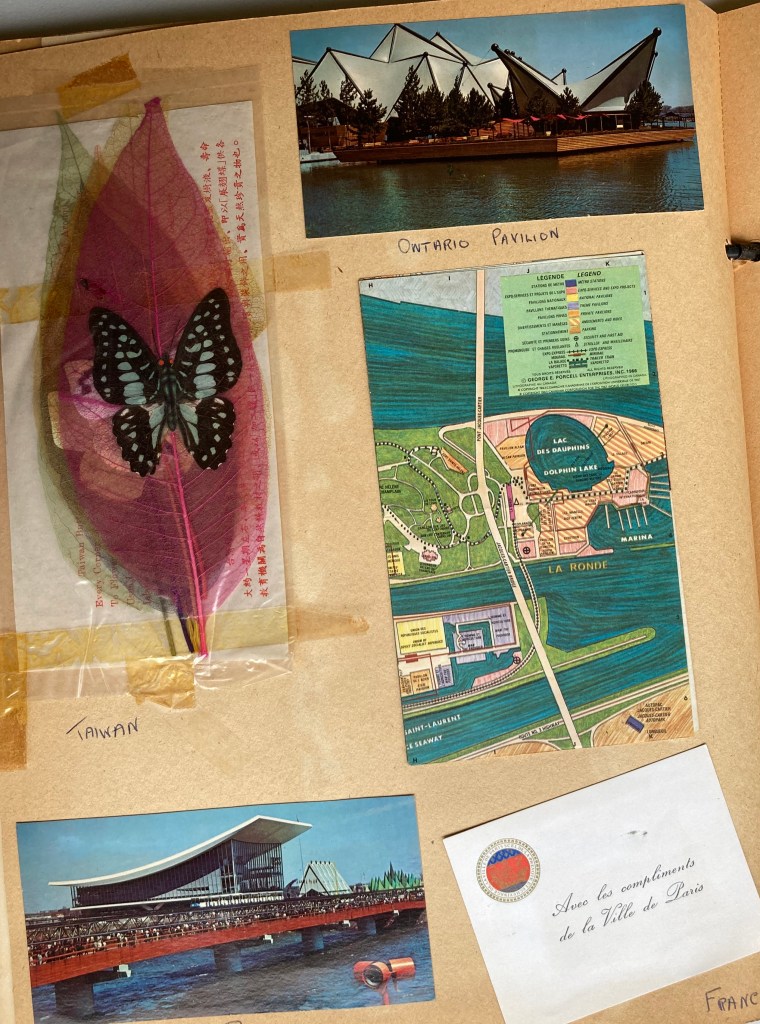
Cyn’s scrapbook shows the Ontario Pavilion, the most visited (but perhaps not by us, no swag) U.S.S.R. Pavilion at the bottom, and mementos from the France and Taiwanese pavilions, which we obviously went to.
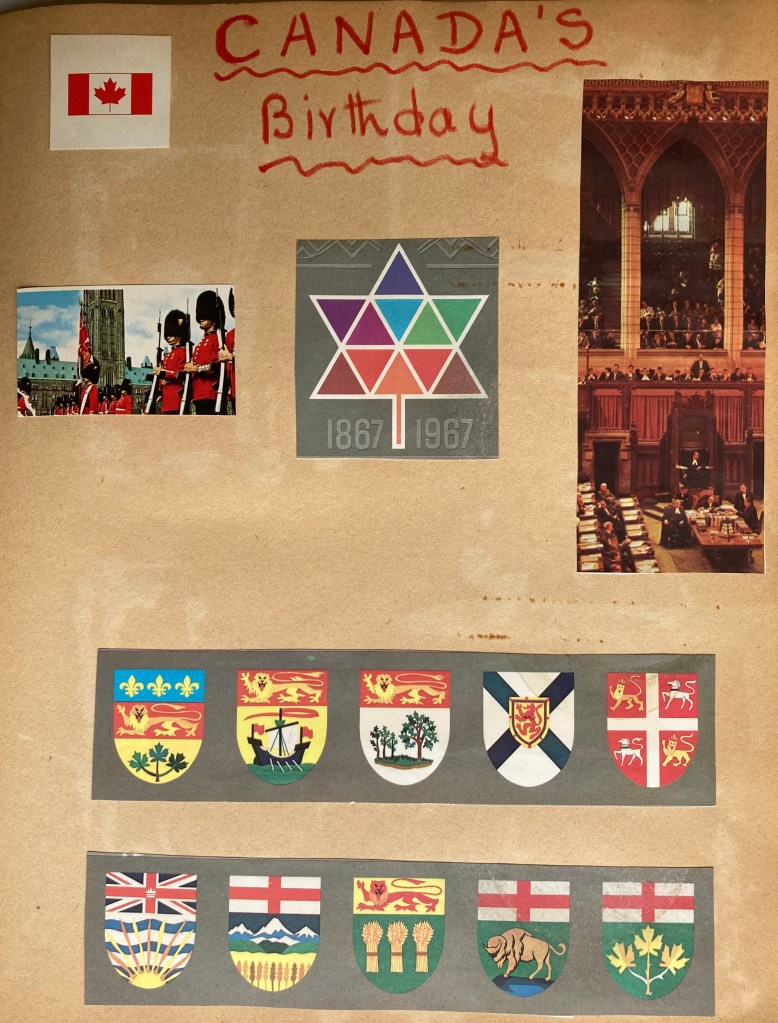
It seems strange that we only spent one day there, when Canadians from much further away travelled to explore for several days, but our English trip was the Costain priority. My brother remembers a school trip to Expo as well, featuring big crowds and overwhelming hugeness, but I’m pretty sure the rest of us only spent one day there. The Centennial awareness however, pervaded the whole year- especially July 1, 1967, Canada’s 100th birthday.
As I have said earlier, Gloucester High School had a pretty diverse population compared to other schools in the area, with students from both rural and suburban backgrounds, both French and English, with some students going out to work after 2 years, others preparing for jobs in their fields after Grade 12, and more, like Linda and Charlie, aiming for university after Grade 13. It had a reputation as one of the most liberal (permissive) schools in the area- it certainly was one of the newest. A few controversial issues made the Ottawa newspapers in 1967, and were also discussed in the school newspaper, which was one of those issues!
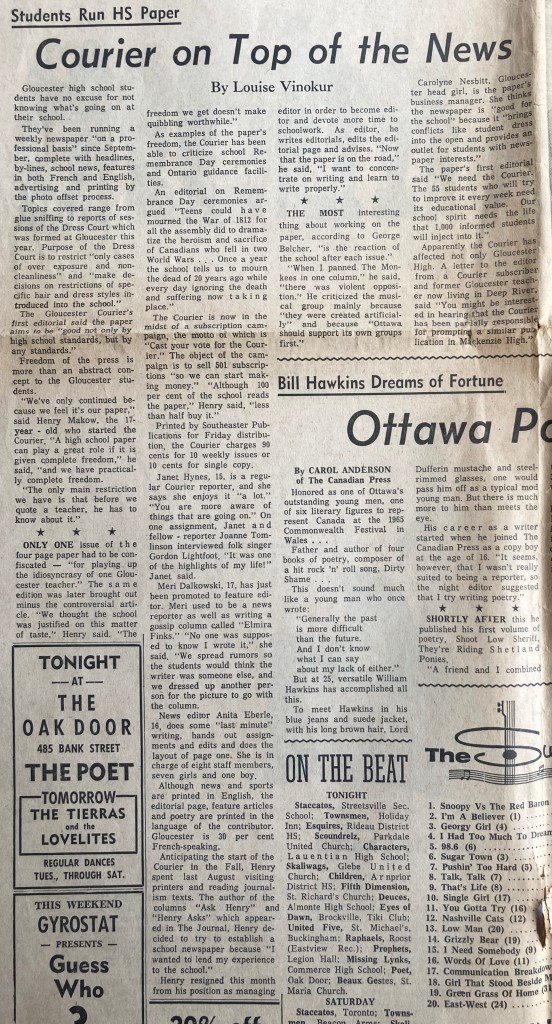
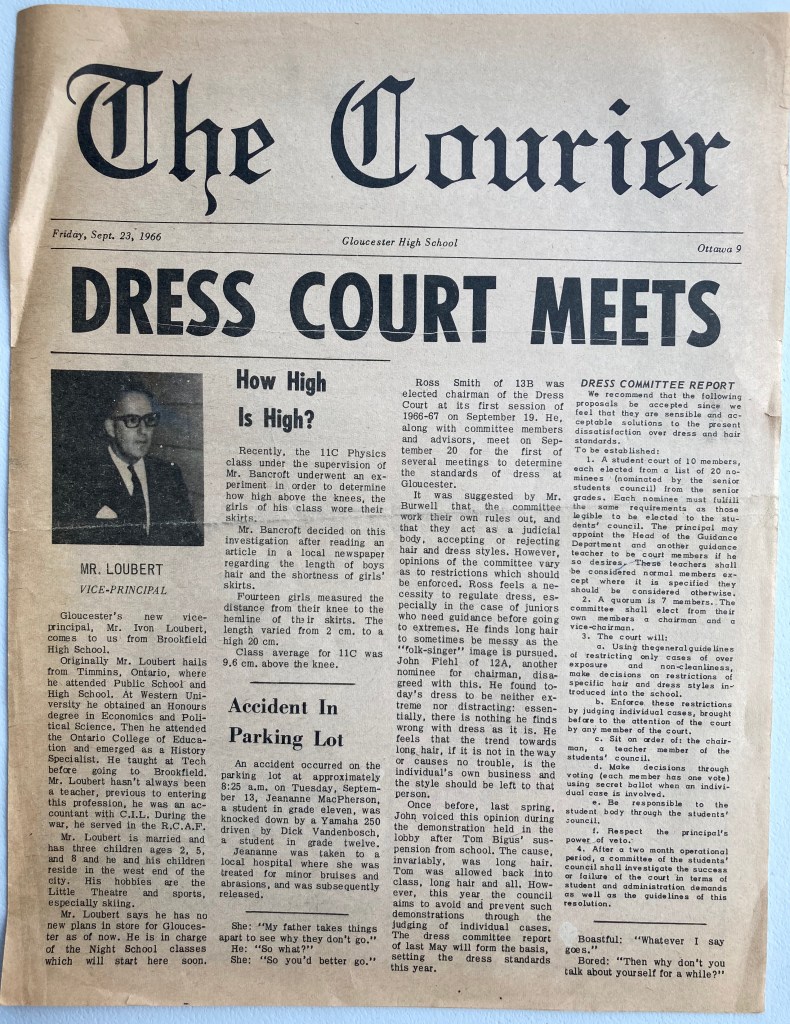
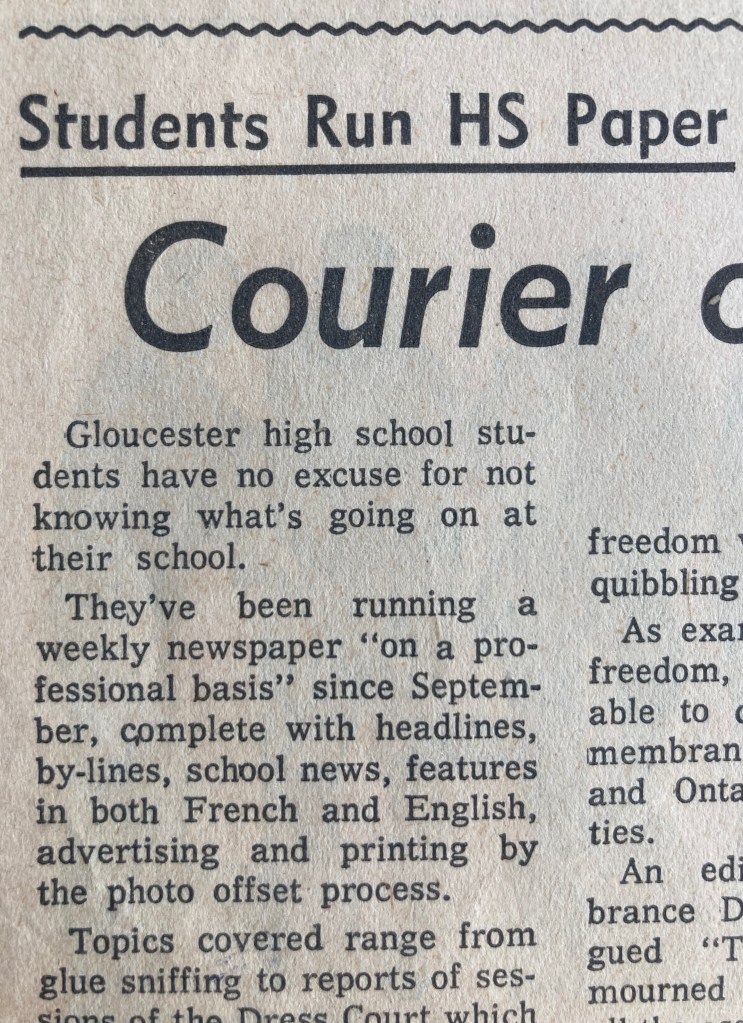
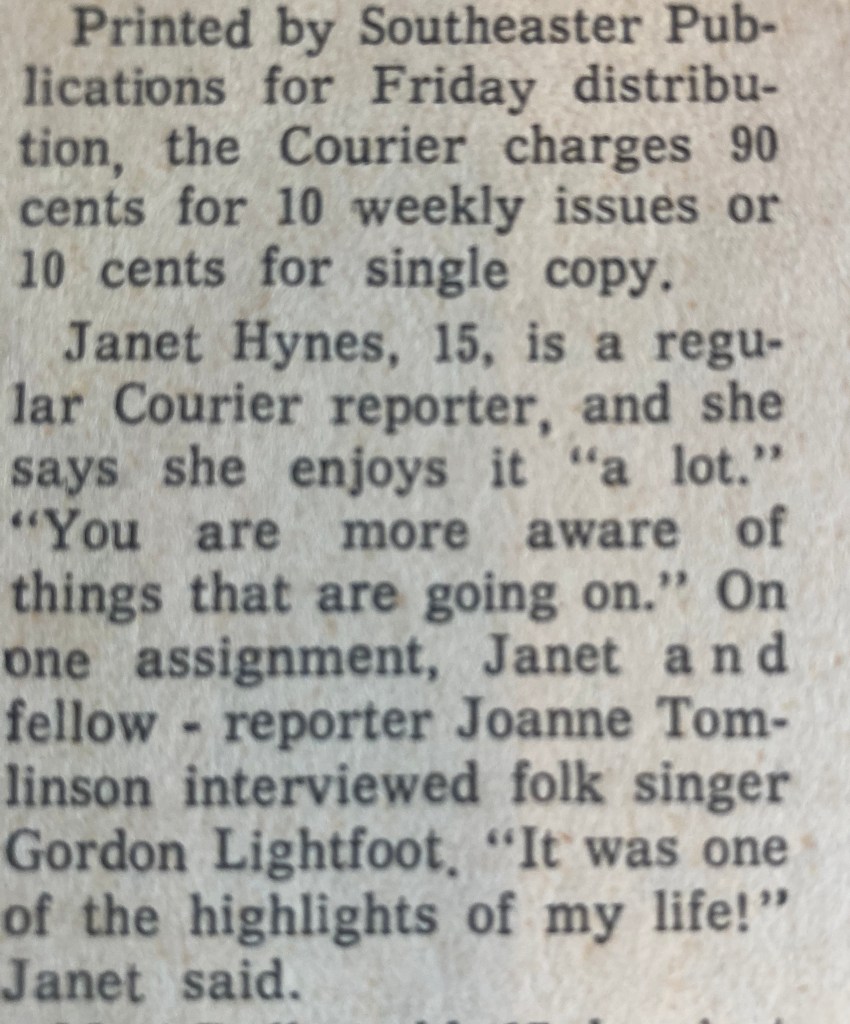
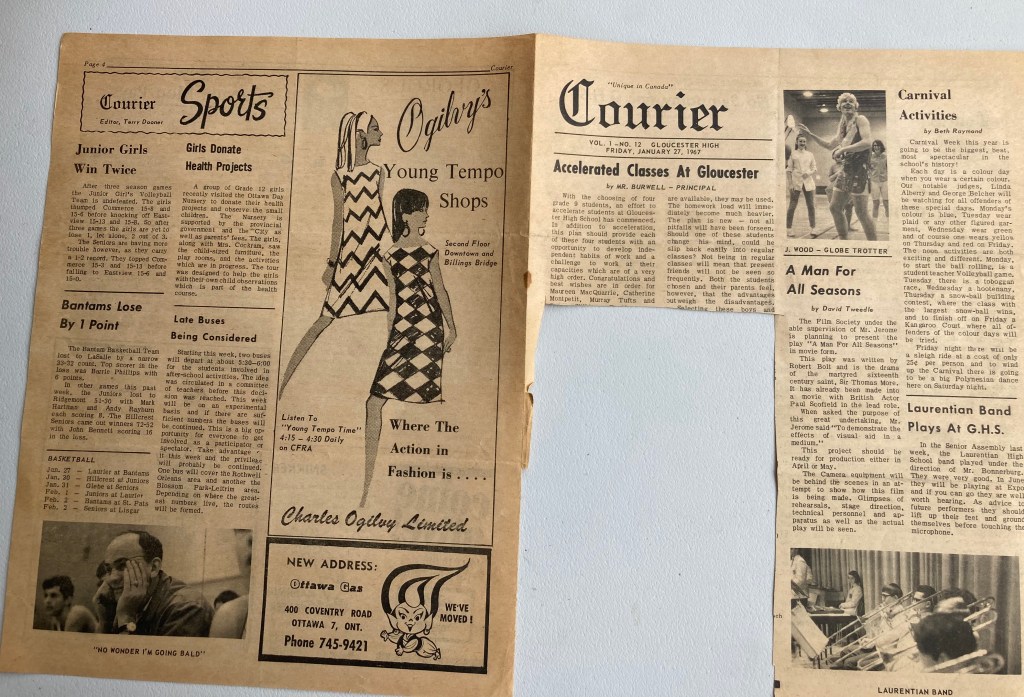
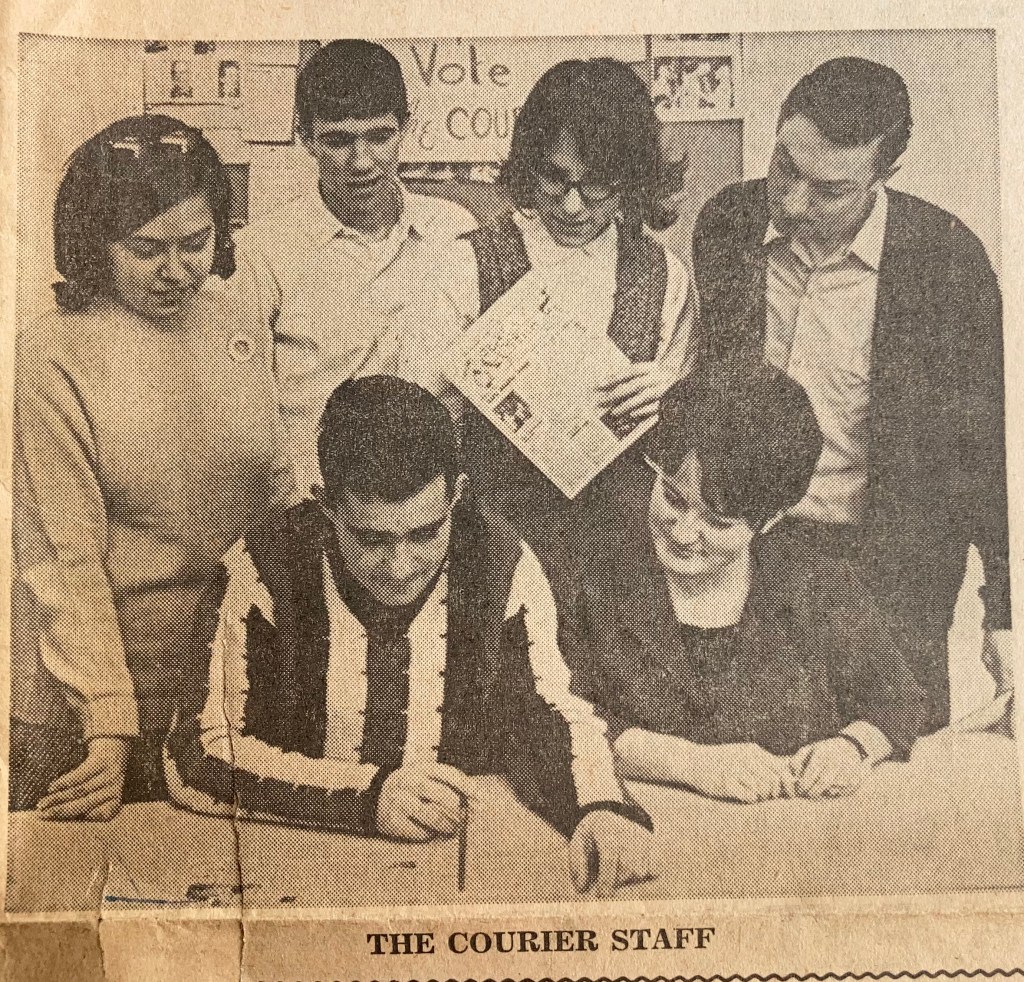
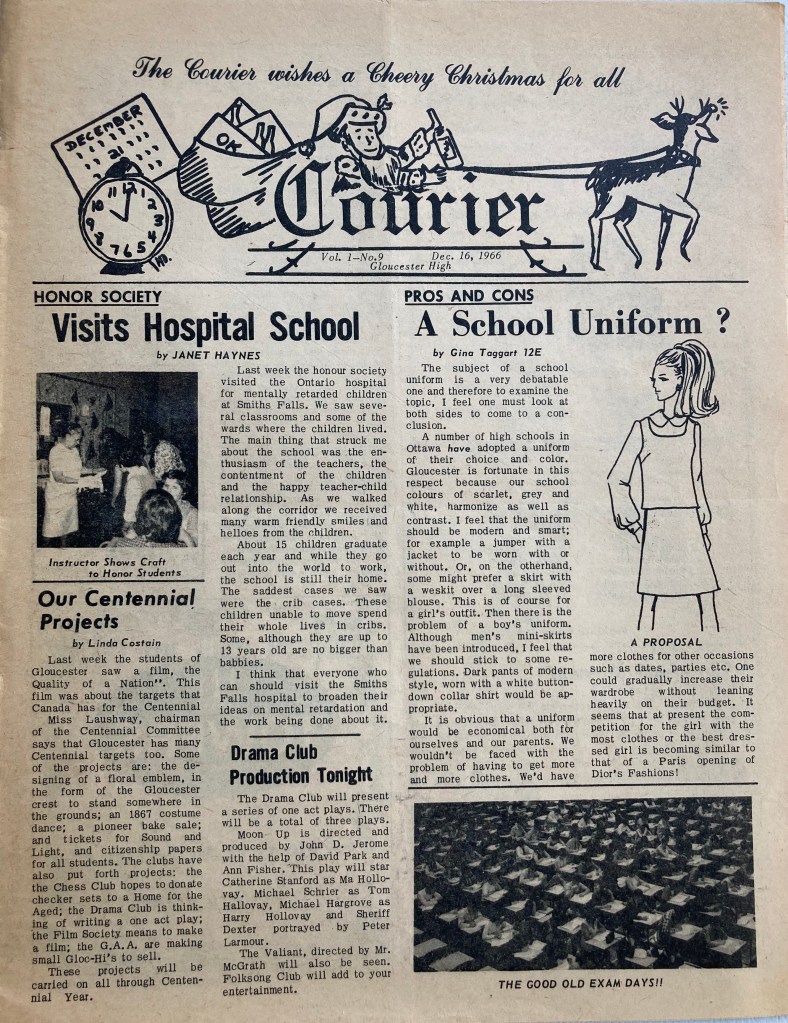
The student leaders came from the academic group- they were there for five years- and were mostly English-speaking — and as the school grew, various initiatives developed in this era of student involvement. In the Centennial year a school newspaper called ‘The Courier’ was started by a student, Henry Makow, who had had an syndicated advice column in one of the Ottawa papers when he was younger- advice by a kid about kids- and who used his experience to produce a weekly professional 4-page newspaper that covered school activities and interests, with news, features, sports, editorials, and ads from local businesses, with bylines of the reporters under the headlines. (This, of course, is why I saved a dozen copies of the paper- either featuring the byline ‘Linda Costain’, or a cut-out gap in the page of an article written by me interesting enough to send to Grannie in one of Cyn’s letters!)
Missing article- my byline on the way to St. Vincent.
The 60s were a time of youth protests- 1968 was coming- and in the previous school year, students had been suspended for having long hair (boys) or short skirts (girls). The front page of the first newspaper has an article on a Grade 11 Physics class conducting an experiment to see how high above the knee the skirts of the girls in the class were- no doubt ammunition for the headline article which explained about the formation of the Dress Court designed to have the student committee create rules about student dress, and then deal with cases brought before them. (The second issue discusses the first cases brought before the court, of 2 boys whose hair was too long… The third reports that the Dress Committee is possibly unconstitutional, the fourth has an editorial about it- possibly the administration supported this court to get out of having to handle the issue!)
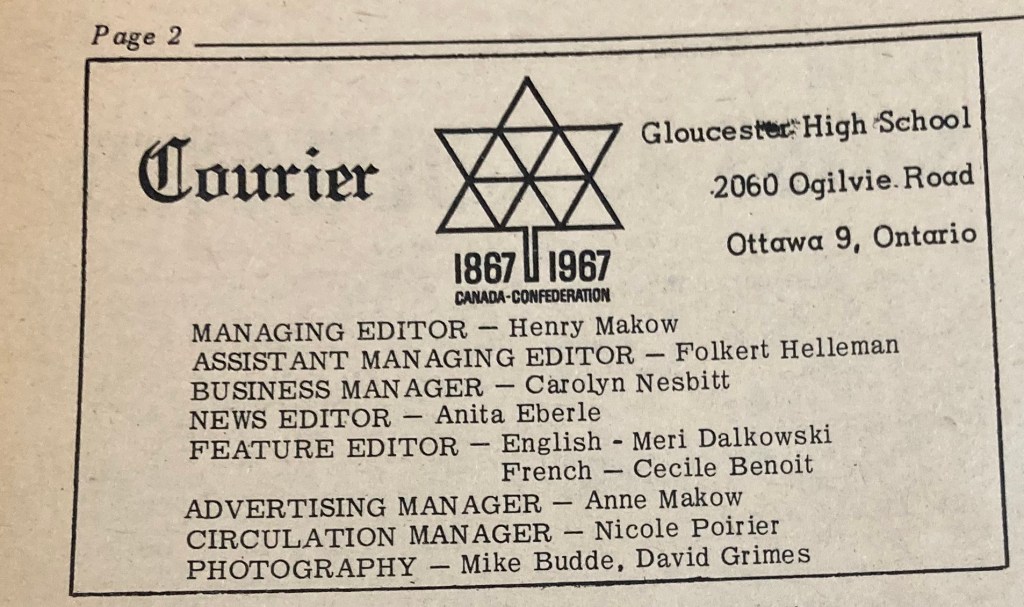
Masthead in the Centennial Year
But articles cover things of concern such as alcohol, teen marriage, and glue-sniffing, as well as news about student government, car and bus accidents, fashion, and the possibility of driver education.
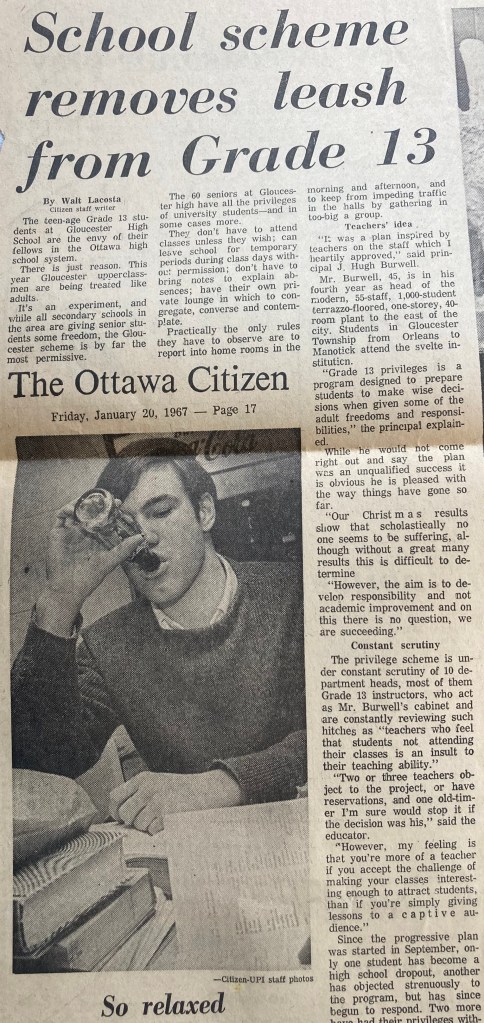
From the Ottawa Journal, January 1967.
The back page was devoted to Sports and the generally sad performances of the school sports teams: Headline, October 8, 1966: ‘Dreary Day, Dreary Game’. To be fair, we were a new school, football certainly wasn’t as important in Canadian high schools as in America, but our basketball and volleyball teams did seem to get beaten regularly in the first term as well, although later in the year wins were recorded. Boys soccer, which hardly seemed to exist in Canada then, was more successful for Gloucester: in spite of having to lend the opposing school 2 valuable players since “Rideau had an inadequate number”, Gloucester shut out the other school 3-0 and were rewarded with pizzas made by the Home Ec. class. However, the sports reporters (who all played various games as well as reporting on them) castigated the rest of the school for lack of participation in intramural noon activities- a thing that must have become more difficult when the student population doubled within the next 2 years, and the lunchtime periods had to be staggered.
As the school year went on, other school activities were lauded in the school newspaper- the hosting of a mobile Blood Donor Clinic, the Debate Tourney in a nearby town, the collection of $1000 worth of non-perishable food for the Christmas hampers, the Winter Carnival week at the end of January (toboggan races at noon Tuesday, biggest snowball competition Thursday, sleigh ride Friday evening, and a Polynesian dance Saturday night, presumably to erase the chilly impression the snowy activities made!) The participation of the school team on the quiz show ‘Reach For the Top’ was covered, and the exciting news reported that the Gloucester Township’s Centennial Project of a swimming pool next to the school would be available for classes the following year. The publication of a Theatre Extra! edition in February when the school’s production of ‘A Man For All Seasons’ was adjudicated for the city drama festival shared both praise and critical comments; and various successful fund-raising events were described through the year – car washes, endurance efforts, and a weekend work day in April, when students could be hired for any task in home and garden- a disgusting porridge pot remains in my mind from when my partner and I were sent to a local home to wash dishes, windows, and floors in a spring-cleaning spree.
Closeup.
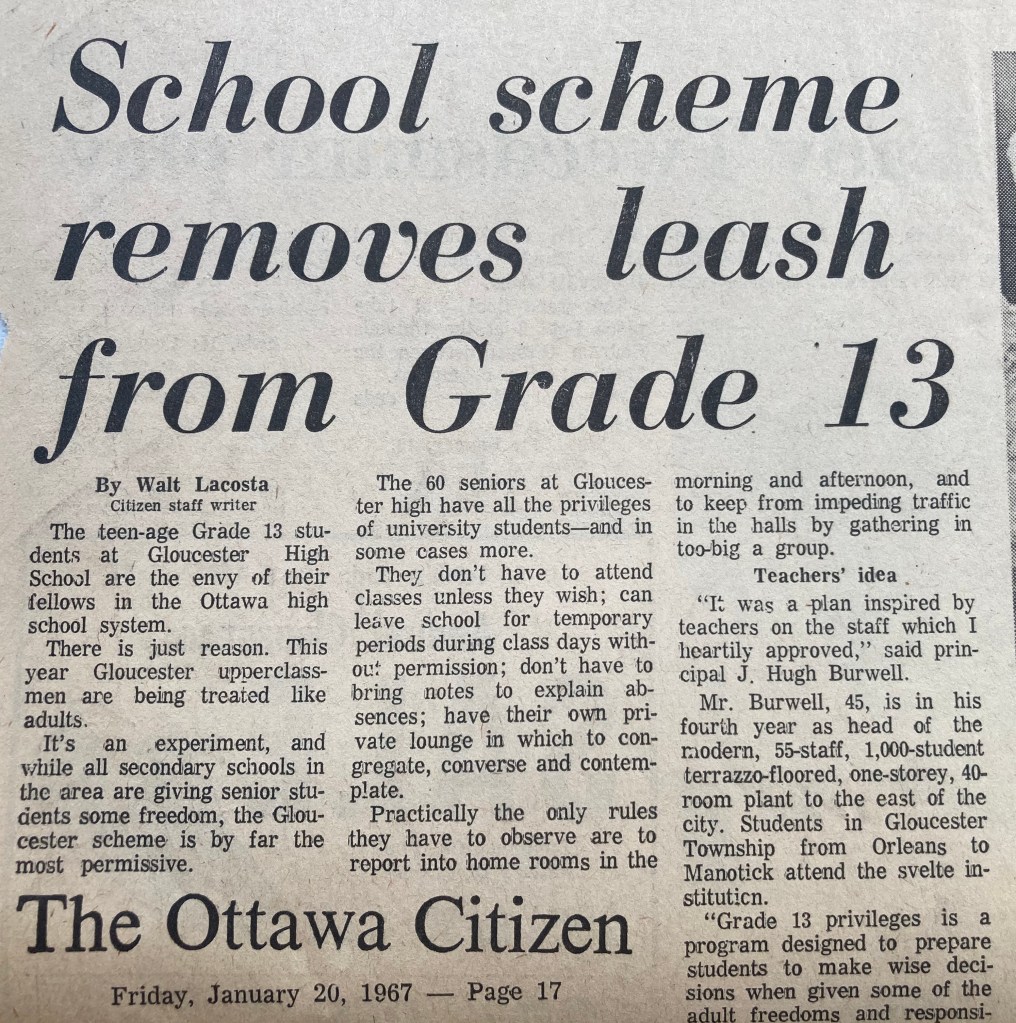
The school newspaper editorials addressed concerns of the day- which also popped up in the Ottawa newspapers, the Ottawa Citizen and the Ottawa Journal- the privileges allowed the Grade 13 students- a lounge to relax in, freedom to leave the school grounds, skip classes, miss school days- and possibly to be extended to Honour Students; 2 editorials written by Henry Makow, the child of immigrant parents, on the effect of war, past and present (and the Vietnam War was on the minds of teens in the 60s, even though male Canadians didn’t have the draft hanging over them)- ‘The World We Inherit’ by ‘The World We Hand On: What Youth Can Do’; which were followed by a guest editorial written by a French Grade 12 student about the discrimination between the English-speaking and French-speaking students, who suggested the students start improving the world they lived in right there in G.H.S. (This prejudice in the school between the English and French students is what I remember most clearly about Gloucester. We had marvellous teachers of French, who exposed us to the music of Quebec and the culture of French literature even though our success at speaking the language was not that great; we had classmates with whom we shared our work and culture (swear words included), but the division was palpable.) At least the issues were raised in the newspaper, if not resolved.
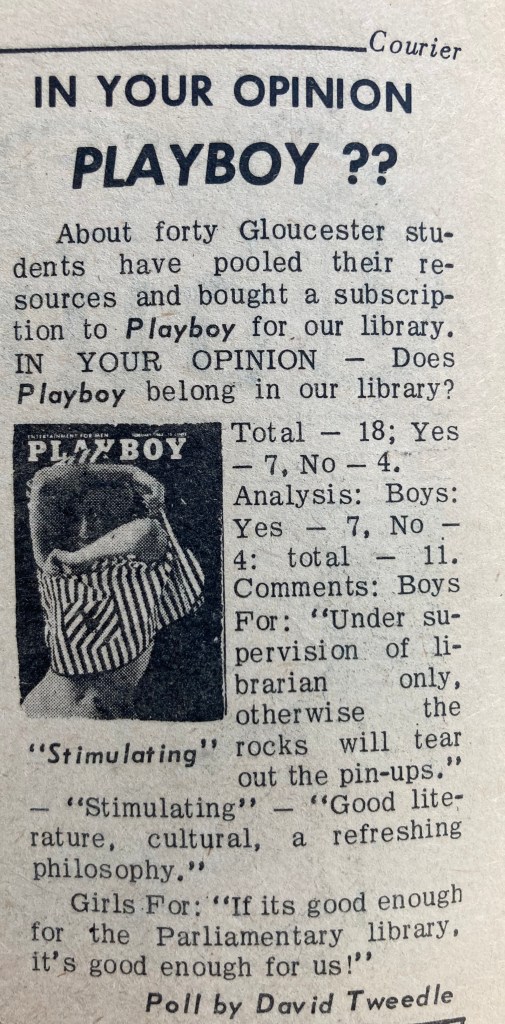
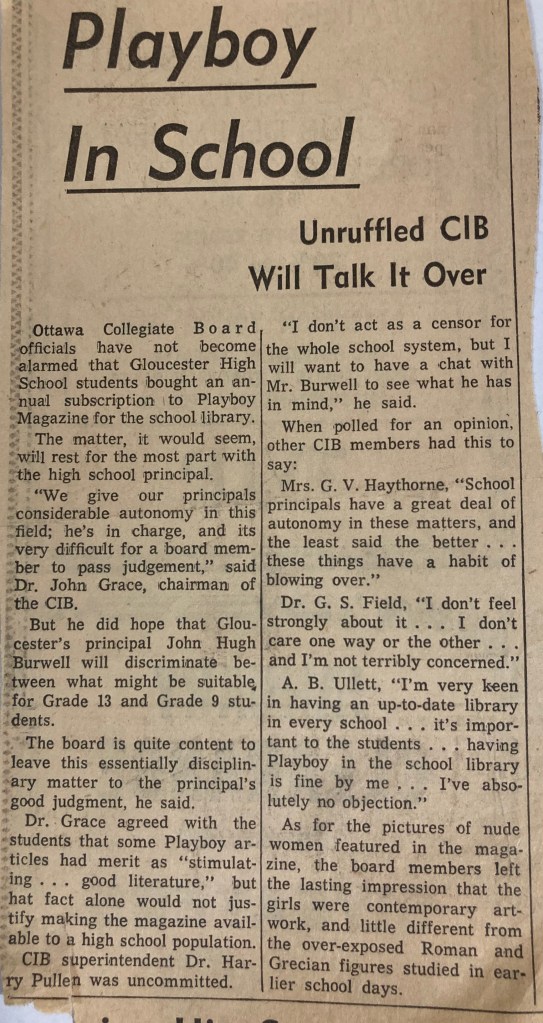
Of course one bit of news in the January 13, 1967 issue of ‘The Courier’ was destined to attract attention: students wanted to buy a subscription to the magazine ‘Playboy’ for the school library. That was quickly picked up by the local papers and discussed at the higher levels of the education system, although the decision on whether to allow it seemed to being left to the school principal- and yeah, I don’t remember what happened…
The regular demands of the school year carried on: classes, homework, written exams three times a year, and the marks that resulted. Linda and Charlie and their friends participated in what interested them, bought ice cream sandwiches in the cafeteria to augment their bag lunches, and did well in classes, being promoted in June to Grades 11 and 12.
But the focus of the Centennial year was Expo 67 in Canada, and for the Costains, their trip to England. It would be an exciting summer, now that the school year was over.
The rest of 1966 carried on as usual, but the atmosphere in Canada was one of simmering anticipation- the next year would be one hundred years since Canada’s Confederation as a country separate from England, and the whole country- townships, villages, towns, cities, provinces and the federal government- were preparing Centennial projects to commemorate the occasion. There was a catchy song in both official languages playing all over- “Ca-Na-Da, (one little, two little, three Canadians) notre pays! Ca-na-da- (now we are 20 million) we love thee…” – or something like that. And to make sure that Canada was on the map, the latest world’s fair, called Expo 67, would be taking place in Montreal. Building was happening everywhere!
Cyn’s activities.
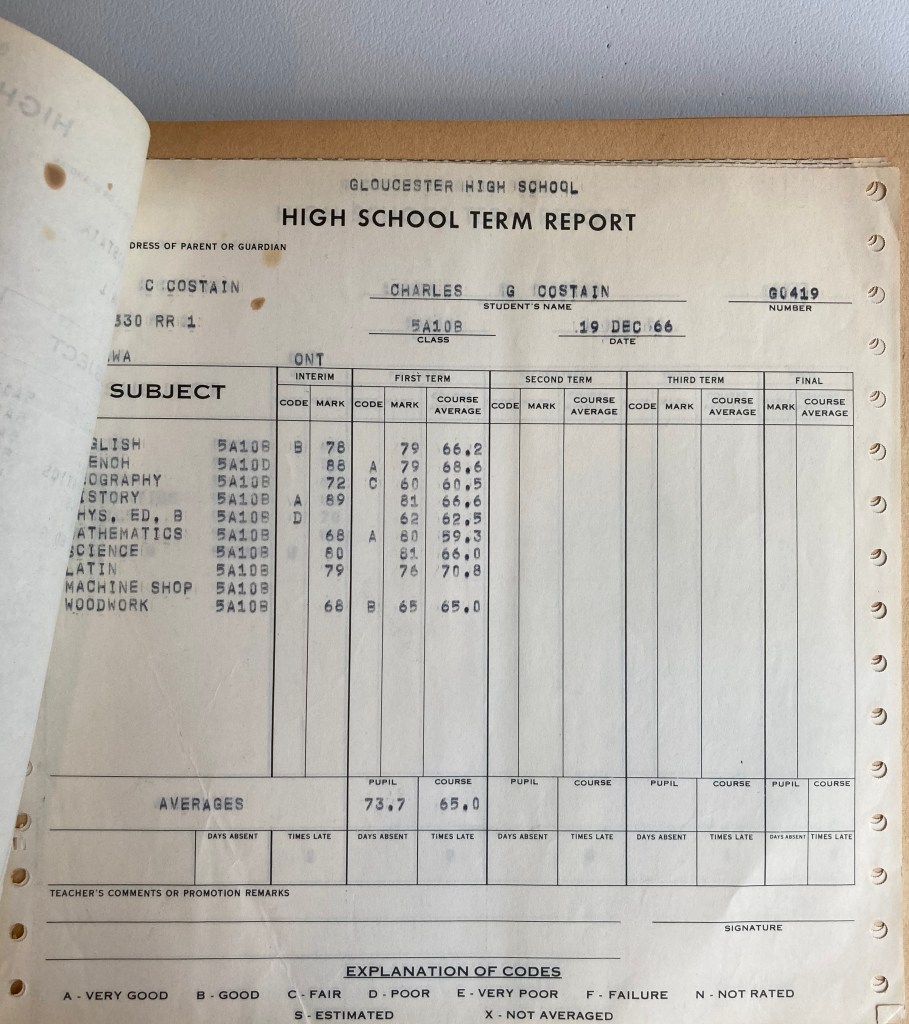
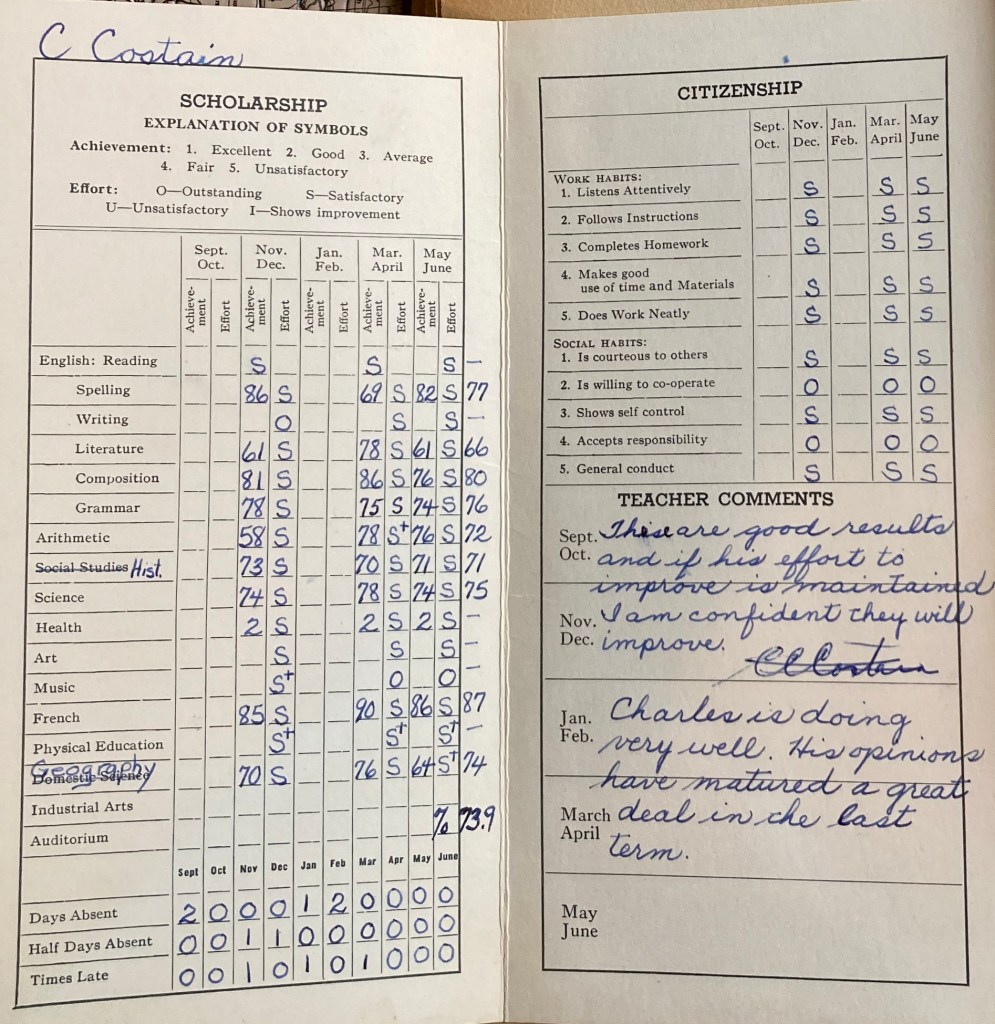
School Reports- computerized in 1966!
The Costains would be going to Expo, since Ottawa was near enough for a day trip, and were involved in various local events, but their project for the centenary was different. After celebrating Canada’s birthday, they were going as a family to England: the first time in 18 years that Cyn would be back, and able to see the friends that she had written to all those years. So work and school life continued with an added edge of planning, saving, and expectation.
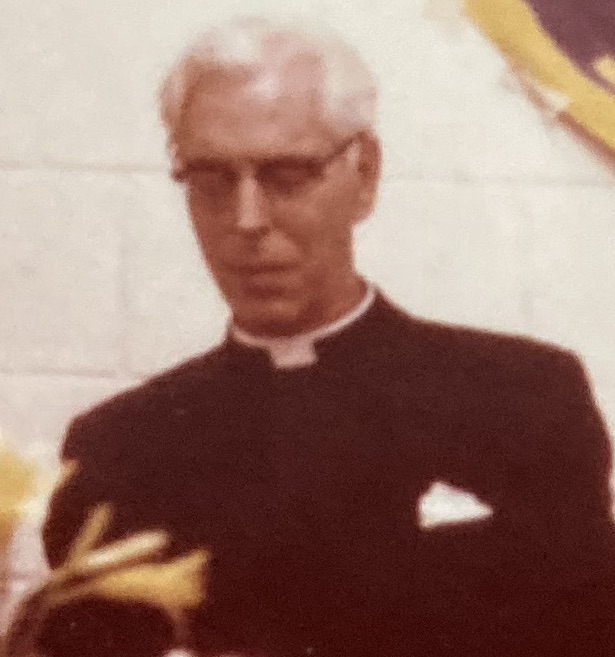
The winter continued with family, work, school, and church activities in Ottawa. After their confirmations, the children took different roles at church. Cyn taught the youngest Sunday School class, 3 and 4 year-olds, and Linda took the next class up. The rector was now the Reverend Llewellyn Graham, a widower with a scholarly attitude, a love of England where he had studied, and a wicked sense of humour when among friends. The whole family enjoyed his visits and Charlie became an altar boy and helped during services.
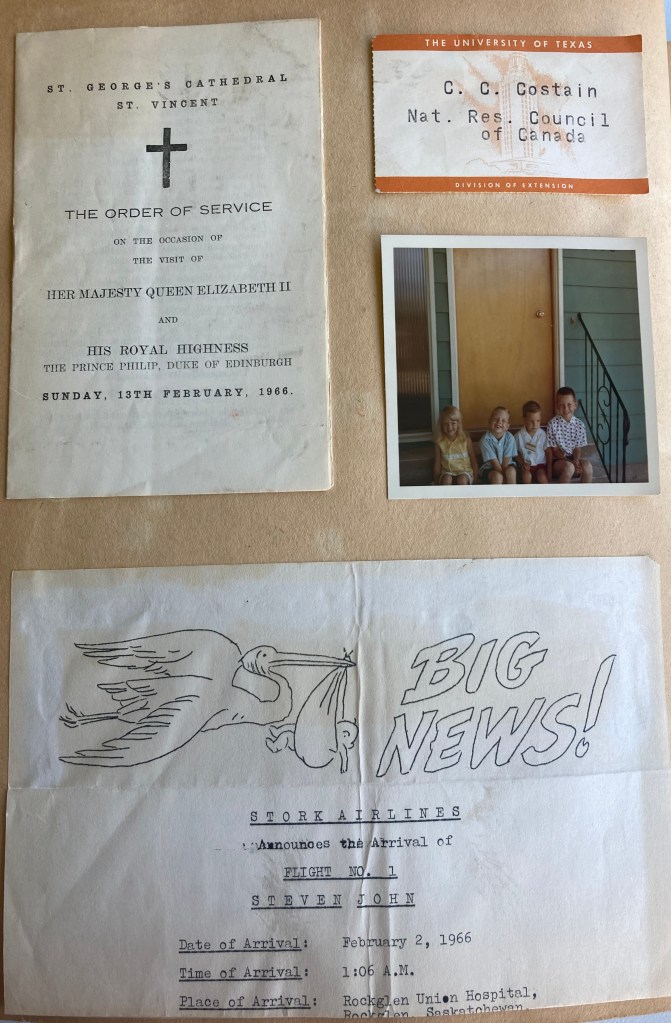
In February, there was excitement in St. Vincent when the Queen and Prince Philip visited. Cec travelled too, to a conference in Texas. From Saskatchewan came the news from John and Sharon of the latest arrival to the family- Steven Moor- who was the first boy of the next generation, and everyone was sorry they lived so far away and couldn’t show off their baby. From B.C. there was a photo of Carman and Leona’s family, David, Robin, Philip, and Leslie. The Costain grandparents (who lived in Penticton near the Carmans) were coming to Ontario in the summer to visit and celebrate their Golden Wedding Anniversary, and we all hoped to meet the cousins if the western families came too.
Around Easter, Cec went to a meeting in Washington, staying with a scientist friend. Because the friend’s young brother had a part in the play, Cec saw Gielgud’s newest production Ivanov on its pre-Broadway tour when he went with them to see it, and actually met John Gielgud and Vivian Leigh backstage after the performance. Cyn pasted the Playbill into the scrapbook with the young man’s name highlighted: Miller Lide. Later, her mother would write about Gielgud and Leigh holidaying on Young’s Island in St. Vincent after the Broadway run had finished.
April was Cyn’s birthday, celebrated with a card from one of her New York cousins down visiting her mother in the West Indies, and, as the summer approached, it was the season for weddings. The scrapbook celebrates three: children of old friends of Cyn’s in England, and invitations from the young men in the Lab- Klaus Huber and Phil Bunker. And at the end of May, the letters resume, and although not regularly preserved by Carol in St. Vincent, there are enough to give a more intimate look at the mid 60s, for which I am very grateful! The antics of the Golden Wedding that summer deserve a blow-by-blow description…
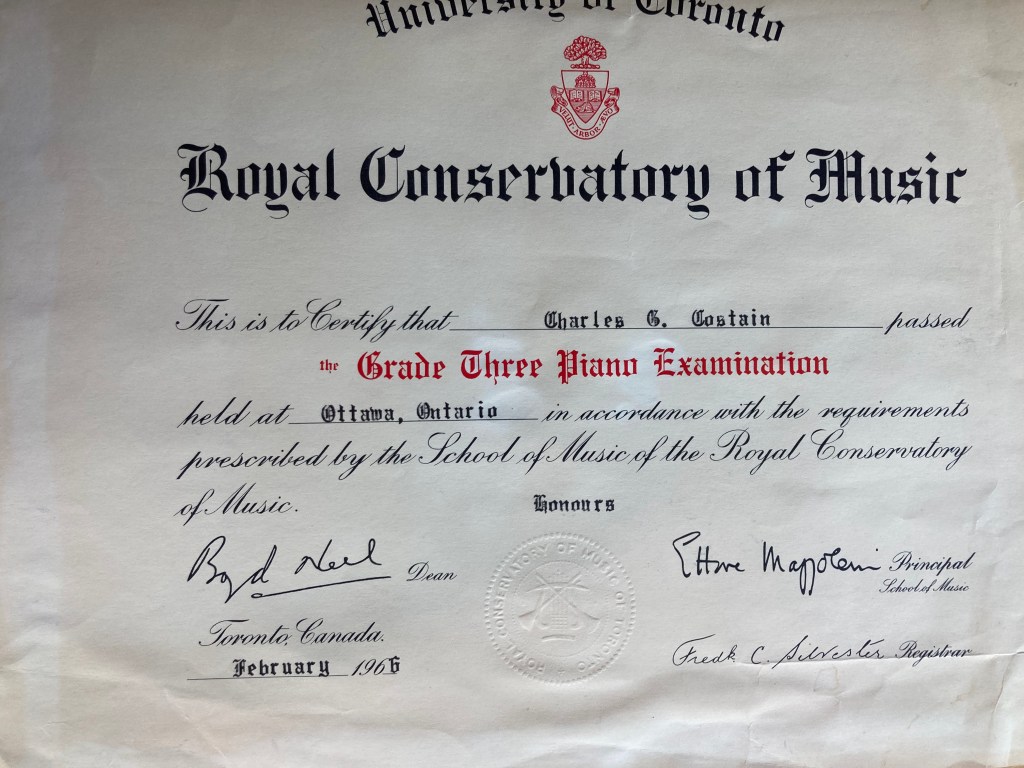
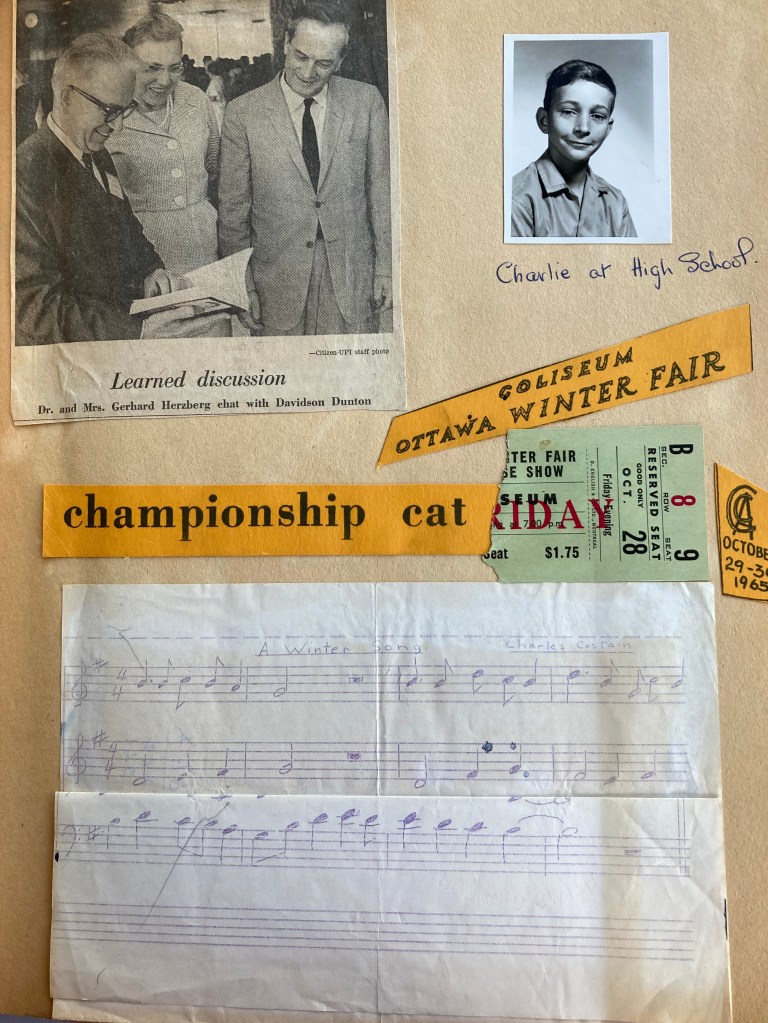
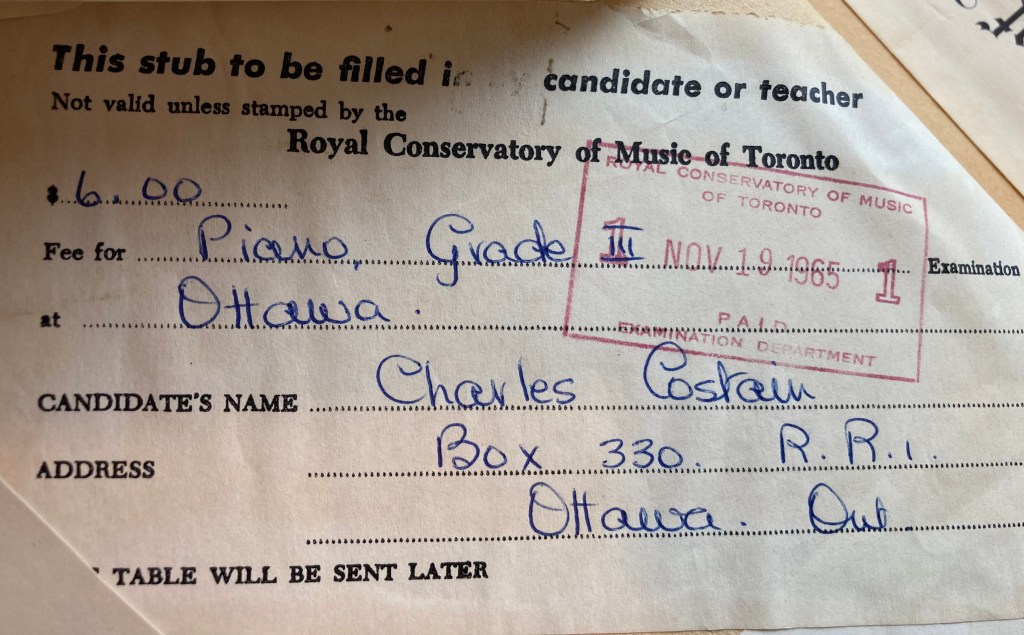
When school started in September, Linda and Charlie were once more on the same schedule, both catching the bus for high school. Charlie had an additional bit of pressure from his piano lessons, because he was planning on sitting a Royal Conservatory of Music exam in the winter.
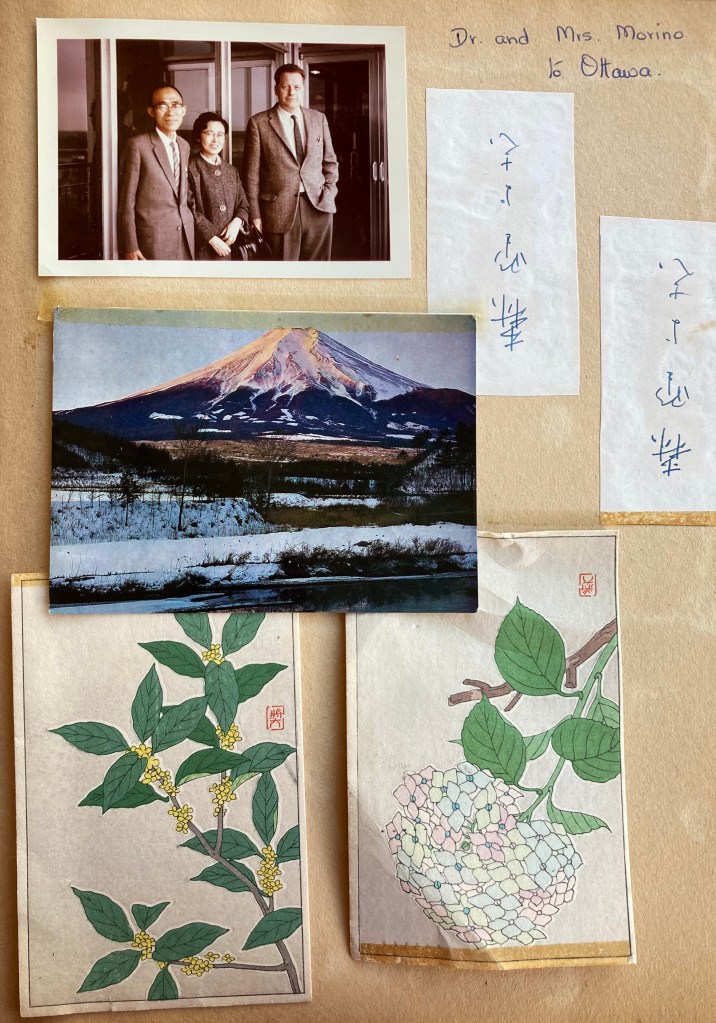
At the N.R.C. Cec was happy to welcome the Dr. and Mrs. Morino from Japan who had both come to spend a year in the Lab. They were very kind to the children and shared aspects of their culture with us. Cyn kept the charming ‘Thank You’ notes they sent after social events, and pasted the kanji that I assume were their names into the scrapbook. Dear Dr. & Mrs. Costain, Just a short note to thank you for giving us such a nice party. Everything about it was wonderful. Sincerely, Yonezo & Yoshi.
Still with me, even with arthritic fingers!
Linda had an Origami book with papers included but had not been able to figure out the tenth piece, the iconic Japanese crane. I remember sitting on a lab stool being coached by Mrs Morino- “now the outside becomes the inside”- as she showed me finally how to achieve the 3D effect that had eluded me. It remained with me, as I whiled away the tedium of Grade 13 Biology 4 years later by folding cranes and penguins and stars under the lab bench.
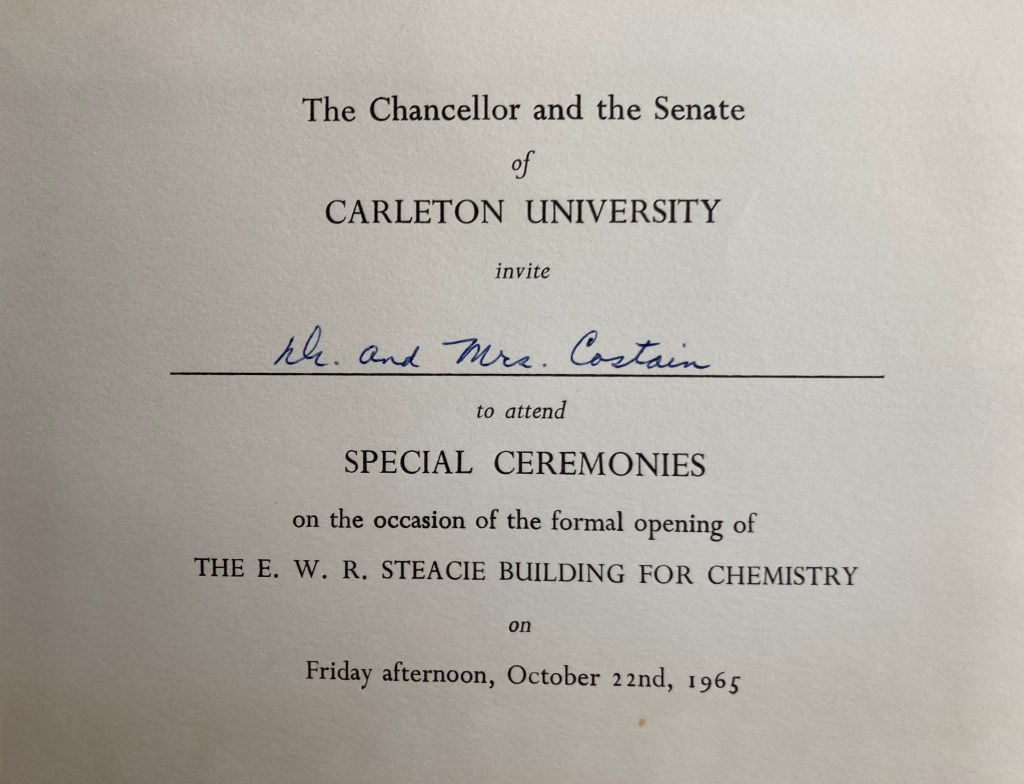
Also of note to the N.R.C. was when Dr. Steacie, the President of the N.R.C. from 1952 until his death in 1962 who had introduced the Postdoctorate Fellowship program, was honoured by Carleton University that fall when their new Chemistry building was named after him. The Herzbergs and N.R.C. staff were happy with this recognition.
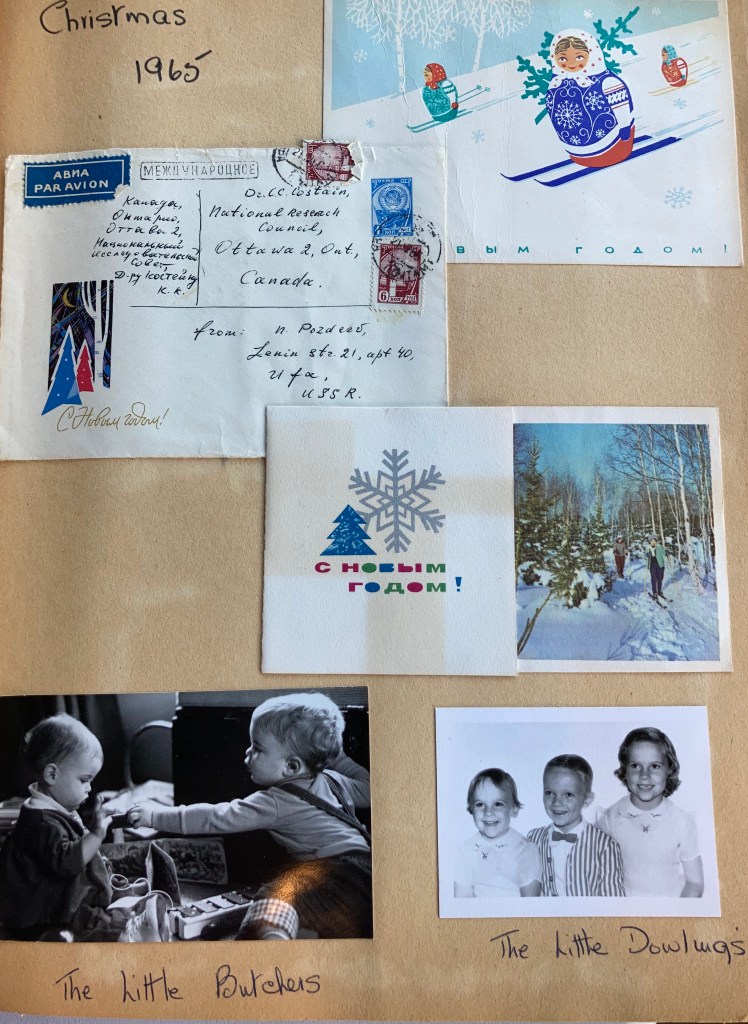
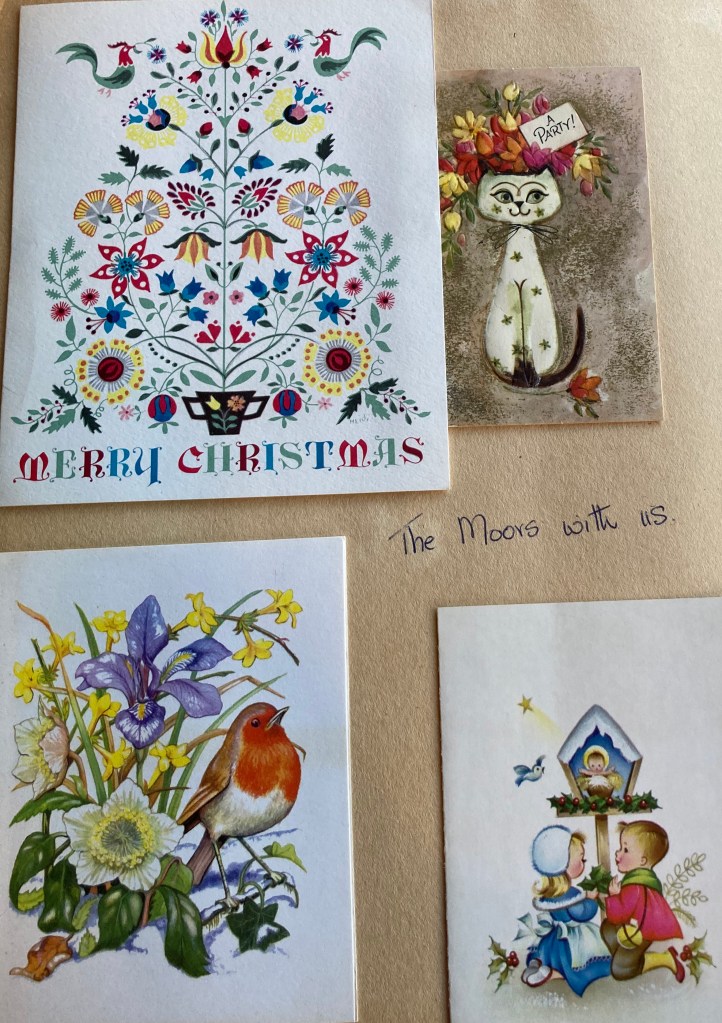
The entries for ‘Presents Sent’ and ‘Received’ and ‘Cards Sent’ for 1965 in Cyn’s ancient Agenda Book are the last lists. The records of Christmas from 1932 to 1965 filled a years’ worth of pages, and the actual 1965 gifts give a picture of the time- Cec got a Harry Belafonte record and fondue forks from the family, Cyn a projector for those slides, and both children got English Annuals from their Grannie this time- which they enjoyed, but now are very much of that time- not PC at all, in fact, offensive in many ways. Linda got more books, of course, including the next hardback in the Little House series she was collecting, and Charlie a Gloucester High School sweater. And with the Christmas cards received, the Costains got the usual adorable photos of their friends’ growing families.
The Moors- now with both older cousins married, reduced to Auntie Merle, Uncle Dix, and Bruce- came up from Brantford for the occasion, and probably Lorne, Liz, and Debbie were also in Ottawa, staying with Liz’s family in Rockcliffe. John and Sharon out west had another reason for staying at home besides Christmas being a clergyman’s busy season- they were expecting their first child in February. There was a lot of planning going on for 1966 that Christmas- the summer would bring celebrations for Granny and Grandpa Costain’s Golden Wedding Anniversary, and the whole family would try to get all four generations together in Ottawa!
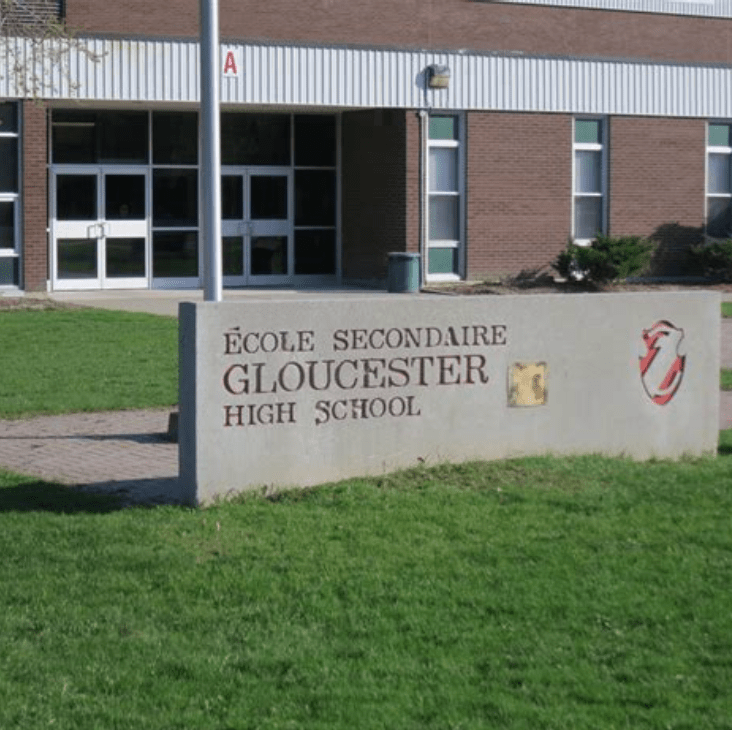
A note about the new high school. I went into Grade 9 at Gloucester High School, along with students from the entire township, some living as far as 40 miles from the school. Some came from the French village of Orleans, other from farm communities with one-room schools, and they had a long commute on school buses. It was quite a culture shock even for us living locally- the high school had a cafeteria where one could buy lunch, an auditorium with a stage, and a library. There were 5 grades in High School, 9 to 13, and 5 different programs offered- 2 year Hairdressing for girls, and Auto Mechanics for boys, with a certificate after completing Grade 10; 4 year Business and Commerce for girls and Technology for boys, with Junior Matriculation and Graduation after Grade 12; and an Academic stream that continued into Grade 13 for those aiming for university with Senior Matriculation at graduation. There was a Francophone stream for the French-speaking students, and French or Français classes for the academic students, depending on their mother tongue. There were 10 Grade 9 classes when I began, so over 200 students in that grade alone, and the school grew every year I was there- a second floor added on above the original level; a new wing with more technical and shop classes; a tower with pie-shaped classrooms replaced the teacher’s parking lot; and after 5 years, a community swimming pool being built beside the school, so gym classes could take advantage of the facility. Meanwhile, the developments around the school continue to expand. In Grade 9, cows in the field separating the school from the new highway used to come and look in the windows. In subsequent years, there were townhouses, apartment buildings, and new roads covering the fields beside the school and between the Montreal Road that we had lived on and the Queensway a mile south. The village of Orleans was growing, new developments went up in the fields beside the Ottawa river, and were spreading to join up. It was the baby boom generation being educated and 10 years later, in my student teaching year and times of unemployment that followed in my 20s, I had 3 more English-speaking high schools to choose from in the area, with French high schools operating separately. Ottawa had grown.
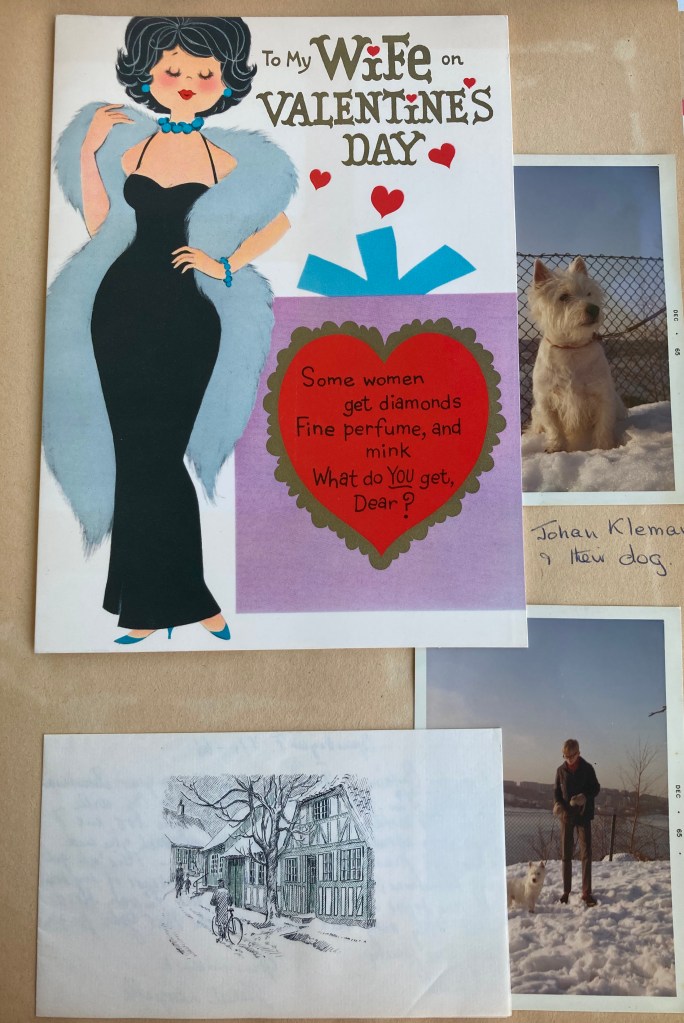
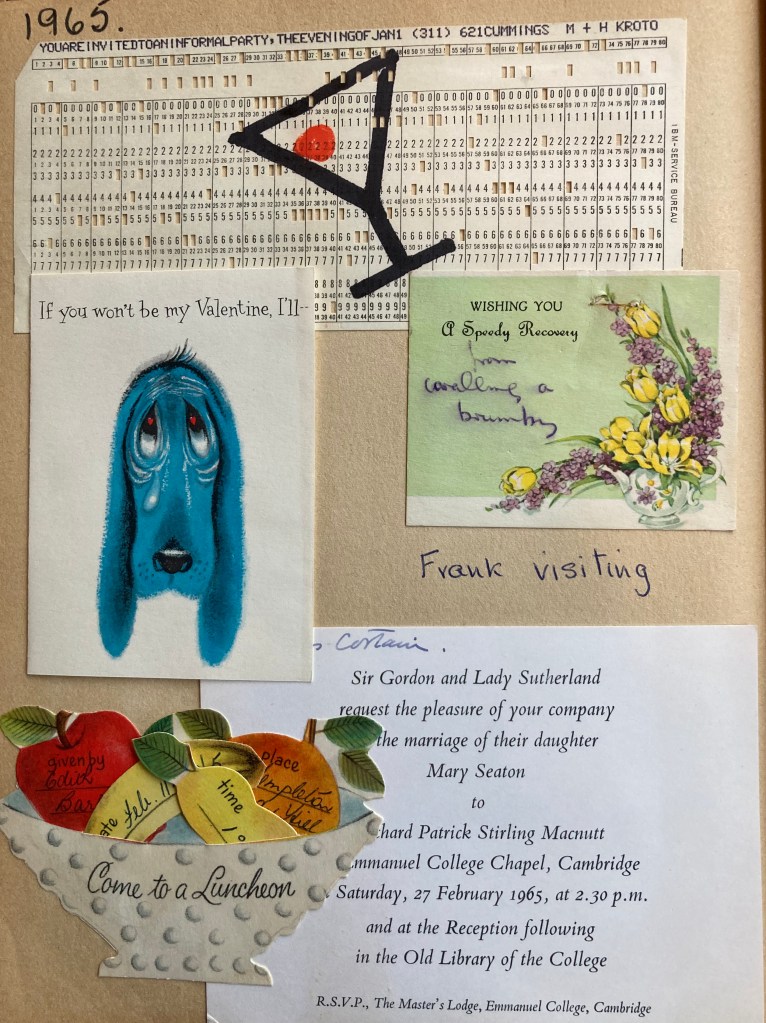
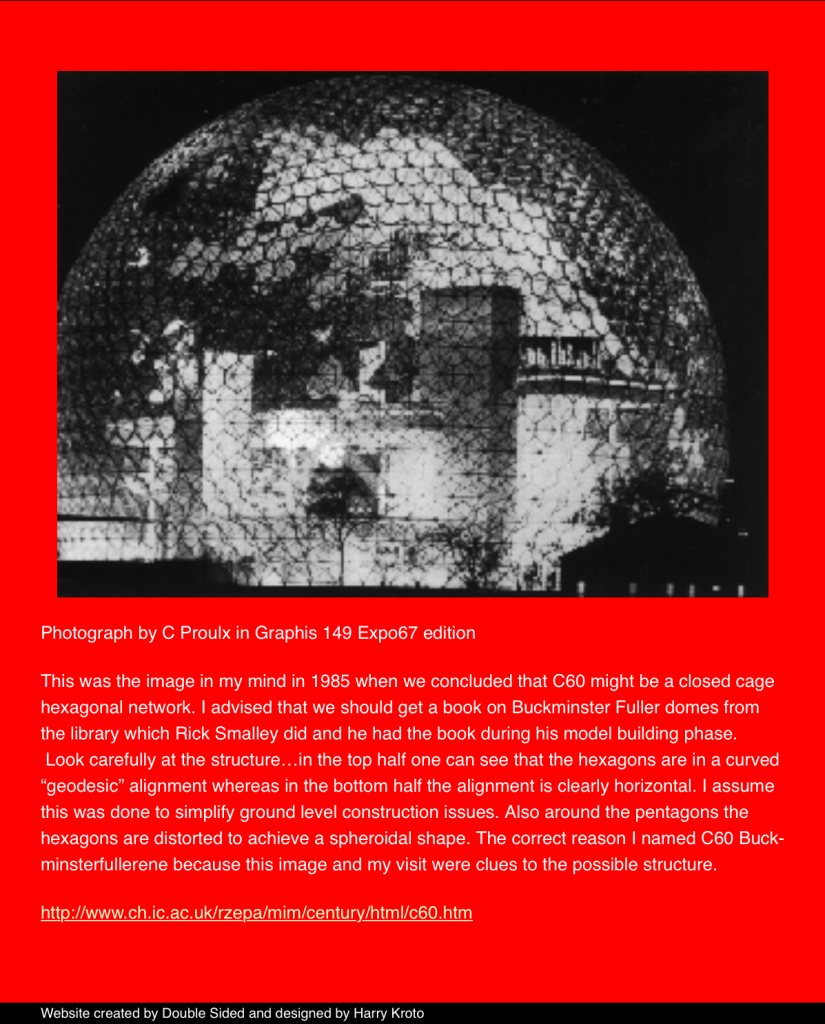
The scrapbook page for 1965 shows invitations and Valentines, showing that the adult Costains were involved with friends both local and abroad. The computer card is an invitation from Cec’s new Post-Doctorate Fellow, Harry Kroto, and his wife Margaret. They were a marvellous young couple from England, interesting, enthusiastic and full of fun. I remember one party with people from Cec’s Lab. where Harry and Margaret played a magic game with their audience, using a blindfold and the poker from the fireplace as props. The blindfolded one of the pair knelt on the hearthrug, and was able to identify which person the other was pointing at- I presume by verbal cues- and the children thought they were the coolest couple ever. Harry was always quite clear about his interest in the visual arts, and how he was torn between science and art as a career. The Krotos were in Canada in 1967 which was the Centennial Year, and visited Expo 67, with the geodesic dome as the USA Pavilion. His later work on Carbon 60, buckminsterfullerene, was linked to this, as he explains:
Cec did not live to see Harry get the the Nobel Prize for Chemistry in 1996 but he was sure it would happen when he heard about Harry’s work with buckyballs. When Harry learned Cec was ill in 1991, he sent him a book- A Dictionary of Scientific Quotations by Alan L. MacKay, into which he had inserted a quotation from his time at the N.R.C. : Cec Costain- “If it doesn’t work, just kick it here.” to HWK in 1965 when the power supply did not work. On the cover page he wrote, ‘To Cec and Cin, Two of our very best friends with love Harry and Margaret. Thanks for engineering my move to microwave spectroscopy- By far the nicest group of scientists due in no small measure to you and E.B.W. The quote on page 62 is one of my favourites. P.S. The rotational spectrum of C60 is too weak even for Jim W. to detect.’ The admiration and affection were mutual. Other friendships are illustrated on this page- the third Sutherland daughter, Mary’s, wedding invitation, and a cryptic thank you card from a visiting Australian, Frank (Mercer?) whom they hadn’t seen since their Cambridge days. The year continued with family birthdays, Spring Break and Easter, with school and work, but the big excitement of the spring was Carol visiting from the West Indies.
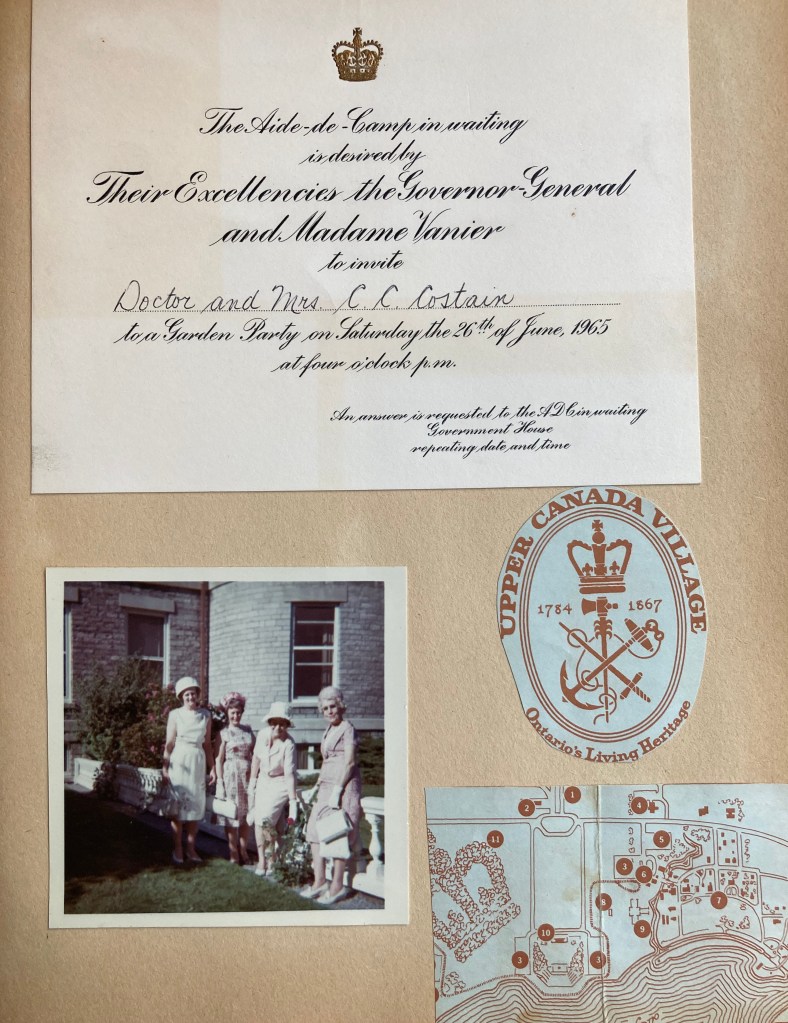
She was there for all the activities in June, the summer, and on into the fall- her usual long stay, having not seen the Costains since 1960, she would have needed to adjust to the changes in the children! Charlie’s Graduation from Grade 8 was the final event of June, but there were other activities first. Grannie would have been very happy to be there for Charlie’s Confirmation in early June at church, and her best hat would have come out for the Governor General’s Garden Party.
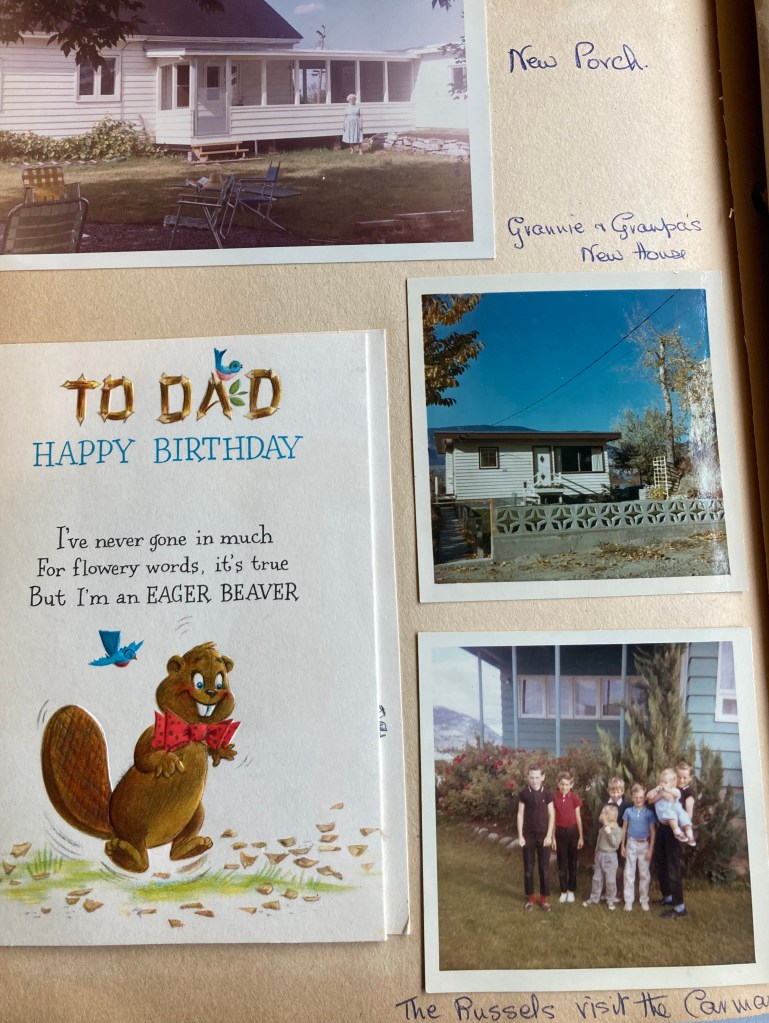
Cec’s birthday and Father’s Day were celebrated, they enjoyed snaps from the Costains out west, and the whole family was pleased by the new porch at the back of the house- the open deck from the garage to the back door was now screened in with comfy chairs and tables, nice for eating in during the hot summer days when the mosquitos were bad under the trees!
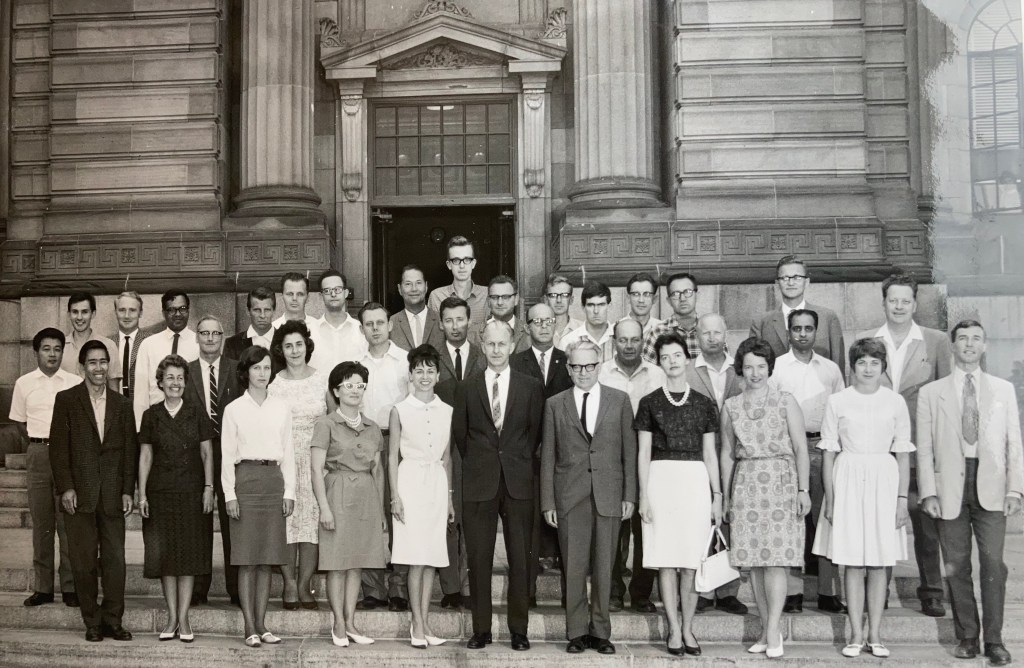
The annual photo of the Lab on the steps of the N.R.C. shows Dr. Herzberg and Alec Douglas centre front, greying, Cec smiling in the second row end right, and Harry Kroto third row far left also with a big grin.
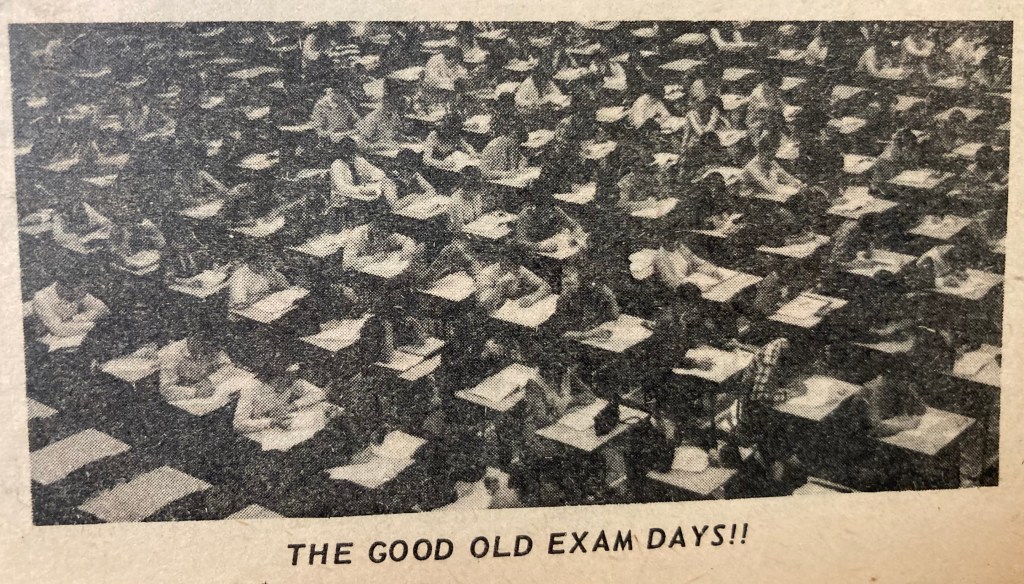
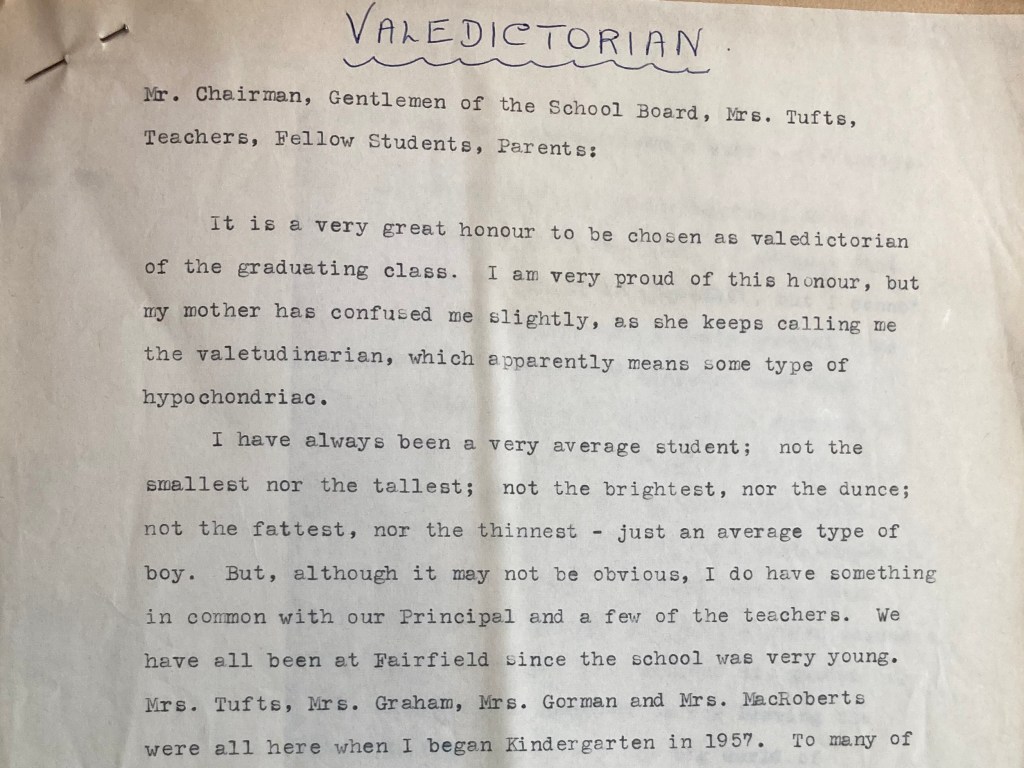
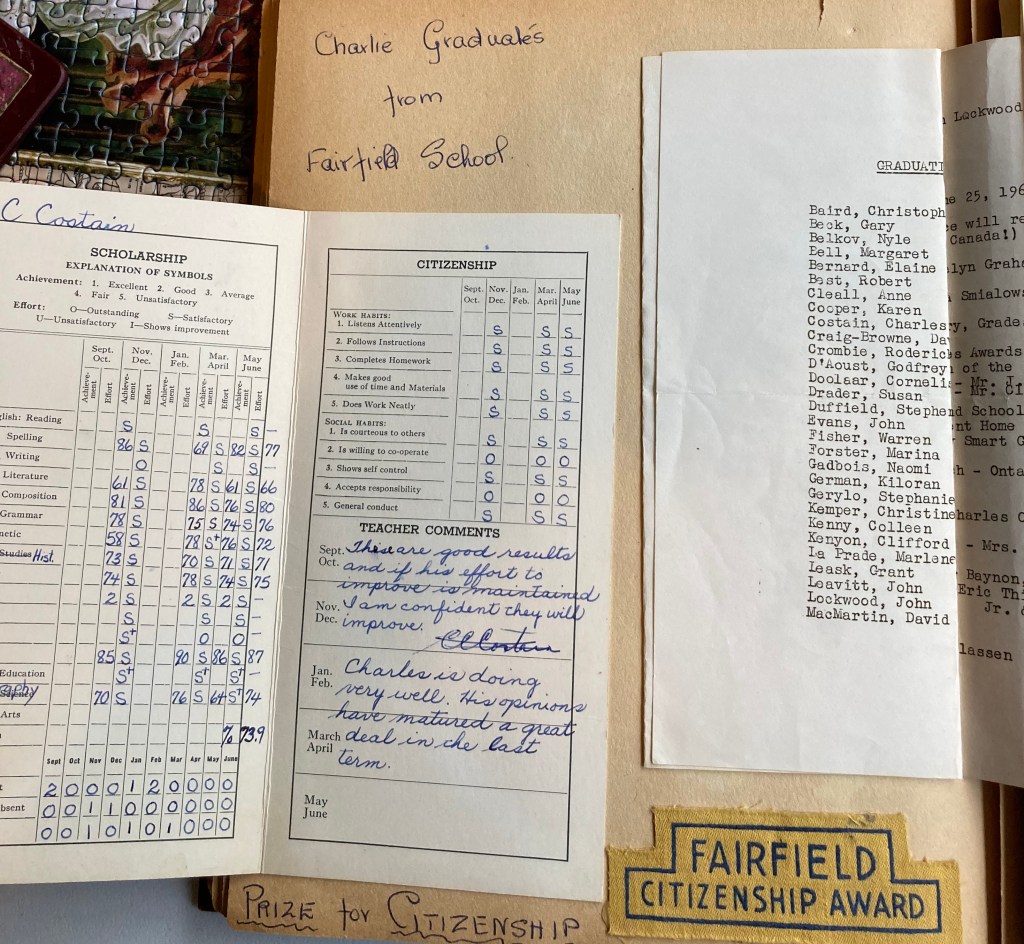
As the school year ended, the children wrote their exams- an intimidating exercise in high school for Linda, with the gym lined with rows of desks, fluorescent lights buzzing, invigilators prowling around, and hundreds of students writing earnestly in the hushed atmosphere. Both got their reports and were promoted, but Charlie’s graduation was a special ceremony because he not only got his diploma and the Citizenship Award, he also was the Valedictorian, speaking on behalf of all his fellow graduates.
After that, the family once more rented a cottage for three weeks in July at Lake Bernard.
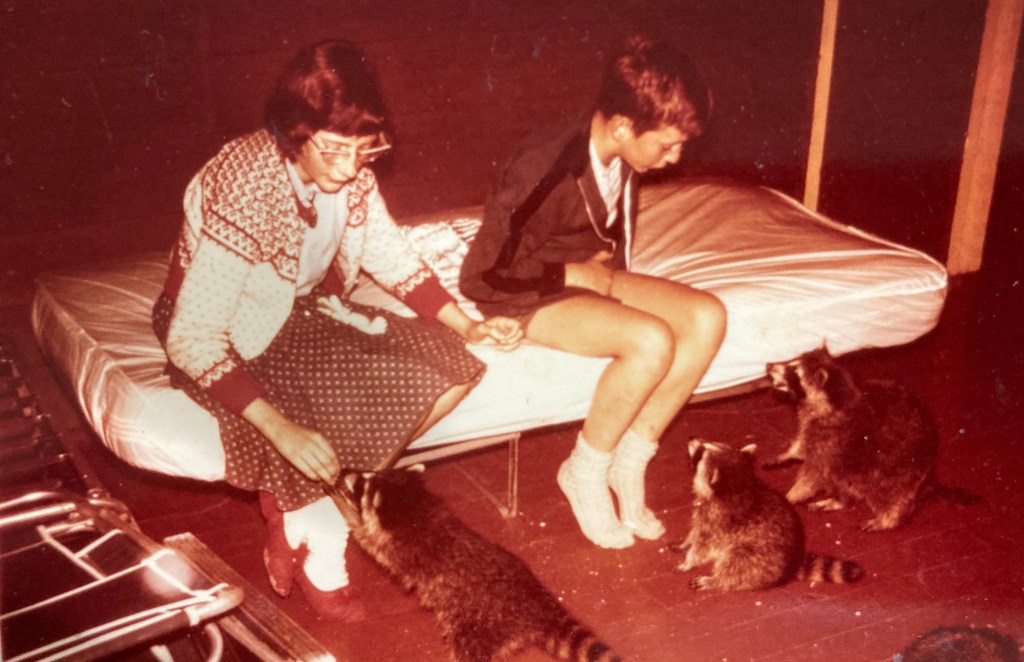
There were beds, but not enough bedrooms, so the children slept on the open, but sheltered, porch. The renting family had asked the Costains to look after the raccoons, and Linda and Charlie found that this meant a whiskered face and a very hand-like paw, peering at them in bed.
The kits were adorable, and the children fed the family who went down to the lake to wash their spoils, which was a relief to all concerned- both animals and humans just as happy to keep a certain distance from each other.
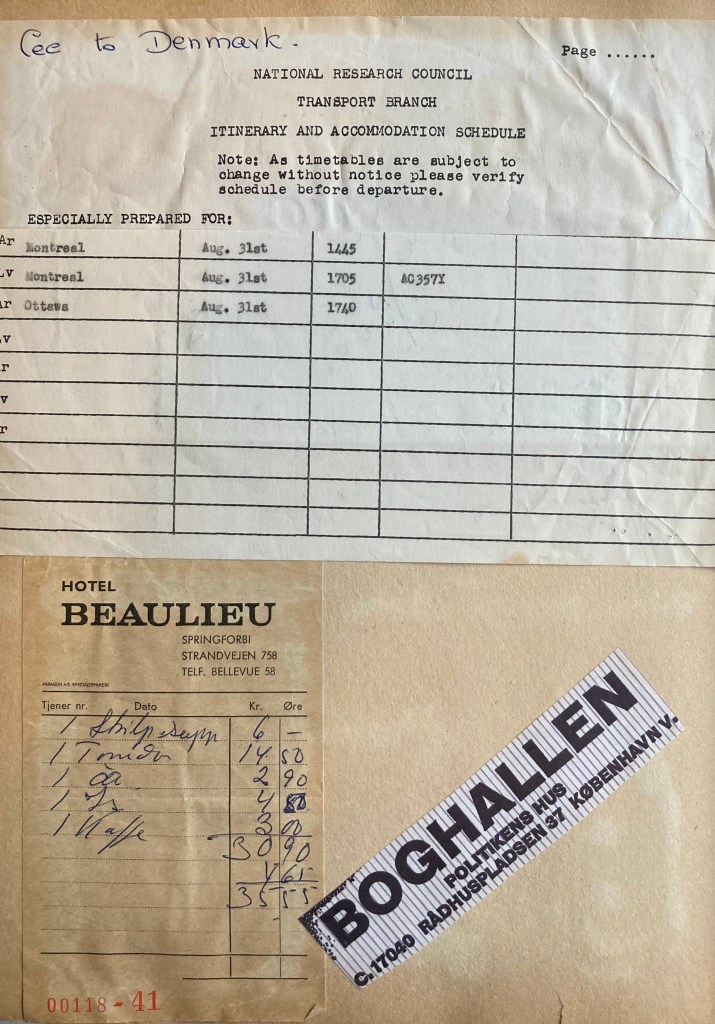
In August, Cec went on a trip to Denmark and stayed with their friend Chris Müeller. Linda turned 13, finally a teenager, and she and Charlie got ready for high school- Linda assuring him it would be much better than elementary!
The fall of 1964 was fun for Linda- she enjoyed high school: the increased independence, the variety of interesting classes and teachers, the library and cafeteria, and new friends- although the number of students took a while to get used to. Her marks remained good although she attempted without much success to follow her mother’s profession by taking Home Economics as an elective- making a blue flannel shift to wear in Sewing, and producing a sad liquid soup that should have been a chocolate pudding in Foods, which seemed to be more about the costing of the dishes than actually making them. She found learning Latin was more interesting.
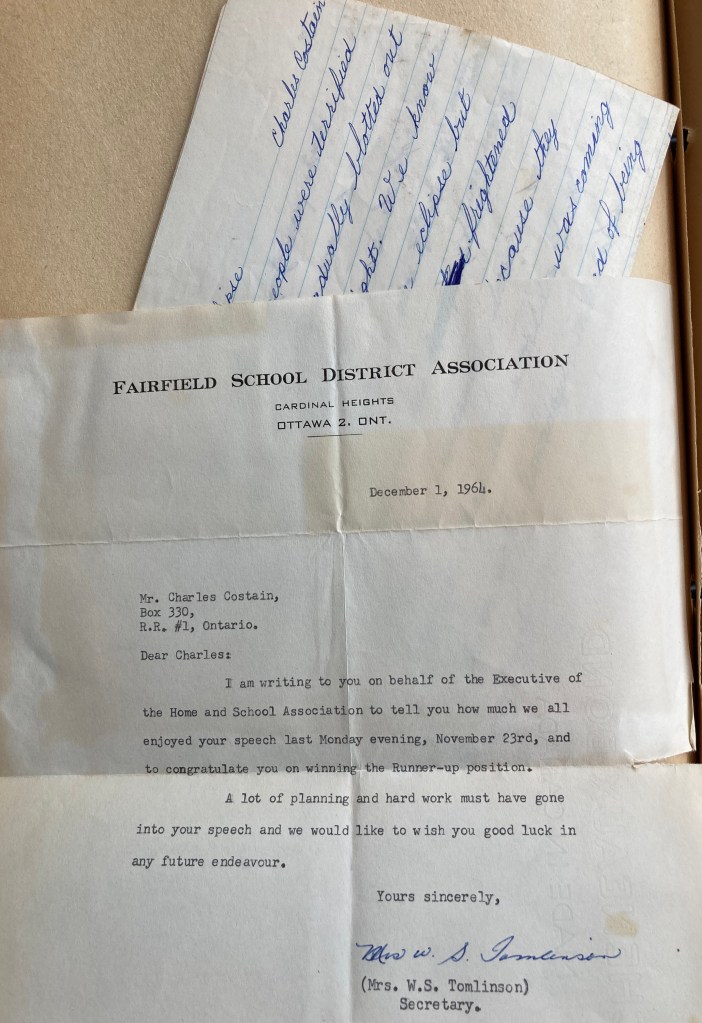
In Grade 8, Charlie was once more in the Speech Contest, with his account of the eclipse that the family had witnessed the year before, and this time he was runner-up to the winner. The Eclipse Charles Costain In ancient times, people were terrified when the sun was gradually blotted out and day turned into night. We know now that it is just an eclipse but people used to be frightened when this happened, because they thought that the world was coming to an end. Nowadays instead of being terrified, people are fascinated to watch such an interesting event. We are not taken by surprise because scientists can tell just where and when it is going to happen. The last total eclipse predicted was on July 20, 1963. We were driving back from Quebec City and went off the main road to a farmhouse, and asked the farmer if we could set up our telescope. He said that we could, and we were soon ready for it. In a while, we could see a small black bite out of the sun, and it began getting a bit darker. Slowly the sun was covered and I realized that the birds had all gone back to their nests, and there was a hush that made me shiver. The eclipse was nearly total when suddenly a cloud drifted over the sun, and no matter how hard we looked, we could not see the total eclipse. The farmer and his wife who were inside watching television probably got a better view than we did because there were no clouds at Grandmère where the television cameras were but at least we made an effort to see the real thing. We soon were packing the telescope and getting ready to leave content, but rather disappointed at not seeing it all. The speech went on to a more scientific discussion, and ended with the news of Prime Minister Pearson’s funding of a second telescope to be built in British Columbia in honour of the Queen’s visit, to be the second largest in the world. Since this was where our uncle, Carman Costain, worked, I’m sure it was good news in Penticton.
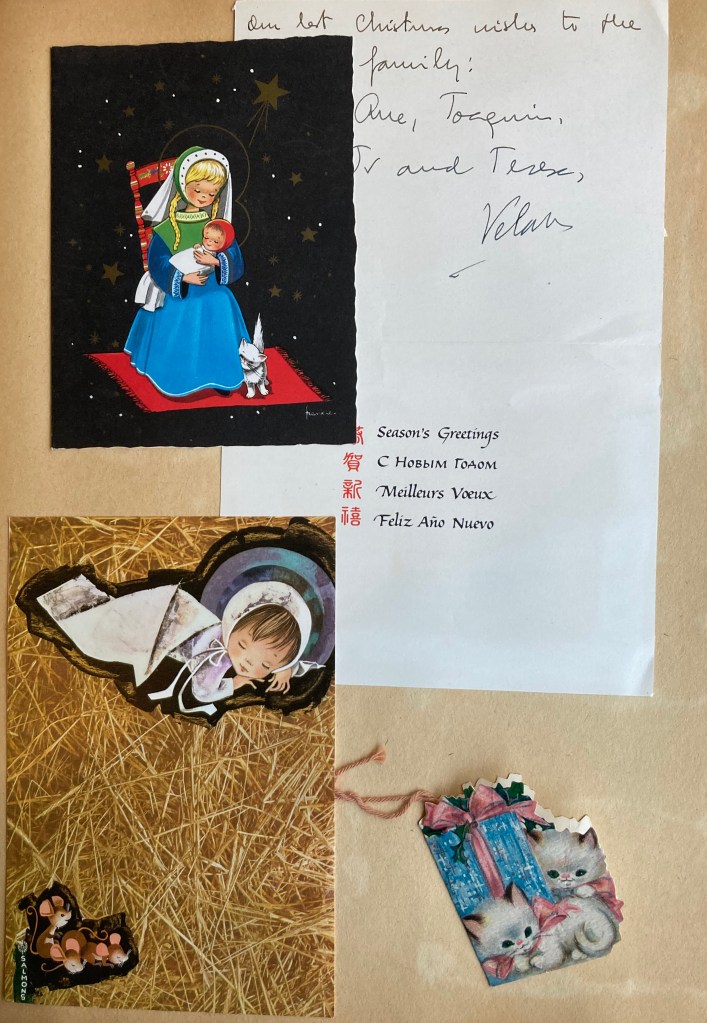
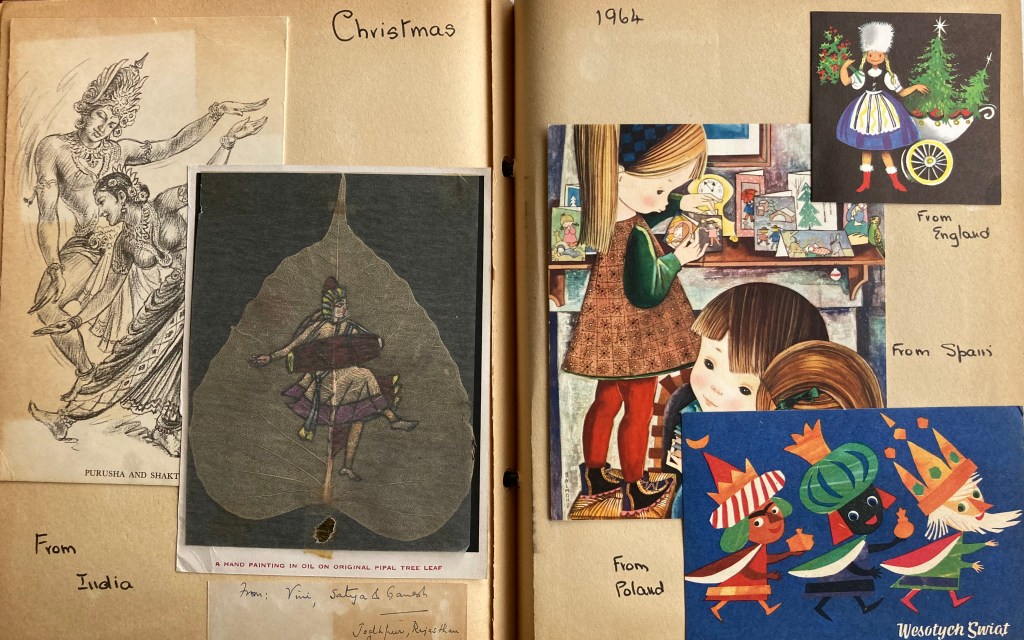
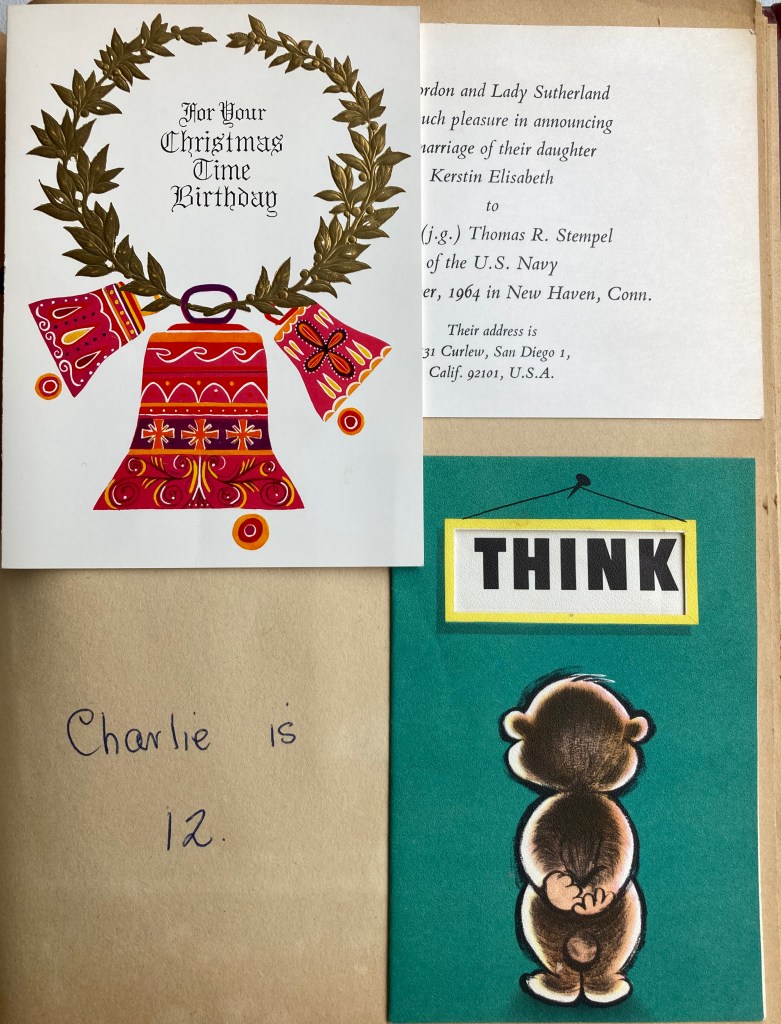
In December, the Christmas routine began again, with the card list now about 150 strong because of Cec’s travels and scientific contacts, and Cyn’s scrapbook reflects this, with cards from all over- India, Spain, Poland, as well as England. Of course news from friends came too, and a card from the Sutherlands- Dr Sutherland had been knighted in 1960, and this year, 1964, had become the Master of Emmanuel College, Cambridge- included Kerstin’s wedding announcement with the news that they would be moving to San Diego. (Cyn and Cec realized the days when they babysat the Sutherland girls in Ann Arbor were long ago.) The parcels to friends and relatives were sent off but this year, there is no mention of J.M.G.E. in the list, so Cyn’s father must have died in Newcastle earlier in 1964.
Charlie’s 12th birthday was followed by Christmas, with Auntie Dottie sending the English Annuals we loved, Linda getting clothes and books, Charlie a tabletop hockey game, the cat giving us vinyl, and the adults getting more practical things. The Costains looked forward to 1965 with anticipation.













 A Family History in Letters